The weather in Italy is more than just a forecast; it is an essential part of the experience itself. It dictates the rhythm of daily life from the afternoon riposo during the summer heat to the cozy warmth of a trattoria on a crisp winter evening. The climate shapes the flavours on your plate influencing the timing of the grape harvest and the arrival of seasonal delicacies like truffles and chestnuts. Understanding the Italy weather by month allows you to connect more deeply with the culture and anticipate the sensory details that make a tour so memorable whether it is the scent of rain on warm Roman cobblestones or the feeling of the Mediterranean sun on your skin.
Key Takeaways
- Pack for Three Climates in One: Italy’s weather is not uniform. What you wear in the alpine North will be very different from your outfit on the southern coast so check the forecast for each region on your tour.
- Aim for Spring and Fall for the Best Experience: The shoulder seasons from April to May and September to October offer the perfect combination of comfortable sightseeing temperatures fewer crowds and vibrant local festivals.
- Focus on Smart Layers and Great Shoes: Your most important items are comfortable walking shoes and versatile clothing you can mix and match. This ensures you are prepared for varied daily activities and temperature changes without overpacking.
What is the Weather Like in Italy?
Packing for a trip to Italy can feel like preparing for three different destinations at once and in many ways you are. The country’s famous boot shape stretches from the Alps down into the Mediterranean Sea creating a wonderfully varied landscape with equally varied weather. Understanding these regional differences is the key to packing smartly and being comfortable on your tour. From the crisp alpine air in the north to the sun-drenched shores of the south Italy’s climate is a vital part of its charm. Knowing what to expect weather-wise means you can spend less time worrying about your wardrobe and more time soaking in la dolce vita.
A Tale of Three Climates: North, Central and South
Thinking of Italy as one single climate is a common mistake. The country actually has a diverse climate that is best understood by dividing it into three regions. Northern Italy near the Alps experiences colder winters with potential for snow while the south enjoys mild temperatures almost all year. For example cities like Milan often have a humid subtropical climate with rainfall throughout the year. Head south to Palermo and you will find a classic hot-summer Mediterranean climate perfect for enjoying the sea. This regional variety is what makes Italy a fantastic place to visit any time of year as there is always a corner of the country with beautiful weather.
Typical Temperatures Across the Country
To give you a clearer picture let’s talk numbers. January is Italy’s coldest month with an average temperature of about 7 °C while August is the warmest averaging a balmy 25 °C. Of course these are just national averages. In the summer cities like Rome and Palermo can see highs climb to 30 °C or more. In contrast a winter day in Bolzano in the north could see temperatures drop below freezing while Palermo stays at a mild 9 °C. You can find a detailed look at average temperatures by month to help you plan but remember that layering is always a great strategy for staying comfortable as you explore.
Spring in Italy: A Season of Awakening (March – May)
Spring is when Italy truly comes alive. After the quiet of winter the country awakens with a flourish of colour and celebration. The air grows warmer the days get longer and the landscapes transform from sleepy to vibrant. It’s a season of rebirth felt in the blooming wisteria that drapes over ancient walls and the cheerful energy that fills town piazzas. For travellers this is a magical time to explore. You can wander through historic sites in comfortable weather before the summer crowds arrive. From north to south Italy in spring offers a perfect blend of pleasant temperatures cultural festivities and breathtaking natural beauty making it an ideal season for discovery.
March: Mild Days and the Festival of Saint Joseph
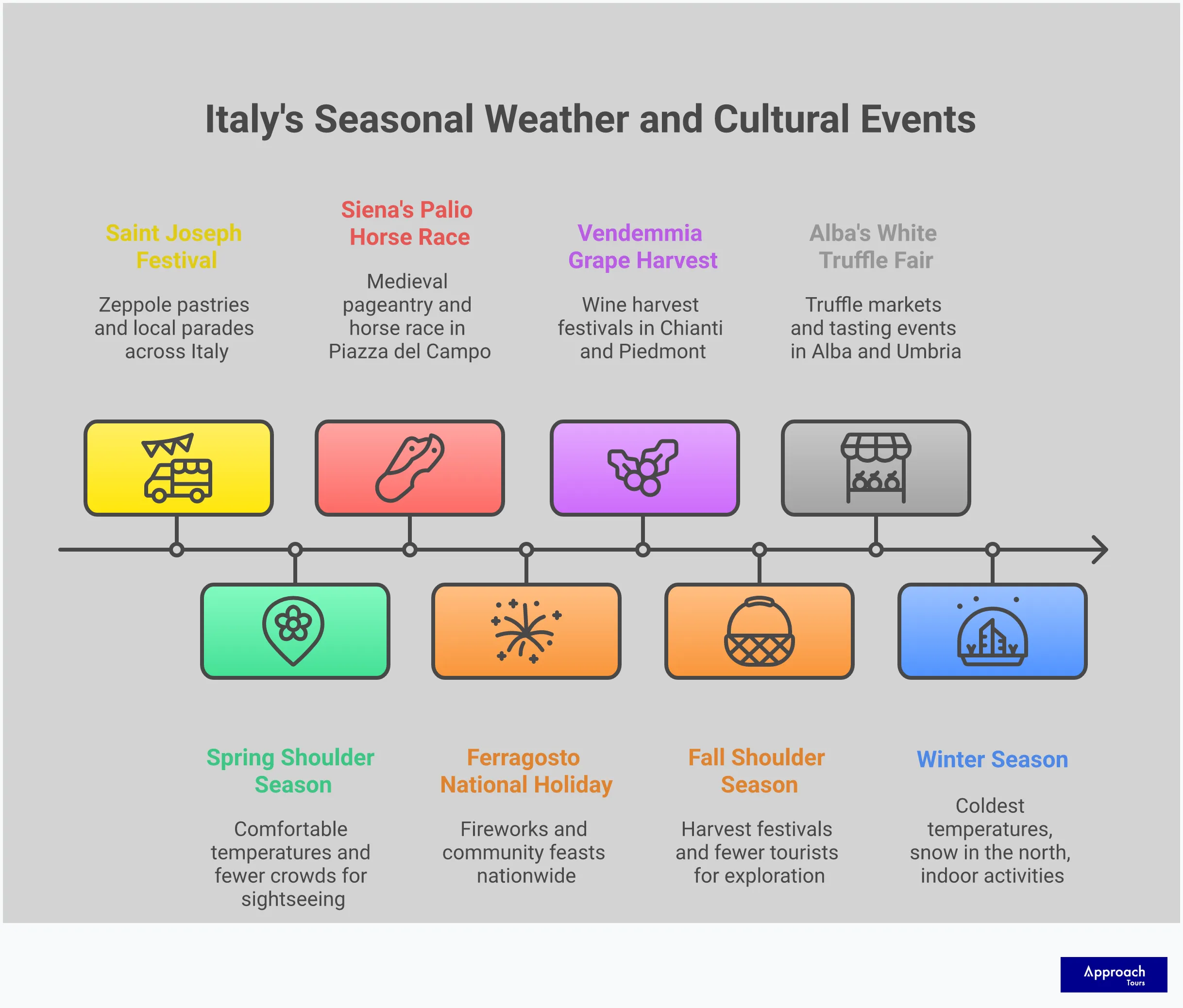
In March Italy begins to shed its winter coat. The air is crisp and fresh with average temperatures climbing to a mild 10 °C. It’s lovely weather for strolling through cities and enjoying a cappuccino at an outdoor café. This month is also when the country celebrates the Festival of Saint Joseph on March 19. This day which also serves as Italian Father’s Day is marked by special masses parades and of course delicious food. You’ll find towns buzzing with local traditions and bakeries filled with sweet treats like zeppole a decadent cream-filled pastry. It’s a wonderful glimpse into authentic Italian culture as communities come together to honour their patron saint.
April: Perfect Touring Weather and Easter Celebrations
April is arguably one of the best months to experience Italy. The weather is simply delightful with average temperatures around 13 °C making it perfect for full days of touring without the intensity of summer heat. The countryside is lush and green and wildflowers dot the rolling hills of Tuscany. If your tour falls over Easter you’re in for a truly special experience. Easter celebrations in Italy are a profound and vibrant affair with elaborate processions and festivities taking place nationwide. Beyond the holiday many cities host their own unique events like the celebration of Rome’s birthday on April 21.
May: Warm Sunshine and Infiorata Flower Festivals
May welcomes the true warmth of the Mediterranean sun with temperatures averaging a pleasant 18 °C. The days are long and bright inviting leisurely exploration and al fresco dining. This is the season of flowers and nowhere is this more apparent than at an Infiorata festival. In towns like Noto in Sicily and Spello in Umbria local artists create intricate and stunning carpets made entirely of flower petals lining the streets with breathtaking designs. These Infiorata festivals are a feast for the senses and a beautiful tribute to the splendour of spring making a May tour an unforgettable visual experience.
Summer in Italy: Sunshine and Celebrations (June – August)
Summer unfurls across Italy like a warm blanket bringing with it long sun-drenched days and a palpable energy. The air hums with life as locals and travellers alike spill out onto cobblestone piazzas for aperitivo and al fresco dinners that stretch late into the balmy evenings. This is the season of vibrant festivals open-air concerts and the sweet ritual of a daily gelato. From the northern lakes to the southern shores the country is alive with celebration. While the temperatures climb the pace of life slows inviting you to savour every moment whether you’re exploring ancient ruins under a brilliant blue sky or simply enjoying the view from a shaded cafe. This is Italy in its most classic and cinematic form a time when the simple act of being feels like a luxury. The long daylight hours mean more time for discovery and the warm weather encourages a joyful embrace of the outdoors making it an unforgettable season for any tour.
June: Early Summer Bliss and the Palio di Siena
June is a truly magical time to be in Italy. The month offers the golden promise of summer with wonderfully warm days and comfortable evenings before the intense heat of July and August arrives. The countryside is lush and green and the Mediterranean waters are finally warm enough for a delightful swim with sea temperatures reaching around 25°C. This is perfect weather for exploring. Beyond the beautiful climate June is also a time of incredible cultural pageantry. In Tuscany the city of Siena prepares for the Palio di Siena a bareback horse race where ancient rivalries play out in the Piazza del Campo. It’s a spectacular display of history and passion that captures the very soul of Italy.
July: Peak Heat and Outdoor Concerts
July is the heart of the Italian summer when the sun is at its most generous. Temperatures in cities like Rome and Florence often climb above 30°C creating a pleasant heat that encourages a slower more relaxed rhythm. This is the perfect excuse to adopt the local custom of a riposo or afternoon rest during the hottest part of the day. As dusk falls the cities come alive again. The warm evenings are perfect for attending one of the many outdoor concerts and festivals that fill the summer calendar. Imagine listening to an opera under the stars in a Roman ruin or enjoying live music in a seaside town. July is when Italy’s zest for life is on full display.
August: Hot and Humid with Ferragosto Festivities
August in Italy is a month-long celebration of summer. It is typically the warmest month and the entire country seems to embrace the heat with a festive spirit. You’ll notice many Italians head for the coast for their own vacations leaving some cities a little quieter which can be a unique experience for travellers. The pinnacle of the month is Ferragosto on August 15 a national holiday that dates back to ancient Rome. It’s a day of feasting fireworks and community gatherings across the country. While the afternoons are best spent relaxing in the shade or enjoying a cool drink the evenings are absolutely glorious. It’s a time to fully immerse yourself in the Italian way of life and enjoy the simple pleasures of a perfect summer night.
Fall in Italy: A Feast for the Senses (September – November)
As the intense summer heat softens into a warm golden glow Italy undergoes a magical transformation. The crowds of August begin to thin leaving more room to breathe in the piazzas and wander through ancient laneways. Autumn is Italy’s harvest season a time of incredible abundance when the country celebrates its deep connection to the land. The air fills with the rich scent of fermenting grapes roasting chestnuts and earthy truffles. It’s a season that invites you to slow down and savour every moment from the changing colours of the Tuscan hills to the rich flavours on your plate.
For travellers fall offers the perfect balance. The weather is often ideal for exploring with sunny days that are warm enough for sitting outside with a cappuccino but cool enough for comfortable sightseeing. This is the season of the sagra or local food festival where towns and villages celebrate their unique culinary treasures. From the grape harvest in September to the olive pressing in November autumn is a true feast for the senses. It’s a time when you can experience the heart of Italian culture through its most cherished traditions: food family and celebration. It’s an invitation to not just see Italy but to taste it.
September: Golden Days and Grape Harvest Festivals
September in Italy feels like a gift. The sun still holds the warmth of summer but the scorching intensity has faded leaving behind perfect golden days. This comfortable weather is ideal for sightseeing and enjoying the beautiful countryside. It’s also the month of the vendemmia or grape harvest. Across the country especially in wine regions like Tuscany and Piedmont the air is electric with excitement. Many towns host lively grape harvest festivals known as sagre dell’uva to celebrate the wine-making tradition with music parades and of course plenty of wine tasting. It’s a wonderful opportunity to witness a timeless Italian ritual.
October: Crisp Air and Chestnut Festivals
October arrives with a refreshing crispness in the air painting the Italian landscape in brilliant hues of amber crimson and gold. The fall foliage is spectacular turning rolling hills and quiet country roads into a painter’s canvas. This is the perfect time for a scenic drive or a brisk walk through a national park. As the temperatures cool the cuisine gets heartier. October is famous for its chestnut festivals or sagre delle castagne particularly in regions like Tuscany and Emilia-Romagna. The scent of roasting chestnuts fills the streets offering a simple delicious warmth against the autumn chill.
November: Cooler Temperatures and the Truffle Fair Season
November brings cooler cozier days inviting travellers to explore museums and linger over long memorable meals. This is the most anticipated time of year for food lovers because it marks the peak of truffle season. In regions like Piedmont and Umbria the hunt is on for the elusive and prized white truffle often called “white gold”. The city of Alba in Piedmont hosts the world-renowned International White Truffle Fair a spectacular event celebrating this culinary treasure. As the month progresses you’ll also notice the first festive lights appearing as towns begin their preparations for the Christmas season.
Winter in Italy: Cozy and Festive (December – February)
Winter in Italy offers a different kind of enchantment. The summer crowds have thinned, revealing a more intimate side of the country. Imagine sipping a cappuccino in a quiet Roman piazza or admiring Renaissance art without jostling for a view. The air is crisp and cities are aglow with festive lights, creating a cozy atmosphere. This season is perfect for travellers who want to immerse themselves in culture and experience Italy like a local. From festive markets to vibrant carnivals, winter provides a unique way to discover the heart of Italy. It’s a time for savoring hearty pasta dishes in a warm trattoria, for lingering over masterpieces in world-class museums and for seeing iconic landmarks dusted in a soft winter light. The pace slows down, allowing you to connect more deeply with the places you visit and the people you meet. It’s a season that trades sun-drenched beaches for the warm glow of community and celebration. You’ll find that the welcome is just as warm, if not warmer, as locals have more time to share their stories and traditions. This is Italy at its most authentic, a chance to see daily life unfold without the filter of peak tourist season.
December: Festive Lights and Christmas Markets
December wraps Italy in a festive spirit with the arrival of Christmas markets or mercatini di Natale. These charming markets spring up in piazzas across the country, where you can wander through wooden stalls warmed by the scent of roasted chestnuts. It’s the perfect place to find unique handcrafted gifts. While it is chilly, the cheerful energy is contagious. Cities like Rome and Florence are decorated with beautiful lights, making an evening stroll or passeggiata a truly magical experience that showcases Italy’s rich holiday traditions.
January: The Coldest Month and Winter Sales
January is Italy’s coldest month, making it ideal for exploring the country’s world-class indoor attractions. Think unhurried visits to the Vatican Museums or the Uffizi Gallery with more space to appreciate the masterpieces. The crisp, quiet atmosphere offers a peaceful way to see iconic sights. For those who enjoy shopping, January brings the start of the winter sales or saldi. This is your chance to find incredible deals on Italian fashion and leather goods. With fewer travellers around, you’ll find a more relaxed pace of life and a warm welcome in cozy trattorias.
February: Winter’s End and the Venice Carnival
As winter retreats, February brings a burst of celebration, most famously with the Carnival of Venice. This world-renowned event transforms the city into a spectacular stage of elaborate masks, historical costumes and lively parades. It’s a bucket-list cultural experience. Beyond Venice, you’ll feel a sense of anticipation as the country prepares for spring. The weather can still be cool but you’ll often find bright, sunny days perfect for exploring ancient ruins. It’s a month of vibrant tradition before the spring blossoms arrive.
How Does Weather Change Across Italy?
Italy’s famous boot shape means it stretches over 1,000 kilometres from the snow-dusted Alps to the sun-drenched shores of the Mediterranean. This incredible length creates a surprisingly diverse range of climates. The weather you experience in Venice can be dramatically different from what you’ll find in Sicily on the same day. Thinking of Italy as one single weather zone is a common mistake. Instead it’s best to see it as three distinct regions: the north central and south.
Understanding these regional differences is the key to packing properly and truly enjoying your tour. Northern Italy has a more continental climate with four distinct seasons and chilly winters. Central Italy offers the classic Mediterranean experience with mild winters and hot dry summers. And Southern Italy enjoys a long season of warmth with very mild winters and scorching summers. This climatic variety is part of what makes Italy so endlessly fascinating. You can experience crisp mountain air and warm sea breezes all in the same country. This variety also influences everything from the local food and wine to the rhythm of daily life.
Northern Italy: Alpine Breezes and Four Distinct Seasons
Northern Italy which includes stunning destinations like Venice and the Lake Como region experiences a climate with four clear seasons. Winters are often cold and crisp with a good chance of snow in the mountainous areas near the Alps. Cities like Milan and Turin can feel quite chilly and damp. Spring brings a beautiful awakening with blooming flowers and pleasant temperatures. Summers are generally warm and can be quite humid especially in the Po Valley. Fall is a spectacular season as the foliage turns to brilliant shades of red and gold and the air becomes cool and comfortable for exploring. This is a region where you’ll want to pack layers to be ready for anything.
Central Italy: Rolling Hills and Sun-Kissed Summers
Home to the rolling landscapes of Tuscany and the timeless city of Rome Central Italy boasts a more temperate climate. This is the weather many people picture when they dream of an Italian escape. The winters are milder than in the north though you can still expect cool rainy days. The true magic happens in spring and fall. These shoulder seasons offer wonderfully mild temperatures and plenty of sunshine making them perfect for sightseeing without the intense summer heat. Summers are typically hot and dry with long sun-filled days. While perfect for enjoying the countryside the heat can be strong in cities like Florence during midday.
Southern Italy: Coastal Sunshine and Mild Winters
As you travel south toward the Amalfi Coast and Sicily the climate becomes distinctly Mediterranean. Southern Italy is known for its long hot summers and very mild winters. It’s the warmest part of the country year-round. The sun shines generously for most of the year and the swimming season is long. You can comfortably take a dip in the sea from June through October. While summer days can be scorching the coastal breezes provide welcome relief. Winter is the rainiest season but temperatures rarely drop to freezing making it a pleasant escape from colder climates. This is the Italy of lemon groves ancient ruins and endless blue skies.
When is the Best Time to Visit Italy?
Deciding when to visit Italy is almost as exciting as choosing what to pack. Each season paints the country in a different light from the sun-drenched coasts of summer to the festive markets of winter. While there’s truly no bad time to experience la dolce vita your travel style and preferences will point you toward the perfect time of year.
For many of our travellers the sweet spot lies just outside the summer rush. The shoulder seasons of spring and fall offer a magical combination of pleasant weather and a more relaxed pace letting you soak in the culture without the crowds.
Peak vs Shoulder Season: What to Expect
The best times to visit Italy are often during the spring (April to May) or fall (September to October). These months are known as the “shoulder seasons” and they offer a wonderful balance. The weather is comfortably warm perfect for strolling through ancient ruins or sitting at a piazza café. You’ll also find fewer people at major attractions which means more space and time to truly appreciate them.
Summer in Italy from June to August is the peak season. It brings long sunny days but also intense heat with temperatures that can climb to 40°C. While beautiful it can be draining for sightseeing. Winter is cooler and quieter offering a different kind of charm but may not be ideal if you’re dreaming of sun-kissed Tuscan hills.
Plan Your Perfect Tour Around the Weather
Your ideal Italian tour is tied to the seasons. Spring is a time of awakening with vibrant festivals celebrating everything from flowers to saints. Easter often falls in April bringing unique and solemn processions throughout the country. It’s a beautiful time to witness Italy’s deep-rooted traditions.
Fall is a feast for the senses. September and October are filled with food festivals celebrating the grape and olive harvests chestnuts and truffles. The air is crisp the light is golden and the countryside is breathtaking. Whether you dream of exploring Rome’s ancient wonders in the gentle spring sunshine or tasting new wine during a fall harvest festival planning around the weather ensures every moment of your tour is comfortable and memorable.
Will I Need an Umbrella? A Look at Italy’s Rainfall
While Italy is famous for its sun-drenched landscapes a little “liquid sunshine” is always a possibility. But a few raindrops should never dampen your spirits. Knowing what to expect can help you pack perfectly and embrace the beauty of Italy in any weather. On our tours we always have a plan B so you can relax and enjoy the experience rain or shine. After all there’s nothing quite like sipping a rich cappuccino in a historic café while watching the rain fall on a Roman piazza.
A sudden shower can transform a bustling square into a glistening masterpiece making the colours of the ancient buildings pop and creating a wonderfully cozy atmosphere. It’s in these moments that you often find the most authentic and peaceful travel memories. Your Group Guru will know just the spot to duck into whether it’s a hidden art gallery a family-run trattoria or a shop filled with local crafts. So while you might want to pack a light umbrella it’s more important to pack a sense of adventure. Italy’s charm isn’t just reserved for sunny days; it shines through in every season and every type of weather. The scent of rain on warm cobblestones the dramatic clouds over the Tuscan hills or the sound of a downpour from under a centuries-old portico are all part of the country’s rich sensory experience.
Italy’s Wettest and Driest Months
Generally the rainiest time to visit Italy is from late October through January with November often seeing the most precipitation. In central and southern cities like Rome and Palermo you can expect more rainfall during the autumn and early winter. In contrast the summer months of July and August are typically the driest offering long sun-filled days perfect for exploring. It’s a different story in the north however. Cities like Milan near the Alps can see more rain during the late spring and summer. Understanding Italy’s climate patterns helps you prepare for any possibility so you can pack the right layers and be ready for anything.
How Rain Might Affect Your Plans
A little rain can be a blessing in disguise. Travelling during the quieter wetter months often means you’ll explore famous sites with far fewer crowds creating a more personal and memorable experience. While some seasonal shops along the coast may close our thoughtfully crafted itineraries always ensure there are wonderful alternatives. On a hot summer day a brief shower can be a welcome refreshment clearing the air and making the cobblestones shine. Your Group Guru is always ready with suggestions for cozy cafés or fascinating indoor museums so you can simply enjoy the moment whatever the weather brings. You can trust that every detail is handled.
How to Pack for Italy’s Weather
Packing for Italy is an art form that balances style with practicality. You will want to feel comfortable while strolling through ancient cobblestone streets yet chic enough for a spontaneous evening aperitivo. The key is versatility. On our tours you might explore the Roman Forum in the morning sun and find yourself in a cool catacomb by the afternoon. Having the right layers means you are prepared for every moment without having to return to the hotel. Think fabrics that travel well and pieces you can dress up or down.
Italians have a wonderful knack for looking effortlessly put-together and you can too. It is not about packing a huge suitcase but about choosing smart pieces. A simple scarf can add a pop of colour and warmth while a classic blazer can instantly dress up a daytime outfit for dinner. Most importantly remember that our tours involve plenty of walking so comfortable shoes are non-negotiable. With a little planning you can create a travel wardrobe that is both functional and fabulous ready for every photo opportunity and cultural immersion.
Your Essential Packing List by Season
Italy’s wardrobe changes dramatically with the seasons so what you pack will depend on when you travel.
- Spring (April to May): Embrace the mild weather with light layers. Pack breathable tops long-sleeved shirts a light sweater or cardigan and a waterproof jacket for those potential spring showers.
- Summer (June to August): Prepare for sun-drenched days. Lightweight clothing in natural fabrics like cotton and linen is a must. Include sunscreen a wide-brimmed hat and sunglasses to stay protected.
- Fall (September to October): Layering is your best friend during these pleasant months. Bring a mix of short and long-sleeved tops sweaters a medium-weight jacket and perhaps a stylish scarf.
- Winter (December to February): Bundle up for the colder especially northern Italian weather. A warm coat gloves a scarf and water-resistant boots are essential for staying cozy.
Packing Tips for a Group Tour
On an Approach tour comfort is paramount as many of our best discoveries happen on foot. A pair of well-worn comfortable walking shoes is the most important item you will pack. Choose versatile clothing pieces in a complementary colour palette that you can mix and match. This strategy not only simplifies your morning routine but also helps you pack lighter. Consider bringing one or two smarter outfits for special group dinners or a night at the opera. Finally leave a little extra room in your luggage. You will undoubtedly find beautiful leather goods local crafts or delicious treats to bring home as a memory of your tour.
Related Articles
- Plan Your Best Italian Trip: A Complete Guide
- The Essential Guide to Italy Weather in September
- What is the best time of year to travel?
Frequently Asked Questions
What are the “shoulder seasons” and why are they so popular? The shoulder seasons are the sweet spots of Italian travel, referring to spring (April to May) and fall (September to October). They are incredibly popular because they offer the best of both worlds. You get to enjoy beautiful, comfortably warm weather that is perfect for full days of sightseeing, but without the intense heat and larger crowds that arrive in the peak summer months. It creates a more relaxed atmosphere for exploring Italy’s treasures.
I’m worried about the summer heat. Is it manageable on a tour? The summer sun in Italy is certainly generous, especially in July and August. We design our tours with this in mind. We often schedule more active outdoor explorations for the cooler morning hours. During the peak heat of the afternoon, you might be visiting a blissfully cool museum, enjoying a long lunch in the shade, or having some personal time to relax. Your Group Guru is an expert at setting a comfortable pace so you can enjoy the sunshine without feeling drained by it.
What kind of shoes should I actually pack for all the walking? This is probably the most important packing decision you will make. The single best thing you can bring is a pair of comfortable, supportive walking shoes that you have already broken in at home. Think of high-quality sneakers or cushioned walking shoes that can handle cobblestones with ease. It is also a great idea to pack a second comfortable pair, like a stylish flat or sandal, to wear in the evenings or to give your primary pair a day off.
How should I pack for a tour that visits different regions, like Rome and Venice? Layering is the secret to staying comfortable as you travel from one region to another. Since the weather in the north can be quite different from the south, packing versatile pieces is key. Think about bringing items you can easily add or remove, such as a light sweater or cardigan, a stylish scarf or pashmina, and a light waterproof jacket. This approach ensures you are prepared for a crisp morning in Venice and a sun-kissed afternoon in Rome without overstuffing your suitcase.
Will I need to pack formal wear for evenings? Our tours maintain a comfortable and relaxed atmosphere, so there is no need for truly formal attire like gowns or suits. However, Italians often dress up a bit for their evening passeggiata or dinner. We recommend packing one or two “smart casual” outfits for our group dinners or any special evening events. A nice blouse with trousers or a simple, elegant dress will be absolutely perfect for enjoying a memorable Italian evening.