One of the best parts of travelling on a group tour is the shared sense of discovery and the wonderful camaraderie that develops. A key ingredient for a successful group experience is ensuring everyone feels their best. Taking a little time for health preparations before you leave is a simple act of care for yourself and your fellow travellers. This guide will walk you through the health recommendations for your adventure including what you need to know about New Zealand vaccines. By taking care of these details beforehand you help ensure the tour is a seamless and enjoyable experience for everyone from start to finish.
Key Takeaways
- Start with a Routine Health Check: A quick chat with your doctor ensures your standard Canadian immunizations like MMR and Tetanus are up to date, giving you a great baseline for healthy travels.
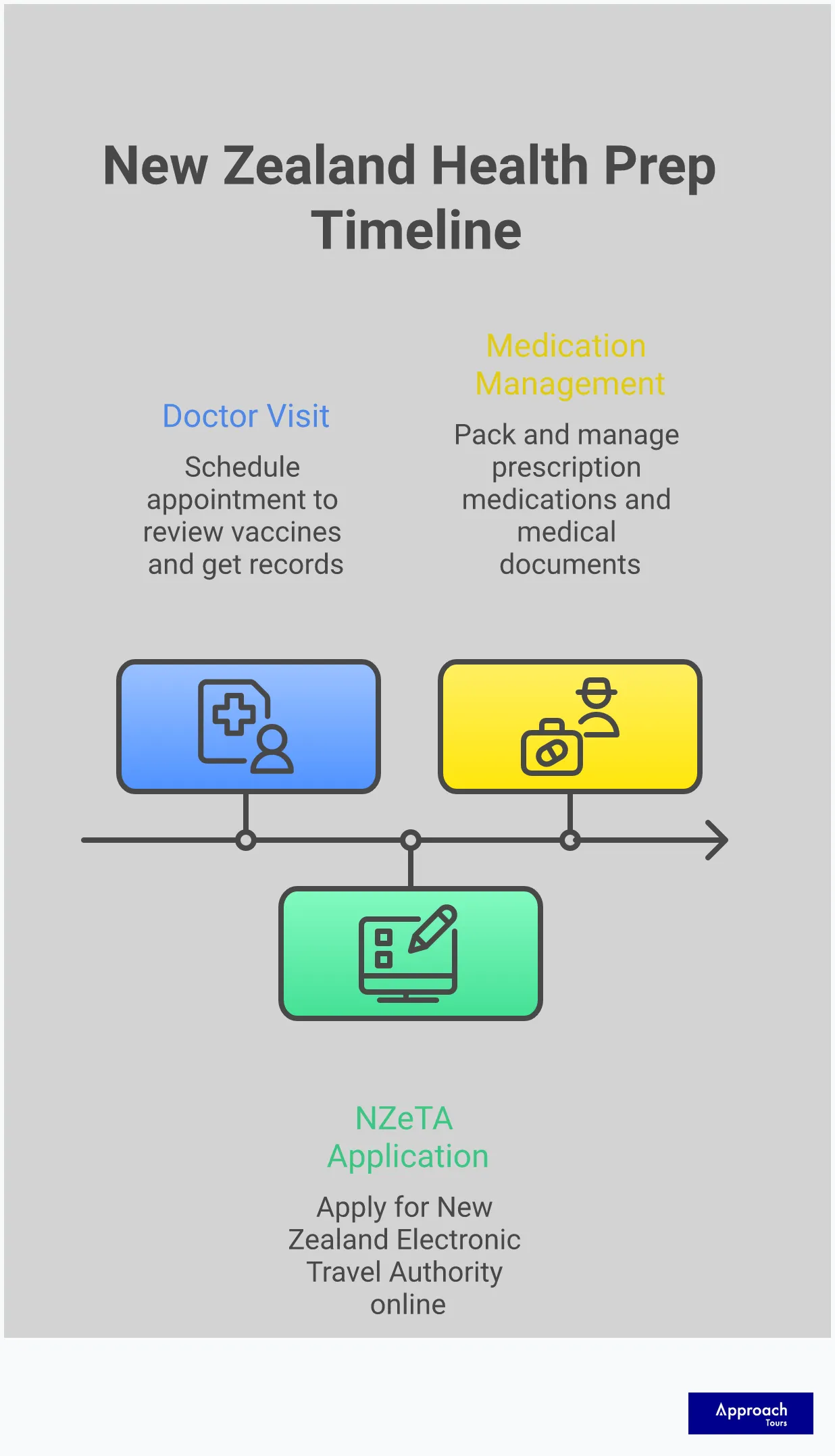
- Plan Your Pre-Tour Doctor’s Visit: See your doctor at least a month before your tour. This visit is the perfect time to get personalized advice, discuss any travel-specific vaccines, and arrange prescriptions for your trip.
- Organize Your Essential Paperwork: Get your New Zealand Electronic Travel Authority (NZeTA) sorted online well before you fly and pack copies of your travel insurance, prescriptions, and immunization record for complete peace of mind.
Your New Zealand Vaccination Checklist
Getting ready for your tour is an exciting time filled with anticipation for the incredible landscapes and culture that await. Part of that preparation involves a quick health check to ensure you’re ready for a comfortable and worry-free experience. We’ve put together this simple checklist to help you organize your health preparations before you travel to the stunning land of the Kiwis.
Understanding New Zealand’s Entry Requirements
First things first let’s talk about getting into the country. All travellers need a passport that is valid for at least three months beyond your planned departure date from New Zealand. Most Canadian travellers will also need to get a New Zealand Electronic Travel Authority (NZeTA) before flying. It’s a straightforward online process that electronically links to your passport. Think of it as a pre-approval that makes your arrival much smoother. Applying for your NZeTA well in advance is a great way to check one more thing off your to-do list.
A Quick Review of Your Routine Vaccinations
Before any international travel it’s always a smart idea to ensure your routine vaccinations are current. These are the standard immunizations recommended for life in Canada not just for travel. This includes vaccines like Measles-Mumps-Rubella (MMR) Tetanus-Diphtheria-Pertussis and the seasonal flu shot. A quick chat with your family doctor or a visit to a travel clinic can confirm you’re up to date. They can review your immunization history and provide any boosters you might need ensuring you’re protected and ready for your adventure. You can find a helpful list of recommended immunizations for travellers on the Government of Canada’s website.
Recommended Vaccinations for Your New Zealand Tour
When you’re preparing for an adventure, thinking about health and safety is a natural part of the process. While New Zealand is a modern country with excellent healthcare standards, taking a few proactive steps ensures you can focus entirely on the stunning landscapes and rich culture. The best approach is always a prepared one. Getting the right vaccinations before you travel is one of the simplest ways to protect your health and give yourself peace of mind.
Think of it as just another item on your pre-tour checklist like packing your favourite walking shoes or charging your camera. The recommendations that follow are based on general guidance from global health organizations. Your personal health history and your doctor’s advice will be your most important guides. For a comprehensive overview, the Government of Canada provides excellent travel health advice specific to New Zealand. This information helps you have an informed conversation with your healthcare provider so you can feel confident and ready for your tour.
Why the MMR Vaccine is Important
One of the most important immunizations to check on is the MMR vaccine which protects against measles mumps and rubella. Health authorities worldwide emphasize this one for a key reason: measles is incredibly contagious. A single case can spread quickly among those who are not immune. Ensuring your MMR vaccination is up to date is a simple and highly effective way to protect yourself and others. The Centers for Disease Control and Prevention strongly recommends that all international travellers be fully vaccinated against measles before their trip. It’s a small step that contributes to a healthy and worry-free experience for everyone on your tour.
Considering Hepatitis A and B
Two other vaccines you’ll likely discuss with your doctor are for Hepatitis A and Hepatitis B. These are often recommended for travellers heading to most parts of the world. Hepatitis A is a liver infection that can be contracted through contaminated food or water. The Hepatitis B virus is also a liver infection but is spread through contact with infected body fluids. While the risk in New Zealand is low, getting these vaccinations offers a broad layer of protection. Your doctor can help you decide if these are right for you based on your health profile and past immunizations.
Tailoring Vaccines to Your Itinerary and Health
Beyond travel-specific vaccines your doctor will likely review your routine immunizations to make sure everything is current. It’s a great opportunity to check on vaccinations for tetanus diphtheria and pertussis (whooping cough) as well as shingles and the seasonal flu. According to New Zealand’s own health services staying up to date on these adult immunisations is a key part of staying healthy. Your personal health needs are unique so a pre-travel consultation is the perfect time to create a plan tailored just for you ensuring you’re fully prepared for your adventure.
Special Health Considerations for Travellers
Your health is the most important thing you’ll pack for any tour. As we move through different stages of life our health needs can change. A quick chat with your doctor can help you feel confident and prepared for your adventure. It’s always best to tailor your health plan to your personal circumstances so you can focus on enjoying every moment in New Zealand. Our Group Gurus and local guides are there to ensure a smooth experience on the ground but your personal health preparations start at home. Taking a little time to review these considerations will give you peace of mind.
Advice for Travellers Over 50
Staying healthy while travelling is all about preparation. It’s a great idea to ensure your routine vaccinations are current before you go. Health professionals often recommend that adults over 50 stay up to date with vaccines for tetanus whooping cough flu and pneumonia. The shingles vaccine is also commonly recommended for this age group. A quick visit to your family doctor or a travel clinic can help you review your immunization history and see what’s right for you. Think of it as a simple pre-tour checkup that ensures you’re ready for anything from hiking near Aoraki Mount Cook to exploring the vibrant streets of Wellington.
Travelling with Specific Health Needs
If you are managing a specific medical condition your health preparations might look a little different and that’s perfectly fine. Travellers with weakened immune systems for example may need additional vaccines like hepatitis A. The best course of action is always to consult with your doctor. They understand your health history and can provide personalized advice for travelling to New Zealand. They can also help you prepare any necessary medications or documentation you might need. Getting this sorted out before you leave means you can relax and immerse yourself in the experience knowing you’ve taken care of your wellbeing.
A Note on COVID-19 Policies
While the world has settled into a new rhythm of travel it’s still wise to be informed about COVID-19. Health authorities recommend that all eligible travellers are up to date with their COVID-19 vaccinations before heading overseas. Policies can change so we always suggest checking the Government of Canada’s official travel advice and advisories for New Zealand before your departure. This will give you the most current information on entry requirements and local health measures. Being prepared ensures a seamless start to your tour letting you focus on the incredible landscapes and culture that await.
Planning and Documentation
A little preparation goes a long way in ensuring your tour is smooth from start to finish. Taking care of your health planning and paperwork beforehand means you can fully immerse yourself in the stunning landscapes and vibrant culture of New Zealand without a worry. Think of it as the final step in packing your peace of mind. This part of the process is all about simple checks and conversations that set you up for a fantastic experience. From a quick chat with your doctor to making sure your documents are in order you can handle these details with ease.
We want you to focus on the excitement of watching the sunrise over Milford Sound or exploring the geothermal wonders of Rotorua not on last-minute paperwork. Your Group Guru will be there to handle the on-the-ground logistics but these personal health preparations are yours to own. Getting everything sorted out before you board your flight allows you to relax into the journey from the moment you arrive. It’s about creating a seamless transition from your daily life to the extraordinary adventure that awaits. Let’s walk through the key steps to get your health documentation ready for your grand adventure down under. It’s simpler than you think and the confidence it brings is priceless.
When to See Your Doctor Before You Travel
The best time to connect with your doctor is at least one month before your departure date. This gives you and your physician ample time to discuss your itinerary and any personal health considerations. It also ensures there is enough time to administer any recommended vaccines or to fill prescriptions you might need for your travels. This visit is a great opportunity to get personalized medical advice tailored to you. A simple check-in can confirm you are ready for your tour and address any questions you may have. Think of it as a proactive step for a healthy and enjoyable trip.
Keeping Your Health Documents in Order
Before you travel it’s wise to review your health insurance plan. Check with your provincial health plan and any private insurance provider to understand what is covered while you are abroad. Many travellers opt for additional travel health insurance for comprehensive coverage and peace of mind. It’s also a good practice to carry a copy of your prescriptions and a list of your medications. Keep both physical and digital copies of your important health documents separate from the originals. This simple organizational step ensures you have everything you need right at your fingertips should you ever need it.
What Proof of Vaccination Do You Need?
While New Zealand does not require proof of specific vaccinations for entry from Canada it is highly recommended that you are up-to-date on all your routine immunizations. This is for your own protection and the well-being of your fellow travellers. Your doctor will likely review your status for vaccines like Measles-Mumps-Rubella (MMR) Tetanus-Diphtheria-Pertussis and the seasonal flu. Ensuring your regular vaccines are current is a standard part of safe travel anywhere in the world. Bring a copy of your immunization record with you just in case. It’s a simple document to pack and provides a helpful health summary.
Health and Safety in New Zealand
New Zealand is known for its stunning landscapes and its high standards for public health and safety. This commitment means you can focus on enjoying the incredible sights and experiences with peace of mind. While preparing for your tour is straightforward it’s always wise to be informed. Knowing what to expect from vaccinations and how to access care if needed will help you feel confident and ready for your adventure. Your Group Guru is always on hand to assist but here are a few key points to keep in mind for a smooth and healthy trip.
What to Expect After a Vaccination
Getting your vaccinations before you travel is a proactive step toward a wonderful trip. It’s completely normal to feel some mild effects afterward like a slight fever headache or achy muscles. According to New Zealand’s health authorities this is a positive sign that your immune system is building protection. These temporary feelings are much milder than experiencing the actual illness and they usually pass within a day or two. Think of it as your body’s dress rehearsal for staying healthy so you can fully immerse yourself in every moment of your tour from the fjords to the forests.
New Zealand’s High Standards for Vaccine Safety
You can feel secure knowing that New Zealand has a robust and well-regarded healthcare system. The country maintains a comprehensive Immunisation Schedule for its residents and ensures that all available vaccines meet strict safety criteria. This focus on public health creates a safer environment for everyone including travellers. While some vaccines are routine others are recommended only in specific situations. This careful approach shows how seriously the country takes well-being. It’s one more reason New Zealand is such a welcoming and comfortable place to explore.
What to Do If You Need a Doctor While Travelling
While it’s unlikely you’ll need medical attention it’s always best to be prepared. Before you leave check that your health insurance provides international coverage and consider purchasing a dedicated travel health insurance plan for extra assurance. The US Centers for Disease Control recommends carrying a list of local doctors and hospitals. On an Approach Tour your Group Guru is your first point of contact. They can help you find a reputable local clinic or doctor should the need arise. This support system is designed to handle the logistics for you so you can focus on getting better.
Related Articles
- What’s an NZeTA for New Zealand and How Do I Apply for One?
- Best New Zealand Tours for a Luxurious Escape
- Epic New Zealand
Frequently Asked Questions
Do I need specific vaccinations to enter New Zealand? New Zealand does not require proof of any specific vaccinations for travellers arriving from Canada. The main entry requirement is your valid passport and a New Zealand Electronic Travel Authority (NZeTA). The vaccine recommendations are for your own health and wellbeing so you can feel your best while exploring. It’s about being prepared not fulfilling a government mandate.
I’m over 50. Are there any particular immunizations I should focus on? This is a great question to discuss with your doctor. Beyond ensuring your routine shots like tetanus and the seasonal flu are current they might also review vaccines for shingles or pneumonia. A pre-travel consultation is the perfect time to review your personal health history and create a plan that gives you complete peace of mind for your adventure.
How far in advance should I see my doctor before the tour? We recommend scheduling a visit with your doctor or a travel clinic at least one month before your departure. This timing is ideal because it allows plenty of time for any recommended vaccines to become fully effective. It also gives you a comfortable window to fill any necessary prescriptions without a last-minute rush.
What health paperwork should I pack for the trip? It’s always wise to travel with a few key documents. We suggest bringing a copy of your travel health insurance policy a list of your current medications and a copy of your immunization record. Keeping both a physical copy in your carry-on and a digital version on your phone is a great strategy so you’re always prepared.
What happens if I feel unwell while I’m in New Zealand? Your health and safety are our top priorities. If you begin to feel unwell your first point of contact should be your Group Guru. They are there to support you and can help with the logistics of finding a local doctor or clinic. This allows you to focus on resting and feeling better while they assist with the arrangements.