The postcard image of Victoria Falls a perfect curtain of water under a blue sky only tells a fraction of the story. In reality this is a living breathing place that transforms dramatically throughout the year. The mighty Zambezi River begins its journey far away in the Angolan highlands meaning the water crashing over the cliffs today is a result of rains that fell months ago. This incredible natural cycle creates distinct seasons each offering a unique perspective. To truly understand this dynamic landscape you need to look at the victoria falls weather by month. It is the secret to seeing beyond the postcard.
Key Takeaways
- Pick Your Perfect Season: Your experience is shaped by the season. The wet season (November to April) offers lush landscapes and the falls at their most powerful, while the dry season (May to October) provides clearer views and more comfortable weather.
- Align Your Visit with Your Must-Do Activities: For the full thundering spectacle, travel during the high-water months of April to June. For incredible photography, excellent wildlife viewing and unique adventures like Devil’s Pool, the low-water period from July to October is ideal.
- Pack for Both Mist and Sunshine: Be prepared for two distinct environments. A lightweight raincoat is essential for the falls’ spray year-round, while layers are key for the dry season’s cool mornings and warm, sunny afternoons.
Understanding the Climate at Victoria Falls
Victoria Falls is a place of dramatic natural beauty and its climate is just as dynamic. The region experiences two distinct seasons that completely transform the landscape and the experience of seeing the Falls. Locals simply call them the wet season and the dry season. Understanding the rhythm of these seasons is the first step in planning your perfect tour. Each offers a unique perspective on this Natural Wonder of the World from the sheer power of the Zambezi River in full flood to the stark beauty of the exposed rock face. Let’s look at what you can expect throughout the year.
Wet Season vs Dry Season
The wet season runs from about November to April. During these months the weather is hot humid and often cloudy with spectacular afternoon thunderstorms. This is summer in southern Africa and the rains replenish the Zambezi River. In contrast the dry season lasts from May to October. These months bring warm clear days and cooler evenings making it a very pleasant time to be outdoors. With little to no rain the landscape becomes drier and the air loses its humidity. Your choice between these seasons will shape every part of your experience from the clothes you pack to the photos you take.
A Look at Temperature and Rainfall
Throughout the year you can expect temperatures to range from a cool 8°C to a hot 34°C. It rarely gets colder than 5°C or hotter than 38°C. The rainy season which lasts from mid-November to late March sees the most precipitation. January is the wettest month of all receiving an average of 114 millimetres of rain. The dry season stretches from late March to mid-November. During this period rainfall is scarce. July is the driest month with virtually no rain at all. This predictable annual weather pattern makes planning your activities much easier.
How Weather Shapes Your Experience
The season you choose to travel in directly impacts how you will see Victoria Falls. If you visit during the wet season you will witness the Zambezi River at its most powerful. The sheer volume of water creates a thundering curtain and an immense amount of spray. You will get drenched but you will also feel the raw force of nature. The downside is that the thick mist can sometimes make it difficult to see the full width of the Falls. For the clearest views and best photo opportunities the dry season is ideal. As water levels drop you can see the full geological structure of the gorge.
January to March: The Peak Wet Season
Visiting Victoria Falls between January and March is an experience of pure unbridled nature. This is the heart of the wet season when the Zambezi River swells with summer rains and the landscape is a vibrant saturated green. The air is thick with the scent of rain-soaked earth and the sound of the falls known locally as Mosi-oa-Tunya or “The Smoke that Thunders” is a constant powerful presence. It’s a time of dramatic skies intense heat and the falls at their most formidable.
Expect High Heat and Humidity
The summer months bring a tropical intensity to the region. Days are hot and humid with temperatures often climbing into the high 30s Celsius (high 90s Fahrenheit). The air feels heavy so you’ll want to plan your activities for the cooler mornings or late afternoons. After a morning of exploring there is nothing better than retreating to a shaded veranda for a cool drink. Nights remain warm and balmy averaging around 18°C (mid-60s°F) perfect for dining outdoors. You can find detailed seasonal climate maps to help you visualize the conditions month by month.
Witness Powerful Storms and Maximum Flow
This is when you will see the falls at their most thunderous. The Zambezi River is at its highest from February onwards turning the mile-wide cataract into a breathtaking display of raw power. The sheer volume of water crashing into the gorge below is staggering creating a plume of mist that can be seen from miles away. This period is also known for its spectacular afternoon thunderstorms. Dark clouds gather quickly unleashing short heavy downpours that clear the air and leave the landscape glistening. These storms are a dramatic and beautiful part of the summer experience.
What to Do During the Wettest Months
Seeing the falls at their most powerful is the main draw of this season. The experience is less about perfect photographs and more about feeling the immense energy of the water. The spray is so intense that it feels like standing in a torrential downpour so a waterproof jacket is essential. While the mist can obscure views from the ground a helicopter flight offers a stunning perspective from above the clouds of spray. This season is a top contender if you want to witness its full might and feel the ground tremble. You can learn more in this detailed Victoria Falls weather guide.
April to June: The Falls in Full Splendour
As the summer rains begin to fade Victoria Falls enters a period of breathtaking power and beauty. From April to June the landscape is vibrant and the Zambezi River swells to its mightiest. This is when you truly understand why the falls are called Mosi-oa-Tunya or ‘The Smoke that Thunders’. The entire region feels alive bursting with energy from the sheer volume of water plunging into the gorge below. It is a time of grand displays and sensory overload in the best possible way.
Enjoy Pleasant Days as the Rains Subside
The heavy downpours of the wet season give way to long sunny days perfect for discovery. The air loses its intense humidity making for a much more comfortable atmosphere for travellers. While daytime temperatures can climb into the high 30s Celsius you will find the seasonal climate pleasant for exploring the town and viewpoints. Evenings are wonderfully mild and balmy ideal for relaxing with a cool drink after a day of adventure. This beautiful weather sets the stage for an unforgettable visit where you can comfortably enjoy everything the area has to offer.
Experience Peak Water Flow and Stunning Views
This is the season of pure spectacle. The Zambezi River fed by the recent rains pushes an incredible volume of water over the edge sometimes up to 500 million litres per minute. The resulting spray is immense rising hundreds of metres into the air and drenching everything in its path. You will get wet but the experience of feeling the raw power of the falls is absolutely exhilarating. The surrounding rainforest thrives in the constant mist creating a lush green backdrop for the world’s largest sheet of falling water. The Victoria Falls weather during this time creates a truly dramatic scene.
Perfect Conditions for Walking Tours
With the sun shining and comfortable temperatures this is the ideal time for walking tours along the gorge. Imagine strolling from one viewpoint to the next each one revealing a new more dramatic perspective of the thundering water. The mist feels refreshing on a warm day and the roar of the falls is a constant powerful soundtrack to your walk. Your Group Guru will guide you to the best spots for photos where rainbows dance in the spray. It is a truly multi-sensory experience and one of the best outdoor activities you will not soon forget.
July to September: The Peak Dry Season
The period from July to September marks Southern Africa’s winter a dry season defined by clear blue skies and wonderfully comfortable temperatures. This is when Victoria Falls reveals a different side of its personality. The thundering deluges of the wet season recede and as the Zambezi River’s water level drops the clouds of mist thin out. For the first time in months the full geological marvel of the gorge is visible its sheer rock walls exposed in breathtaking detail. This makes it a perfect time for travellers who love photography and prefer to explore without the intense heat and humidity. The days are sunny and mild ideal for leisurely walks through the rainforest paths or taking a scenic flight for a bird’s-eye view. The evenings turn crisp and cool providing a lovely atmosphere for relaxing after a day of discovery. This season strikes an ideal balance between spectacular scenery and traveller comfort making it a favourite for many. It’s a time of transition and clarity where you can truly appreciate the scale of this natural wonder.
Expect Warm Days and Cool Evenings
This season offers some of the most pleasant weather of the year. You can expect sun-drenched days with daytime temperatures hovering around a comfortable 25°C. It’s warm enough to explore without the intense heat and humidity of the summer months. However as the sun sets the temperature drops significantly. Evenings and early mornings can be quite chilly with temperatures sometimes falling below 10°C. Packing layers is the key to comfort. A light shirt is perfect for midday walks but you will want a warm fleece or jacket for your morning game drives and evening relaxation. This predictable and mild Victoria Falls weather makes planning your daily activities a breeze.
Capture the Falls with Crystal-Clear Visibility
If your goal is to capture stunning photographs with incredible clarity this is your season. As the Zambezi River’s flow decreases the legendary spray and mist diminish dramatically. This allows for breathtaking panoramic views of the Falls that are often obscured during the wet season. You can see the full length of the chasm and appreciate the sheer rock faces and the immense geological power that carved this landscape. The reduced mist means you can get closer without getting completely soaked and your camera lens will stay clear. It is the best time to visit Victoria Falls for an unobstructed view of this natural wonder in its entirety.
Adventure Awaits: Devil’s Pool Opens
For the truly adventurous traveller this season holds a special treat. As water levels drop low enough a unique and thrilling opportunity emerges: a swim in Devil’s Pool. This natural rock pool sits right on the edge of the waterfall offering an experience unlike any other. Usually opening from mid-August through January it allows you to peer directly over the cascading water. While it’s a heart-pounding adventure it is managed by experienced guides who ensure your safety. Even if you prefer to watch from the sidelines the sight of fellow travellers enjoying this incredible natural infinity pool is a spectacle in itself and one of the most iconic seasonal activities at the Falls.
October to December: A Time for Wildlife
As the year winds down the landscape around Victoria Falls transforms. The air grows hotter and the mighty Zambezi River recedes but this reveals a different kind of magic. This season is a spectacular time for wildlife enthusiasts as animals gather near the water offering some of the best game viewing of the year. It’s a time of dramatic contrasts where the stark beauty of the exposed gorge meets the vibrant life of the African bush. While the heat is a factor the rewards are immense for those who travel during this period.
Prepare for the Hottest Months
There’s no sugarcoating it: October is the hottest month at Victoria Falls. Temperatures often climb to 33–35°C (91–95°F) creating a very dry and warm environment. The key to enjoying this time is preparation. Think lightweight breathable fabrics like linen and cotton for your wardrobe and always have a wide-brimmed hat and sunscreen handy. Staying hydrated is essential so keep your water bottle filled. We plan our activities for the cooler mornings and late afternoons ensuring you can relax and escape the midday sun perhaps with a cool drink by the hotel pool.
See the Full Gorge as Water Levels Drop
While the thundering spray may be less intense the low water levels from October to December offer a rare and fascinating sight. You get to see the full geological majesty of the gorge itself. On the Zambian side the falls can slow to a trickle revealing the sheer rock face that has been carved over millennia. It’s a powerful perspective that shows the raw structure of this natural wonder. Don’t worry you’ll still see water flowing on the Zimbabwean side. This season provides a unique chance to appreciate the sheer scale and depth of the Batoka Gorge a view hidden during the high-water months and showcasing the dramatic seasonal changes.
Excellent Opportunities for Wildlife Viewing
This is truly when the wild side of Victoria Falls comes to life. As smaller water sources dry up across the landscape animals congregate along the banks of the mighty Zambezi River. This makes for absolutely incredible wildlife viewing. Imagine watching herds of elephants and buffalo making their daily pilgrimage to the river’s edge or spotting graceful giraffes and zebras against the golden light of sunset. It’s the perfect time for a river safari or a game drive in the nearby Zambezi National Park. The sparse vegetation makes it easier to see African wildlife creating unforgettable moments for photographers and nature lovers alike.
How Does Weather Affect Water Levels?
The weather at Victoria Falls does more than just decide if you need a rain jacket. It dictates the very character of the Zambezi River and the spectacle of the Falls themselves. The volume of water thundering over the precipice changes dramatically throughout the year creating two distinct seasons: High Water and Low Water. Each offers a completely different but equally breathtaking experience.
Understanding this natural rhythm is key to planning your perfect tour. The amount of water affects everything from the intensity of the spray to the visibility of the gorge and even which adventure activities are available. A common misconception is that local rain immediately swells the river. In reality the water’s journey is much grander. The rise and fall of the Zambezi is a powerful story that begins hundreds of kilometres away and culminates in the magnificent display you’ve come to see. Knowing how this cycle works will help you choose the time of year that best matches the memories you want to create.
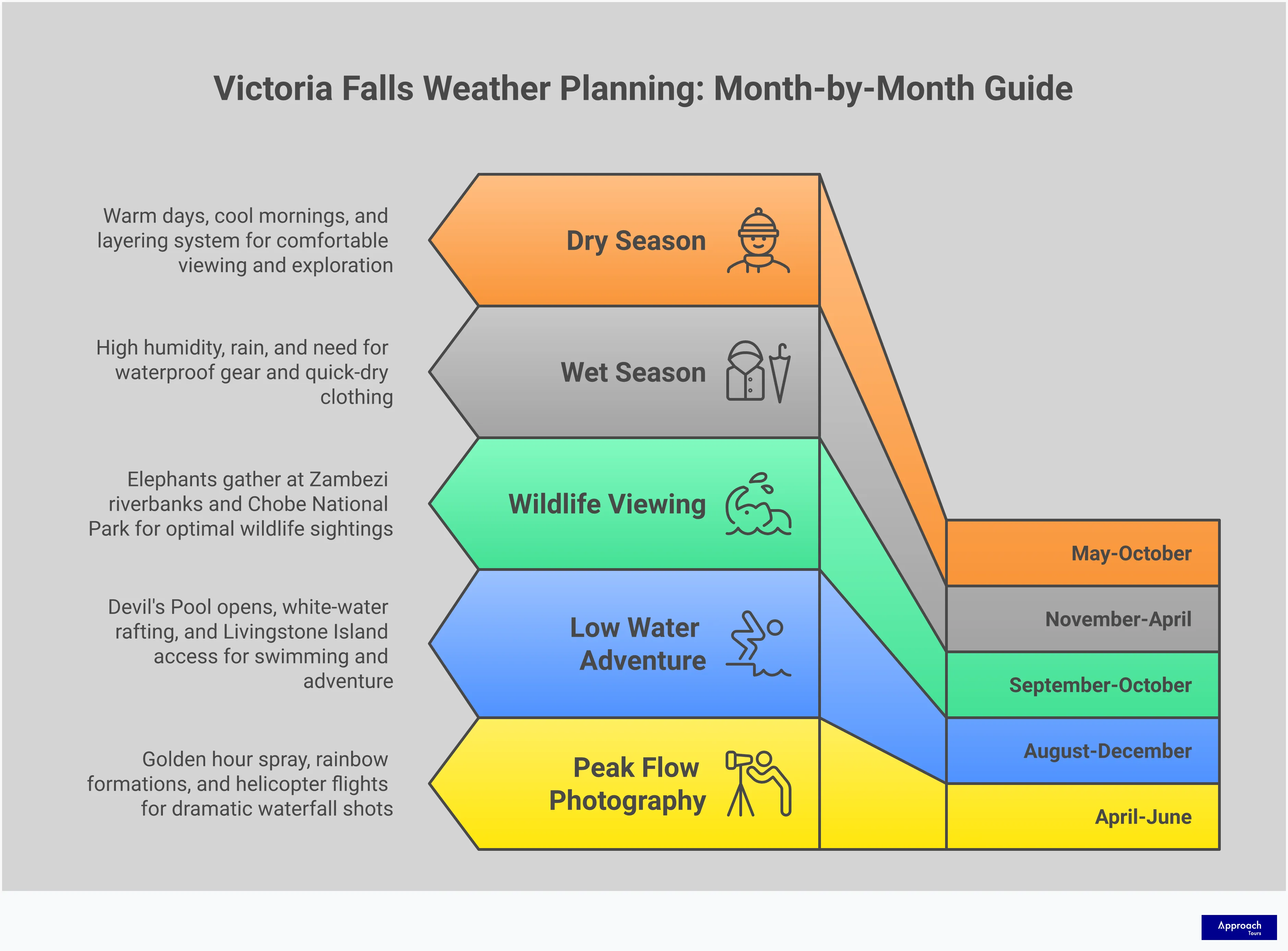
The Zambezi River’s Monthly Flow
Picture this: the rainy season arrives in the highlands of Angola far to the northwest. This is the source of the mighty Zambezi River. That rainfall begins a long and winding journey across the continent before it ever reaches the cliffs of Victoria Falls. Because of this great distance there is a significant delay between the local rainy season and the river’s peak flow. The water levels you see today are a result of rains that fell weeks or even months ago far upstream. This time lag is why the Falls are often at their most powerful after the local rains have already started to subside.
From Mighty Mist to Clear Vistas
During the High Water season from February to June the river is a force of nature. Up to 500 million litres of water per minute crash into the gorge below. This creates the legendary “Mosi-oa-Tunya” or “The Smoke that Thunders.” The air fills with a thick cooling mist that can soak you from hundreds of metres away and the roar is something you feel in your bones. While the power is awe-inspiring the immense spray can sometimes obscure the full view of the Falls from the ground.
Conversely the Low Water season from October to December offers a different kind of magic. The water volume drops significantly revealing the sheer rock faces and the incredible geological formation of the gorge. With crystal-clear visibility you can appreciate the full scale and depth of this natural wonder. It’s a fantastic time for photography as you can capture the intricate details of the cliffs that are hidden for much of the year.
Swimming Safely: When and Where to Go
The changing water levels also open and close opportunities for certain unique experiences. The most famous of these is the Devil’s Pool a natural rock pool right on the edge of the Falls. This thrilling swim is only possible when the river flow is low and slow enough to be safe. Typically the Devil’s Pool is open from mid-August to early January. For those seeking an adrenaline rush on the water the best time for white-water rafting is also during the Low Water season from August to December when the rapids are more exposed and exciting.
What Are the Best Activities for Each Season?
Victoria Falls is a destination that transforms with the seasons offering a different but equally spectacular experience throughout the year. The best activities often depend on the time of your visit and the flow of the mighty Zambezi River. Whether you dream of feeling the thunderous spray on your face or taking a dip at the edge of the world’s largest waterfall the timing of your tour will shape your adventure.
Top Picks for the Wet Season
If you want to witness the sheer unbridled power of Victoria Falls the wet season from January to June is your moment. This is when the Zambezi River is at its most forceful creating a spectacle of raw natural energy. The spray is so immense it can be seen from miles away earning the falls its local name Mosi-oa-Tunya or “The Smoke that Thunders.” While you will certainly get drenched on a walking tour the reward is a front-row seat to one of nature’s greatest shows often complete with dramatic afternoon storms and brilliant rainbows. For a truly breathtaking perspective a scenic helicopter flight offers an unparalleled view of the falls in their full glory.
Must-Do Adventures in the Dry Season
As the rains subside and water levels drop from July to December a new world of adventure opens up. With clearer skies and less spray the dry season provides incredible visibility of the gorge’s full geological structure. This is the prime time for thrill-seekers. The lower water levels make for the most exciting white-water rafting conditions on the Zambezi. For the truly daring this is also when Devil’s Pool typically opens. This natural rock pool sits right on the edge of the falls allowing you to swim in a spot that feels like the very end of the earth. It’s an unforgettable experience that is only possible during these drier months.
Enjoyable Activities All Year Round
While the falls themselves are the main attraction many wonderful activities are available no matter when you travel. A sunset cruise on the upper Zambezi River is a must-do offering serene views and the chance to spot hippos elephants and crocodiles along the banks. Cultural tours to nearby villages provide insight into the lives of the local people and their rich traditions. Bird watching is also exceptional particularly around September when migratory species arrive. Victoria Falls is a destination that constantly changes so you can always find something new and exciting to do whether you’re surrounded by misty spray or bathed in warm sunshine.
How to Pack for the Weather at Victoria Falls
Packing for Victoria Falls requires a bit of strategy. The key is preparing for two distinct experiences: the thundering spray of the falls and the warm dry air of the African bush. Your comfort often comes down to having the right layers and protection. The weather can shift quite a bit between the cool crisp mornings on a game drive and the warm humid afternoons by the falls. Thinking about your daily activities will help you build a practical and versatile travel wardrobe.
The region has two main seasons the wet and the dry and what you pack will depend heavily on when you travel. During the wet season you will want to focus on staying dry from both rain and the immense spray from the falls. In the dry season the focus shifts to layering for cool mornings and evenings while staying comfortable in the daytime heat. No matter when you visit a few key items will ensure you are prepared for any adventure that comes your way. A well-packed bag is the first step to a truly carefree experience.
Essentials for the Wet Season
If you are travelling between November and March you are visiting in the wet season. This means preparing for impressive afternoon rain showers and the falls at their most powerful. A lightweight raincoat or waterproof jacket is your most important item. An umbrella is often no match for the combination of wind and the sheer volume of mist coming off the falls. Quick-drying clothing is also a smart choice as you are almost guaranteed to get damp. Consider packing a pair of waterproof sandals or shoes with good grip for walking along the misty paths. Finally a waterproof bag or cover will give you peace of mind when photographing the falls.
Must-Haves for the Dry Season
The dry season from May to September offers clear skies and pleasant weather perfect for exploring. Days are warm and sunny but the evenings and early mornings can be surprisingly cool. Layering is the best approach. Pack lightweight long-sleeved shirts long pants and a warm fleece or sweater for those early morning game drives on the coach. As the day warms up you can shed layers to stay comfortable. For daytime exploring around the falls or in town T-shirts and light trousers or shorts are ideal. Remember that even in the dry season you will encounter some spray from the falls so a light water-resistant layer is still a good idea.
Year-Round Comfort and Health Items
A few items are essential no matter when you visit Victoria Falls. Comfortable walking shoes are non-negotiable as you will be on your feet exploring the beautiful trails. The African sun is strong so pack a wide-brimmed hat sunglasses and high-SPF sunscreen. Clothing made from light breathable fabrics like cotton or linen will keep you comfortable in the heat. For the evenings it is wise to use a good insect repellent to protect against mosquito bites. We also recommend checking the latest travel health notices from the Government of Canada before you depart to ensure you have all necessary precautions in place.
So When Is the Best Time to Visit Victoria Falls?
This is the million-dollar question isn’t it? The wonderful truth is that Victoria Falls is a spectacular destination any time of year. There isn’t a single “best” time to go because each season offers a completely different but equally breathtaking experience. The ideal time for your tour really comes down to what you hope to see and do. Are you dreaming of the thunderous roar of the falls at their absolute peak or do you prefer clearer skies for photography and wildlife spotting? Your answer will point you to the perfect spot on the calendar.
Find the Perfect Season for Your Travel Style
Deciding when to visit is all about matching the season to your personal travel style. The experience of the falls changes dramatically with the flow of the Zambezi River. It’s fascinating to know that the water levels don’t align with local rainfall. The river begins its long journey in Angola so there’s a delay before the water reaches the falls. This means you can have dry weather locally but still witness the river at full tilt. The wet season brings immense power and mist while the dry season reveals the sheer rock face of the gorge and opens up different adventure opportunities.
Balancing Spectacular Views with Your Comfort
Finding that sweet spot between magnificent views and comfortable weather is key to a perfect trip. While the falls are at their most powerful from April to June the immense spray can sometimes obscure the view and leave you completely drenched. For the best photographs and clearer visibility many travellers prefer the dry season from July to September. During these months the skies are generally clear the weather is pleasant and you can truly appreciate the scale of the gorge. This period often presents an ideal balance of good water levels comfortable dry-season weather and excellent wildlife viewing in nearby parks.
Related Articles
Frequently Asked Questions
What is the main difference between visiting during high water versus low water? The biggest difference is the sensory experience. During the high water season, from roughly February to June, you will feel the immense power of the Zambezi River. The sound is thunderous and the air is filled with a thick mist that will drench you. In contrast, the low water season from August to January offers incredible clarity. The mist subsides, revealing the full geological structure of the gorge and allowing for crystal-clear photographs.
How wet will I actually get when visiting the falls? During the peak flow from April to June, you should expect to get completely soaked, as if you have walked through a heavy rainstorm. The spray is powerful and constant. A good waterproof jacket is essential. During the drier months, especially from September to November, you will still encounter some light mist in certain viewing areas, but it is much more manageable and feels quite refreshing on a warm day.
When is the absolute best time for seeing wildlife? For the best wildlife viewing, plan your tour for the late dry season, from September to October. As other water sources in the region dry up, animals congregate in large numbers along the banks of the Zambezi River. This makes for fantastic game viewing opportunities on river cruises and drives in the nearby national parks, as the animals are more concentrated and easier to spot.
Is swimming in Devil’s Pool safe and when can I do it? Yes, the Devil’s Pool experience is managed by experienced guides who prioritize your safety. It is a thrilling activity where you can swim in a natural rock pool right at the waterfall’s edge. This adventure is only possible when the river’s flow is low enough to be safe, which is typically from mid-August through early January.
If I want good water flow and comfortable weather, when should I travel? For a wonderful balance of impressive water levels and pleasant weather, consider travelling between July and September. During this period, the Zambezi River still has a substantial flow, creating a spectacular sight without the overwhelming mist of the peak season. The days are warm and sunny with very little humidity, and the evenings are cool and comfortable, making it an ideal time for all activities.