Choosing when to travel is about more than just avoiding rain. It’s about deciding what you want your experience to feel like. Do you want to see the northern mountains when the terraced rice fields turn a brilliant gold just before harvest? Or would you prefer to relax on a southern beach with endless sunshine and blue skies? The seasons paint the country in different colours and create unique atmospheres. Determining the best time to visit Vietnam is about choosing the backdrop for your memories. This guide explores what each season offers from cultural festivals to outdoor adventures helping you find the perfect time to discover this captivating country.
Key Takeaways
- Plan Around Three Distinct Climate Zones: Vietnam’s great length means the weather differs from north to south. The north has four seasons the central coast has a specific typhoon season (Sept-Nov) and the south remains tropical year-round.
- Travel in Spring or Autumn for the Sweet Spot: For the best overall experience plan your tour for March-April or September-November. These months provide a beautiful balance of comfortable weather and smaller crowds across the entire country.
- Align Your Trip with Your Travel Style: Decide if you prefer the vibrant energy and sunny days of the peak season from December to March or the lush landscapes and quieter feel of the shoulder seasons.
What is Vietnam’s Weather Really Like?
Vietnam’s weather is a beautiful and complex tapestry woven from north to south. Because the country stretches over 1,650 kilometres you can experience several different climates on a single tour. This incredible diversity is part of its charm. It means that while one region is enjoying sunny skies another might be experiencing a refreshing afternoon shower. Understanding these regional patterns is the key to packing perfectly and making the most of every moment. You won’t find a single “best” time to visit the entire country. Instead the ideal season depends on which part of Vietnam captures your imagination. Are you dreaming of cruising through the limestone karsts of Halong Bay exploring the ancient streets of Hoi An or floating through the vibrant markets of the Mekong Delta? Each region has its own rhythm and its own perfect window for travel. This guide will help you understand the distinct climates from the cooler highlands of the north to the tropical warmth of the south so you can feel confident and prepared for your adventure.
The Cooler North (Hanoi and Sapa)
The north of Vietnam including the elegant capital of Hanoi and the misty mountains of Sapa has four distinct seasons. The most pleasant times to visit are spring (March to April) and autumn (September to November). During these months the weather is wonderfully mild with warm sunshine and clear skies perfect for strolling around Hoan Kiem Lake or exploring the Old Quarter. Winter from December to February is cool and dry with temperatures around 17–22°C. You’ll want to pack a sweater or light jacket especially for the evenings. Summer brings heat and humidity so light clothing is essential if you plan a visit during that time.
The Temperate Centre (Hoi An and Hue)
Central Vietnam home to the imperial city of Hue and the enchanting lantern-lit town of Hoi An enjoys a long stretch of beautiful weather from February to May. This is when you’ll find sunny days low humidity and comfortable temperatures ideal for cycling through rice paddies or discovering ancient temples. The region has a rainy season that can sometimes bring typhoons particularly from September to November. We carefully plan our tours to avoid this period ensuring your time in this historic heartland is as serene and enjoyable as possible. Exploring the UNESCO World Heritage site of Hoi An is best done when the sun is shining and the streets are dry.
The Tropical South (Ho Chi Minh City and Mekong Delta)
The south of Vietnam where you’ll find bustling Ho Chi Minh City and the lush Mekong Delta is consistently warm all year round. The climate here is divided into two simple seasons: dry and wet. The dry season runs from December to April and is the most popular time to visit offering endless sunshine and blue skies. The wet season from May to November might sound daunting but it shouldn’t be. Rain typically falls in short heavy bursts in the afternoon which can be a welcome refreshment from the heat. These brief showers rarely disrupt travel plans and often leave the air feeling fresh and clean making the Mekong Delta’s vibrant green landscapes even more spectacular.
When is the Best Time to Visit Vietnam?
Vietnam’s incredible length means its weather varies dramatically from north to south. While there’s no single time that’s perfect for the entire country you can absolutely find a sweet spot for your tour. Pinpointing the best time to visit Vietnam depends on which regions you want to explore and what kind of weather you enjoy most. Generally the country’s most pleasant seasons offer a wonderful balance of sunshine and comfortable temperatures making your explorations a true delight.
Most seasoned travellers agree that the ideal windows to visit are during the spring and autumn months. These periods let you avoid the intense heat of the summer and the heaviest rainfall of the monsoon season. From March to April the country awakens in a gentle spring with mild weather perfect for sightseeing. Later in the year from September to November a golden autumn brings drier days and comfortable warmth. The winter months from December to February are also a fantastic option especially if you’re seeking sunshine in the south while the north remains cool and crisp. These seasons provide the most favourable conditions to fully experience Vietnam’s culture from its ancient temples to its bustling city streets.
March to April: The Gentle Spring
Spring is arguably the most beautiful time to see Vietnam. From March to April the entire country enjoys moderate temperatures and lower rainfall creating perfect conditions for discovery. In the north the air in Hanoi is pleasantly warm and the iconic limestone karsts of Ha Long Bay are often draped in a soft morning mist that adds to their mystique. Central Vietnam including Hoi An and Hue is sunny and dry making it ideal for strolling through ancient streets or relaxing on the beach. The south is also entering its dry season so you can explore the Mekong Delta under clear blue skies. This is a time of renewal and the vibrant green landscapes are truly a sight to behold.
September to November: The Golden Autumn
As the summer rains subside autumn ushers in a glorious season of dry sunny weather. From September to November the humidity drops and the climate becomes much more comfortable across Vietnam. This is a particularly stunning time to visit the northern mountains where the rice terraces turn a brilliant gold just before harvest. The weather is perfect for outdoor activities and you’ll find comfortable temperatures for exploring cities like Hanoi and Ho Chi Minh City. Central Vietnam is moving past its rainiest period making it a great time to visit the historic town of Hoi An as it glows with lantern light in the pleasant evening air. This season offers a beautiful and comfortable backdrop for your adventures.
December to February: The Dry and Sunny Season
If you’re looking to escape the Canadian winter this is the time to go. December through February marks the peak tourist season in Vietnam for good reason. The weather is at its absolute best particularly in the south where you can expect endless sunshine and blue skies perfect for cruising the Mekong Delta. Central Vietnam is also dry and warm. The north is cooler and can be quite crisp especially in the evenings but it’s generally dry and clear making it a wonderful time for city exploration in Hanoi. This period also includes the vibrant celebrations for Tet the Lunar New Year which offers a fascinating glimpse into Vietnam’s most important cultural festival.
What Weather Should You Plan Around?
Vietnam’s weather is a beautiful and complex tapestry woven from two distinct monsoons. This creates different climate zones from north to south which means that while one region is basking in sunshine another might be experiencing a refreshing afternoon shower. This variety is part of Vietnam’s charm and it’s entirely possible to have a wonderful trip any time of year. However knowing about a few specific weather patterns will help you plan your perfect tour.
Thinking about the weather isn’t about avoiding certain months entirely. It’s about matching the right season to the experiences you’re dreaming of. Whether you envision yourself gliding through Halong Bay under clear blue skies or wandering through ancient temples in comfortable temperatures understanding these key weather events is the first step. With a little planning you can ensure your time in Vietnam is as comfortable as it is captivating.
Central Vietnam’s Typhoon Season
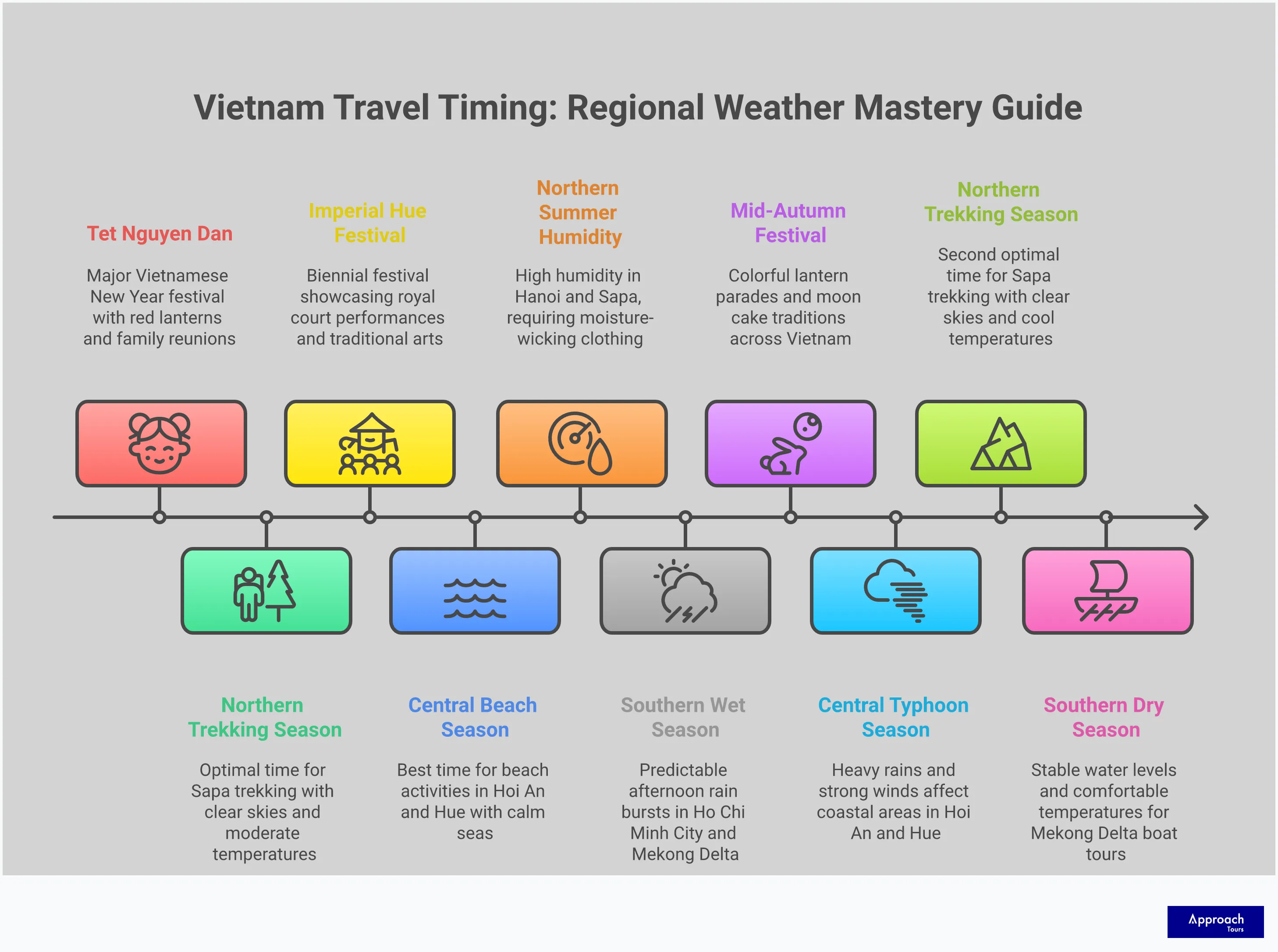
The coastal cities of Central Vietnam like Hoi An Hue and Da Nang can experience a typhoon season. This typically runs from August to November with storms being more frequent from September to November. During this period the region can see heavy rains and strong winds which may affect travel plans like flights and boat tours. While the dramatic weather can be a sight to behold it’s not ideal for sightseeing or relaxing on the beach. We always monitor the weather forecasts closely to ensure the safety and comfort of our travellers. Planning your visit outside of these months is the best way to experience the imperial architecture and lantern-lit streets of this historic region in all their glory.
The North’s Summer Heat
Northern Vietnam including the vibrant capital of Hanoi and the stunning landscapes of Sapa experiences a hot and humid summer from May through August. Temperatures often climb above 35°C (95°F) and the high humidity can make it feel even warmer. This intense heat can make long days of exploring temples or trekking through rice terraces quite draining. While the countryside is lush and green this time of year the weather can be uncomfortable for those not accustomed to tropical heat. If you prefer milder conditions for your outdoor adventures you might find the spring or autumn months in the north more pleasant and comfortable for a full day of discovery.
Understanding Regional Rainy Seasons
The term “rainy season” can sound a bit daunting but in Vietnam it doesn’t mean constant downpours. For most of the country the main rainy season is from June to September. In the south around Ho Chi Minh City and the Mekong Delta the wet season lasts from June to November. However the rain here is often predictable and manageable. It typically arrives in a short heavy burst in the afternoon which can be a welcome and refreshing break from the humidity. These showers rarely disrupt travel for long and often leave behind clear skies and cooler air making it a perfectly fine time to explore the region.
Should You Travel in Peak or Shoulder Season?
Deciding when to visit Vietnam often comes down to a simple choice: do you prefer the vibrant energy of a country in full swing or the quiet charm of a more relaxed pace? Every season in Vietnam offers a unique experience and understanding the difference between peak and shoulder season travel will help you find the perfect fit. Peak season brings glorious weather and a bustling atmosphere while the shoulder seasons offer a sweet spot of pleasant days and fewer fellow travellers. Each has its own appeal and knowing what to expect can help you plan a tour that feels just right for you.
The Buzz of High Season (December to March)
High season in Vietnam is popular for a reason. From December to March the country enjoys some of its best weather with dry sunny days and comfortable temperatures perfect for exploring ancient temples or relaxing on a Halong Bay cruise. This is when Vietnam feels most alive. Markets are bustling streets are filled with energy and there’s a palpable excitement in the air. If you thrive on this kind of vibrancy and want to experience Vietnam at its most dynamic this is an ideal time to go. Just be prepared for more company at famous sites. The excellent weather draws travellers from around the world so you’ll want to plan for a more popular and lively experience.
The Sweet Spot of Shoulder Season (April-May and Sept-Nov)
For many travellers the shoulder seasons are Vietnam’s best-kept secret. Spanning from April to May and again from September to November these months offer a beautiful balance of good weather and smaller crowds. You’ll find more room to breathe at historical sites and a more tranquil atmosphere overall. The weather is generally very pleasant making it a wonderful time for outdoor activities. An added bonus of travelling just after the rainy season is that the countryside is incredibly lush and green. This is the perfect time to discover Vietnam’s landscapes when the rice paddies are at their most vibrant and the scenery is simply spectacular. It’s a chance to see the country in its full natural glory with all the comfort of a high-season tour.
What to Know About Low Season Travel
Travelling during Vietnam’s low season from roughly May to early September is an option for those who truly want to have the place to themselves. The primary reason for fewer visitors is the weather which can be hot humid and wet as the monsoon season rolls through different regions. However “rainy season” doesn’t always mean constant downpours. Often it’s just a heavy but brief shower in the afternoon leaving the rest of the day clear. If you don’t mind the heat and an occasional rain shower you’ll be rewarded with serene temples quiet beaches and the feeling that you’re experiencing a more local side of Vietnam without the crowds.
How to Plan Your Trip Around Vietnam’s Festivals
Timing your tour to coincide with a festival is like receiving a special invitation into the heart of Vietnamese culture. The country’s calendar is dotted with vibrant celebrations that transform cities and villages into lively stages for ancient traditions music and community connection. From the nationwide joy of the Lunar New Year to the unique charm of a local village event planning around these dates offers a richer more immersive experience.
These festivals are a feast for the senses. Imagine streets draped in brilliant red and gold lanterns the scent of traditional foods wafting from family homes and the sound of drums echoing during a lion dance. It’s a chance to see history come alive and witness the deep-rooted customs that shape daily life. While some major festivals can mean larger crowds and busier travel it’s a small price to pay for the unforgettable memories and deeper understanding you’ll gain. An expertly planned tour can help you enjoy the spectacle without the stress letting you focus on the magic of the moment.
Celebrating Tet (The Lunar New Year)
Tet Nguyen Dan or Tet is the most important celebration in Vietnam. It marks the arrival of spring on the lunar calendar and usually falls between late January and mid-February. This is a time of renewal and reunion when families travel across the country to be together honour their ancestors and welcome the new year with hope. The streets buzz with energy as people shop for peach blossoms and kumquat trees which symbolize luck and prosperity. Planning your trip around Tet offers a spectacular window into Vietnamese culture and the traditions that bind families together. It’s a truly special time to witness the country at its most festive.
Experiencing the Imperial Hue Festival
For a deep appreciation of Vietnam’s royal past the Imperial Hue Festival is an unmissable event. Held every two years in the former imperial capital this celebration brings the city’s history to life. Usually taking place in April the festival fills the ancient citadel and temples with a magnificent array of performances. You can enjoy traditional court music stunning dance exhibitions and impressive art displays that showcase the nation’s rich artistic heritage. Attending the various festivals in Vietnam is wonderful but this one in particular lets you step back in time and experience the grandeur of the Nguyen Dynasty in a truly captivating way.
The Magic of the Mid-Autumn Festival
The Mid-Autumn Festival is one of the most enchanting celebrations in Vietnam. Held on the full moon of the eighth lunar month typically in September it’s a joyous occasion for families to gather and celebrate the year’s harvest. The festival is famous for its colourful lantern parades that light up the evening streets creating a magical atmosphere. Children and adults alike delight in lively lion dances and share delicious moon cakes a traditional treat filled with sweet paste and salted egg yolk. It’s a beautiful time to be in Vietnam as the air fills with a sense of community and wonder making it one of the most beloved traditional festivals.
Discovering Local Markets and Village Festivals
Beyond the major national holidays Vietnam’s cultural fabric is woven with countless local festivals. Many villages host their own unique celebrations throughout the year often tied to the agricultural calendar local deities or legendary figures. These smaller events offer an incredibly authentic glimpse into the daily lives and beliefs of the Vietnamese people. You might stumble upon a boat race a folk singing competition or a ceremony honouring a village’s founder. Exploring these local markets and festivals is a fantastic way to connect with the community and discover traditions that have been passed down for generations. These moments often become the most cherished memories of a trip through Vietnam.
What Are the Best Activities for Each Season?
Vietnam’s diverse climate means that no matter when you travel there is always a perfect activity waiting for you. The country’s elongated shape creates distinct weather patterns from north to south so you can tailor your experiences to the season. Whether you dream of walking through emerald rice paddies under a clear sky relaxing on a sun-drenched beach or exploring ancient cities without breaking a sweat timing is everything. Understanding the seasonal rhythm of Vietnam allows you to fully immerse yourself in its culture and landscapes making for a truly unforgettable tour.
Exploring the Outdoors in Cooler Months
The cooler dry months are a gift for anyone who loves to explore on foot. From September to November and again from March to May the north of Vietnam sheds its summer humidity. This is the ideal time for scenic walks through the terraced rice fields of Sapa where the air is crisp and the landscapes are breathtakingly green. The weather is pleasant enough for a full day of discovery without the intensity of the tropical sun. Imagine wandering through hill tribe villages learning about local life and taking in the panoramic mountain views. These seasons offer the perfect conditions to connect with Vietnam’s stunning natural beauty at a comfortable pace.
Relaxing on the Coast
When thoughts turn to sand and sea southern Vietnam’s coastline beckons. The prime time for a coastal escape is during the dry season from December to April. During these months the sun shines brightly over the tranquil waters of the South China Sea. Islands like Phu Quoc become idyllic retreats with calm seas and golden beaches perfect for unwinding. You can spend your days lounging with a good book sipping fresh coconut water and enjoying the gentle sea breeze. This is the season to truly relax and soak in the tropical paradise that defines Vietnam’s southern shores making it a perfect interlude in your travels.
Visiting Temples and Cultural Sites
Vietnam’s cities are treasure troves of history and culture best explored when the weather is mild. While you can visit cultural sites year-round the spring months of March and April and the autumn months of October and November offer the most comfortable climate for sightseeing. Picture yourself wandering through the ancient streets of Hoi An’s Old Town a UNESCO World Heritage site without the interruption of heavy rain or intense heat. You can explore the majestic Imperial City of Hue or the quiet courtyards of Hanoi’s Temple of Literature with ease. These temperate seasons allow for a deeper more leisurely appreciation of Vietnam’s rich history and architectural wonders.
Enjoying Seasonal Cooking and Culinary Tours
A trip to Vietnam is a feast for the senses and its cuisine is a highlight for many travellers. Culinary experiences like cooking classes and market tours are fantastic year-round activities that connect you directly to the local culture. Vietnamese cooking is a celebrated art form and learning to prepare traditional dishes offers a unique window into the country’s soul. You can join a local chef to browse a bustling market for fresh herbs and spices before creating your own pho or fresh spring rolls. These hands-on culinary classes provide more than just a meal they offer a memorable and delicious understanding of Vietnamese traditions.
How to Time Your Perfect Vietnam Itinerary
Timing is everything when planning a trip that spans the length of a country as diverse as Vietnam. From the cool highlands of the north to the tropical Mekong Delta in the south coordinating your visit with the seasons ensures every moment is comfortable and captivating. Thinking about the kind of experience you want—whether it’s an in-depth exploration of one area or a grand tour of the entire nation—will help you choose the perfect time to go.
Focusing on a Single Region
If you dream of truly immersing yourself in one part of Vietnam timing your visit is wonderfully straightforward. For the north home to Hanoi and the breathtaking Halong Bay the best seasons are spring (March to May) and autumn (September to November). During these months the weather is pleasant and mild making it ideal for strolling through ancient city streets or watching limestone karsts drift by from the deck of a boat. This timing helps you avoid the winter chill and the intense humidity of summer.
Planning a Seamless North-to-South Tour
The beauty of Vietnam’s geography is that you can almost always find good weather somewhere. For a comprehensive tour that covers the country from top to bottom the best time to visit Vietnam is generally between November and April. This window is the sweet spot when most of the country is dry and sunny. You can experience the cool air of Hanoi in the north and arrive in the south’s sunny Ho Chi Minh City without worrying about significant rain. A well-planned tour handles all the logistics so you can simply enjoy the seamless transition between climates and cultures.
Getting Around Vietnam by Season
Your travel experience is shaped by the seasons. The dry season from November to April is perfect for moving around the country. Clear skies make for spectacular views on scenic coach rides through mountain passes like the Hai Van Pass. The rainy season from May to October presents a different picture. While it can bring heavy downpours especially in the south these are often short-lived and leave the landscape incredibly lush and vibrant. A sudden shower can be a great excuse to duck into a charming café for a Vietnamese coffee while you wait for the sun to return.
When to Book Your Accommodations
To ensure your trip is as smooth as the silk you’ll find in Hoi An’s shops it’s wise to book well in advance. This is especially true if you plan to travel during the peak season from December to March when many travellers seek out Vietnam’s sunshine. For a more relaxed pace consider the shoulder seasons of April to May and September to November. You’ll often find fewer crowds and more availability at top hotels. Planning ahead with a tour operator removes this stress entirely securing your place in comfortable accommodations no matter when you choose to travel.
Related Articles
- How to Choose the Perfect Vietnam Tour for You
- Dos & Don’ts: Crossing the street in Vietnam
- Tribes and Villages of Vietnam
- Compelling Cities & Historic Small Towns of Vietnam
- 8 Cool Creatures in Vietnam and Cambodia
Frequently Asked Questions
What should I pack for Vietnam’s diverse weather? Packing for Vietnam is all about smart layers. For the south and during the summer months think light breathable fabrics like cotton and linen. For the cooler northern winters from December to February you will want a sweater or a light jacket for the evenings. A light waterproof jacket is also a wise addition no matter the season as a brief shower can pop up. Most importantly bring comfortable walking shoes as you will want to explore ancient temples and bustling city streets with ease.
Should I really avoid travelling during the rainy season? Not at all. The term “rainy season” can be misleading. In Vietnam it rarely means a full day of constant rain. More often you will experience a short heavy downpour in the afternoon which can be a welcome refreshment from the heat. These showers usually pass quickly leaving the air feeling clean and the landscapes looking incredibly lush and vibrant. Our tours are planned so these brief interruptions cause minimal disruption letting you enjoy the scenery at its most spectacular.
I want to see the whole country. Is there one perfect month to go? If you are planning a grand tour from north to south the window between November and April is your best bet. This period offers the most favourable weather across the entire country. You will get to experience the crisp dry air of Hanoi in the north travel through the sunny central coast and arrive in the warm tropical climate of Ho Chi Minh City in the south all while enjoying comfortable conditions for sightseeing.
How hot and humid does it actually get? Will I be comfortable? Vietnam is a tropical country so you can expect warmth and humidity particularly in the south. However our tours are designed with your comfort in mind. You will travel between destinations in a modern air-conditioned coach and your hotels are chosen for their comfort and amenities. We pace our days to avoid the most intense heat and ensure there are plenty of opportunities to rest and refresh so you can enjoy your explorations fully.
What is it like to travel during Tet (Lunar New Year)? Travelling during Tet is a truly special experience that offers a front-row seat to Vietnam’s most important cultural celebration. The country is alive with festive energy streets are decorated with flowers and there is a palpable sense of joy and renewal. While some shops and restaurants may have limited hours and travel can be busier this is where travelling with a tour operator makes all the difference. We handle all the logistics so you can simply immerse yourself in the magic of the celebrations.