While understanding the four main seasons gives you a great overview the magic of Kruger truly reveals itself in the month-to-month details. Each month offers a distinct personality with unique sights sounds and safari experiences. Whether you dream of dramatic summer thunderstorms that wash the dust from the air or crisp winter mornings under a vast clear sky the park’s ever-changing character has something special in store. This detailed guide will walk you through the entire year exploring the kruger weather by month and helping you picture exactly what your adventure could look like so you can choose the perfect time for your unforgettable tour.
Key Takeaways
- Choose your ideal safari experience by season: The dry winter (May to September) is best for spotting lots of animals easily, while the wet summer (October to April) is perfect for seeing lush scenery, baby animals and vibrant birdlife.
- Focus on June through August for maximum wildlife sightings: During these peak dry months, the thinned-out bush and shrinking water sources make finding animals, including the Big Five, much simpler.
- Always pack layers for comfort on game drives: A warm fleece or jacket is essential for cool mornings in the open safari vehicle, even during warmer seasons, ensuring you can focus on the sights instead of the chill.
A Guide to Kruger’s Seasons
Kruger National Park is a destination for all seasons with each period offering a completely different but equally magical experience. The park transforms dramatically throughout the year from a lush green paradise teeming with newborns to a dry golden landscape where wildlife is easy to spot. Understanding these shifts is the key to planning your perfect safari adventure. Whether you dream of dramatic thunderstorms over the savanna or crisp mornings with unparalleled game viewing there is a season in Kruger that will capture your heart. Let’s explore what each time of year has in store.
Summer (December to February): The Lush Green Season
Summer washes Kruger in vibrant shades of green. This is the rainy season a time of hot humid days and dramatic afternoon thundershowers that clear the air and leave the bushveld smelling fresh and clean. Temperatures often climb above 30°C but the rain brings life. The landscape is thick and beautiful providing a stunning backdrop for your photographs. While the dense foliage can make spotting animals a little more challenging this season has its own rewards. It’s a fantastic time for birdwatching as migratory birds arrive in their colourful flocks. Many animals also give birth filling the plains with wobbly-legged newborns.
Autumn (March to May): Golden Light and Milder Days
As summer’s intensity fades autumn ushers in a period of pure bliss. The heavy rains subside the humidity drops and the days become comfortably warm with cooler nights perfect for sleeping. The park’s lush greenery begins its slow transformation into the golden hues of the dry season. This is a photographer’s dream as the soft golden light of late afternoon bathes the landscape in a warm glow making every snapshot feel like a masterpiece. The thinning vegetation makes wildlife a bit easier to see and the pleasant weather is ideal for long leisurely game drives. It’s a season of beautiful balance offering comfortable conditions and excellent viewing opportunities.
Winter (June to August): Prime Game Viewing in the Dry Season
For many winter is the ultimate time for a Kruger safari. This is the dry season and the reasons are clear: visibility is unmatched. With little to no rain the bush thins out dramatically and temporary water sources dry up. This forces animals to congregate around permanent rivers and waterholes making them much easier to find. The weather is lovely with mild dry days and cool mornings that might require a cozy blanket in your safari vehicle. With average daytime temperatures around 16°C it’s incredibly pleasant. This is your best chance to witness incredible wildlife spectacles and tick the Big Five off your list.
Spring (September to November): New Life and Warming Temperatures
Spring is a season of powerful transition and anticipation. It begins hot and dry with windy conditions that carry over the superb game viewing from winter. Animals remain concentrated near water making for fantastic sightings. As the season progresses temperatures build until the first rains arrive usually in November. This long-awaited water breathes new life into the parched landscape coaxing out fresh green shoots and colourful wildflowers. The transformation is remarkable to witness. It’s also a time when many grazers give birth taking advantage of the tender new growth. Spring offers the best of both worlds: the end of the prime viewing season and the beautiful beginnings of the green season.
When is the Best Time for a Kruger Safari?
Deciding when to visit Kruger National Park is less about finding the “best” time and more about discovering the right time for you. Each season offers a completely different but equally magical experience, painting the vast landscape in a new light. The park’s character shifts dramatically with the rains, transforming everything from the colour of the bush to the behaviour of the animals. Understanding these changes will help you plan the safari that matches your vision.
Imagine the dry season: a world of gold and khaki where the air is crisp and clear. The thinned-out vegetation makes spotting a leopard lounging in a tree or a herd of elephants marching to a waterhole much easier. This is the classic safari scene many dream of, with concentrated wildlife and dramatic, unobstructed views. Now picture the wet season: a vibrant explosion of green. The air is thick with the scent of rain-soaked earth, baby animals take their first wobbly steps and the sky is filled with the jewel-like colours of migratory birds. It’s a photographer’s paradise, a time of renewal and abundance. Your choice of season will shape your entire tour, influencing the rhythm of your days and the memories you bring home.
Why Visit in the Dry Season (May to September)
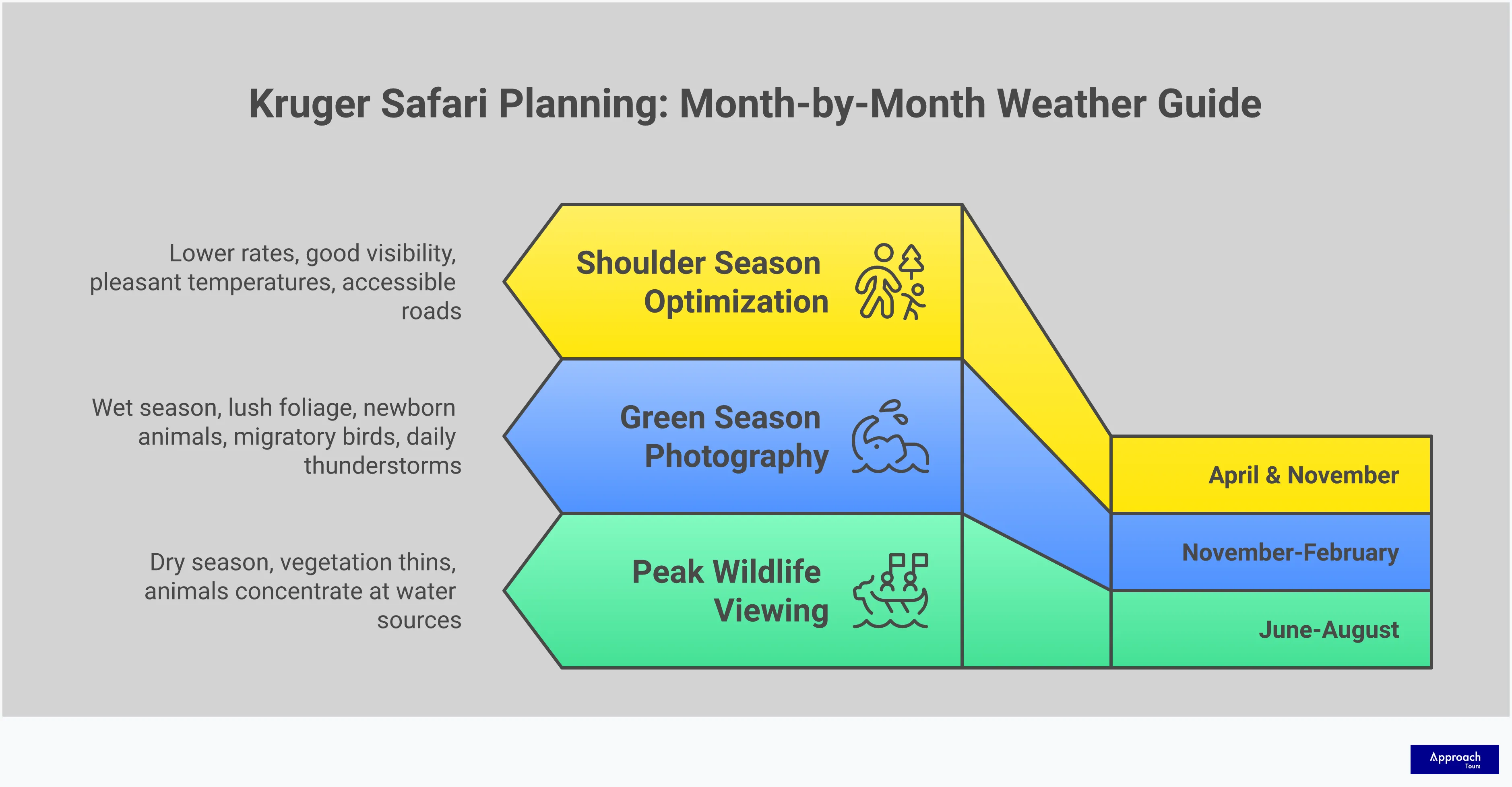
For many, the dry winter season is the classic safari experience. From May to September the landscape transforms into a palette of gold and brown. The bush thins out considerably and grasses are low, creating unobstructed views perfect for spotting wildlife. With water becoming scarce, animals instinctively gather around the remaining rivers and waterholes. This makes for truly spectacular game viewing as you can often see large herds of elephants, buffalo and antelope in one place. The days are pleasantly warm and sunny with very little rain and the evenings are cool, ideal for cozying up after a day of adventure.
The Magic of the Wet Season
The wet summer season from October to April breathes new life into the park. The first rains turn the dry bush into a vibrant green paradise, thick with lush vegetation and blooming wildflowers. This is a stunning time for photography. It’s also the birthing season for many animals, so you’ll have a wonderful chance to see adorable baby impalas, wildebeest and zebras taking their first steps. For bird lovers, this season is unmatched. Hundreds of migratory bird species arrive, filling the air with colour and song. While the thicker foliage can make spotting game a bit more challenging, the rewards are a vibrant, thriving ecosystem.
Pinpointing the Peak Months for Wildlife
If your main goal is to see as much wildlife as possible, the heart of the dry season from June to August is your best bet. These are the driest and coolest months in the park. The lack of rain means vegetation is at its thinnest and you can often see for miles. Animals don’t have to search far for company as they congregate in large numbers at predictable water sources. This concentration of wildlife makes for fantastic and frequent sightings on your game drives. The risk of malaria is also at its lowest during these months, offering extra peace of mind while you travel.
Discovering the Shoulder Seasons in April and November
The shoulder months of April and November offer a beautiful blend of both seasons. In April the rains have subsided but the landscape is still wonderfully green and the air is clear and fresh. Temperatures are mild and comfortable, making it a fantastic time to be out in the park. November is another transitional month. The first rains of summer begin to fall, encouraging new growth and signaling the start of the birthing season. It’s a time of renewal and excitement in the bush as migratory birds start to return and the promise of the lush season is in the air.
A Closer Look: Kruger’s Weather Month by Month
While understanding the four main seasons gives you a great overview the magic of Kruger truly reveals itself in the month-to-month details. Each month offers a distinct personality with unique sights sounds and safari experiences. Whether you dream of dramatic summer thunderstorms that wash the dust from the air or crisp winter mornings under a vast clear sky the park’s ever-changing character has something special in store. This detailed guide will walk you through the entire year helping you picture exactly what your adventure could look like.
We will explore how the shifting weather patterns influence everything from the colour of the landscape to the behaviour of the animals. Knowing these nuances helps you plan not just for the weather but for the specific kind of safari you want to have. For instance the dry season offers easier game viewing as animals gather at waterholes while the wet season brings lush scenery and adorable baby animals. By looking at the park’s calendar month by month you can align your travel dates with your personal interests whether that’s photography birdwatching or simply soaking in the vibrant life of the African bush. This closer look will ensure you can choose the perfect time for your unforgettable tour of the magnificent Kruger National Park.
January: Lush Landscapes and Afternoon Showers
January plunges you into the heart of Kruger’s summer. Expect hot humid days with temperatures often soaring above 30°C. This is the wet season in full swing so afternoon thundershowers are a daily ritual. These downpours are often brief but intense transforming the landscape into a sea of vibrant green. The bush is thick and alive making for breathtaking scenery. While the dense foliage can make spotting animals a little more challenging the park is full of life with many young animals and a symphony of bird calls filling the air.
February: Dramatic Skies and Active Wildlife
February continues the summer trend with extremely humid conditions and a high chance of spectacular thunderstorms. The skies can turn dark and dramatic in the afternoons creating an incredible backdrop for photography. The rain revitalizes the rivers and waterholes dispersing wildlife throughout the park. You will find animals looking healthy and content with the abundance of food and water. This is a fantastic time to see the park’s ecosystem thriving. The lush environment and active wildlife make for a truly immersive safari experience.
March: The Gentle Transition to Autumn
As March arrives you can feel a subtle shift in the air. The intense heat and humidity of mid-summer begin to soften and the rainfall becomes less frequent. The days are still wonderfully warm but the evenings start to carry a hint of coolness. The landscape remains lush and green from the summer rains but the vegetation slowly begins to thin out. This gentle transition toward autumn offers a comfortable climate for game drives making it a lovely time to explore the park without the peak summer intensity.
April: Clear Days and Comfortable Temperatures
April is a favourite for many travellers and for good reason. The rainy season has largely passed leaving behind clear blue skies and wonderfully pleasant weather. The days are warm and sunny while the nights become comfortably cool. The humidity drops significantly making for perfect safari conditions from sunrise to sunset. The bush is still quite green but starts to recede making wildlife a little easier to spot. It’s a beautiful month that combines the lingering vibrancy of the wet season with the comfortable climate of the approaching dry season.
May: The Start of the Dry Season’s Superb Viewing
May officially marks the beginning of the dry season and with it comes a noticeable change in the park. The days are mild and golden while the nights turn chilly so you will want to pack layers for your morning game drives. As seasonal waterholes begin to dry up animals start congregating around the larger rivers and permanent water sources. This is when wildlife viewing becomes truly superb. The thinning vegetation and predictable animal behaviour make for incredible sightings. It’s the perfect time to witness the drama of the bush unfold.
June: Cool Mornings and Unbeatable Visibility
June is the heart of winter in Kruger. Prepare for cold mornings and evenings where a warm jacket hat and gloves are essential for those early starts in an open safari vehicle. However the days warm up beautifully under a clear sunny sky. With average temperatures around 16°C it’s very comfortable for daytime exploring. The air is dry and the vegetation is sparse offering unbeatable visibility. This is a prime time for photographers and anyone keen on spotting elusive animals like leopards who are easier to see in the bare branches of trees.
July: The Heart of Winter and Concentrated Wildlife
July continues the trend of dry cool weather with very cold mornings that quickly give way to pleasant sun-filled days. The landscape is at its driest and most sparse. This is considered one of the absolute best months for wildlife sightings. With water being a scarce resource animals have no choice but to gather at the few remaining rivers and waterholes. This concentration of wildlife provides incredible viewing opportunities and you can often see large herds of elephants buffalo and antelope all in one place.
August: Warming Days and Busy Waterholes
In August you can feel the first hints of spring on the horizon. The days become warmer and the bone-dry conditions persist. The nights remain cold but the daytime temperatures are very agreeable. Wildlife viewing is still exceptional as animals continue to flock to the busy waterholes. The lack of vegetation makes tracking animals much easier for your guides. It’s a month of high activity and anticipation as the bush waits for the first rains to return.
September: Spring’s Arrival and New Growth
September signals the official arrival of spring. The weather turns hot dry and sometimes windy as the season changes. While it’s still the dry season you may see the first signs of new life as some trees begin to blossom in anticipation of the coming rains. The wildlife viewing remains excellent particularly around water sources. This is a time of transition and excitement in the park. The warming temperatures and continued lack of rain create a sense of urgency at the waterholes making for some truly memorable sightings.
October: Hot Days and Abundant Animal Sightings
October is a month of extremes. The temperatures climb significantly and the heat can be intense before the rainy season truly begins. The land is parched and animals are heavily concentrated around any available water making this another fantastic month for game viewing. You might experience the first thunderstorms of the season which can bring welcome relief from the heat. The combination of hot dry conditions and the start of the rains makes for a dynamic and exciting time to be on safari.
November: The First Rains and Returning Birds
November is characterized by very hot and increasingly humid weather as the rainy season gets underway. Afternoon thundershowers become more common transforming the dusty landscape with bursts of green. One of the biggest highlights of November is the return of migratory birds. The park fills with the vibrant colours and songs of species arriving from Europe and other parts of Africa. For bird enthusiasts this is an absolutely magical time to visit and witness the incredible avian diversity of Kruger.
December: The Vibrant Return of the Green Season
December marks the peak of summer in Kruger with hot humid and rainy conditions. The park is transformed into a lush green paradise a stark contrast to the dry winter months. This is the time when many animals give birth so you have a wonderful chance of seeing baby impalas wildebeest and zebras taking their first steps. The daily rains refresh the air and settle the dust. While the thick vegetation can make game viewing more of a challenge the sheer beauty of the verdant landscape makes it a stunning time to visit.
How Weather Shapes Your Safari Experience
The rhythm of Kruger National Park is dictated by its two distinct seasons: the dry winter and the wet summer. Each season completely transforms the landscape and dramatically influences animal behaviour. Understanding this natural cycle is the key to planning your ideal safari because what you see and how you see it changes with the weather. From the thickness of the bush to the location of the nearest water source the climate acts as the ultimate safari director setting the stage for the incredible wildlife encounters you’re about to have.
Where to Find Animals in the Dry vs. Wet Seasons
During the dry winter months from May to September the park’s water sources shrink. Rivers recede to pools and pans dry up forcing animals to congregate around the few remaining permanent waterholes and rivers. This predictable pattern makes finding wildlife much easier for guides. In contrast the wet summer season from October to April brings abundant water across the park. Animals no longer need to travel far for a drink so they disperse throughout the vast landscape. While they may be more spread out the search is part of the adventure and the sightings are just as rewarding.
How Vegetation Affects What You See
The seasons don’t just affect where animals go they also change how easily you can see them. The dry season is prime time for game viewing because the vegetation thins out considerably. Trees lose their leaves and grasses turn golden and low making it much easier to spot a leopard lounging in a tree or a lion stalking through the savanna. The wet season paints the park in a lush vibrant green. While breathtakingly beautiful this thick foliage can create a curtain that makes wildlife spotting more of a challenge. It requires a bit more patience and a keen eye to see animals through the dense bush.
When to Spot Newborn Animals
If your heart is set on seeing baby animals the wet summer season is pure magic. The abundance of food and water creates the perfect environment for new life to flourish. This is the calving and birthing season for many species. You’ll have a wonderful chance to see wobbly-legged impala lambs taking their first steps playful elephant calves splashing in the mud and countless other young animals. It’s a time of renewal and energy that fills the park with heartwarming scenes. The lush greenery also attracts a stunning variety of migratory birds making it a fantastic time for bird-watching.
Navigating the Park in Different Conditions
Kruger’s vast network of roads includes both paved and gravel routes. During the dry season all roads are generally accessible. However the heavy afternoon thunderstorms of the wet season can sometimes make gravel roads muddy and impassable. Low-water bridges may also close temporarily due to rising river levels. This is where travelling on a well-planned tour makes all the difference. Your expert driver and Group Guru are aware of the conditions and will stick to the best routes ensuring your safari is always safe comfortable and focused on incredible wildlife viewing without you having to worry about a single detail.
Packing Smart: What to Bring for Your Kruger Safari
Knowing what to pack can make all the difference between a good safari and a great one. The key is to prepare for a range of temperatures and conditions. From chilly pre-dawn game drives to warm afternoons under the African sun your comfort is paramount. Think practical versatile pieces that will keep you comfortable while you soak in the incredible sights of the bush. Here is a simple guide to help you pack with confidence.
Staying Healthy: A Note on Malaria Season
Your health and safety are the top priorities. It is important to know that Kruger National Park is in a malaria zone. While the risk is very low it is slightly more prevalent during the wet summer months from October to April. Before you travel we strongly recommend consulting your doctor or a local travel clinic. They can provide the most current advice and discuss preventative options with you. Packing a good insect repellent and wearing long sleeves and pants in the evenings are also simple effective ways to protect yourself from mosquito bites.
The Secret to Comfort: Dressing in Layers
If there is one secret to safari packing it is layers. No matter when you visit you should always bring warm clothes. Early morning and evening game drives can get surprisingly chilly especially in the open safari vehicles where the breeze adds an extra nip to the air. A cozy fleece or a warm jacket is essential for staying comfortable while you watch the sunrise over the bushveld. You can easily remove layers as the day warms up. A light scarf can also be a wonderful accessory for both warmth and sun protection.
What to Pack for the Summer Rains
If you are travelling during the green season from October to April your packing list will look a little different. This is the time for lightweight breathable clothes in neutral colours like khaki beige and olive. These colours help you blend into the landscape and are less likely to attract insects. Since this season sees occasional afternoon thundershowers a light waterproof jacket is a must. It will keep you dry during a sudden downpour without making you too warm. Long-sleeved shirts and trousers are also smart choices for the evenings to protect yourself from mosquitoes.
Your Year-Round Essentials: Sun Protection and Water
The African sun is powerful year-round so sun protection is non-negotiable. A wide-brimmed hat is your best friend for shielding your face and neck. Be sure to also pack a pair of sunglasses and a high-SPF sunscreen to apply generously throughout the day. It is also incredibly important to stay hydrated especially during the hottest parts of the day. While your Group Guru will ensure you always have access to water it is a good habit to keep your water bottle handy. These simple essentials will keep you feeling your best so you can focus on the adventure.
Why Kruger? A Climate Comparison with Other Parks
South Africa is a country of breathtakingly diverse landscapes and each of its celebrated national parks offers a unique window into the wild. But the climate from one park to another can be dramatically different shaping everything from the scenery to your comfort on a game drive. While every park has its charm Kruger National Park’s subtropical climate strikes a wonderful balance making it an exceptional choice for a comfortable and rewarding safari.
Kruger’s distinct seasons create predictable patterns for both weather and wildlife behaviour. The dry winter months in particular provide a safari experience that is both pleasant and action-packed. To truly appreciate what makes Kruger’s climate so special it helps to see how it stacks up against other famous South African reserves. Understanding these differences in
Kruger’s Bushveld vs. Addo’s Coastal Breezes
Imagine the classic African bushveld: warm sun golden grasses and a dry air of anticipation. This is Kruger in its prime season. Now picture a coastline with windswept dunes and the chill of an ocean breeze. That gives you a sense of Addo Elephant National Park. Located in the Eastern Cape Addo’s climate is heavily influenced by the nearby Indian Ocean. This means it can experience rain at any time of year and its weather is generally cooler and more unpredictable than Kruger’s.
Kruger’s dry winter from May to September is characterized by mild sunny days and cool nights with very little humidity. This predictable and comfortable weather makes for pleasant game drives from dawn until dusk without the interruption of coastal winds or sudden showers.
Kruger’s Lowveld vs. Pilanesberg’s Highlands
Kruger rests in a region known as the Lowveld which as its name suggests sits at a low elevation. This contributes to its warmer subtropical climate. In contrast Pilanesberg National Park is situated in the highlands of the North West province. Its higher altitude means its winters are significantly colder. Morning game drives in Pilanesberg can be truly frigid requiring heavy layers to stay warm.
While both parks offer incredible wildlife viewing Kruger’s winter climate is far more temperate. The days are comfortably warm often reaching temperatures perfect for sitting in an open-air vehicle and soaking in the sights. This milder weather allows you to focus completely on the wildlife spectacle without shivering through the morning chill making it a more relaxing experience.
Kruger’s Subtropics vs. Kgalagadi’s Desert Heat
On the opposite end of the spectrum is the magnificent Kgalagadi Transfrontier Park a vast and arid desert landscape bordering Botswana. The Kgalagadi is a place of stark beauty and extreme temperatures. Summers are intensely hot while winter nights often drop below freezing. It is a harsh environment that demands resilience from both its wildlife and its visitors.
Kruger offers a much gentler experience. Its subtropical climate means that even in summer the heat is often broken by afternoon thundershowers that nourish the landscape and leave the air feeling fresh. The park’s abundant rivers and lush vegetation provide a vibrant green backdrop that stands in stark contrast to the Kgalagadi’s red sands. For travellers seeking a classic safari rich with life and without extreme temperature swings Kruger’s climate is undeniably more favourable.
Related Articles
Frequently Asked Questions
So, is the dry season really the best time to go? While the dry season from June to August offers that classic safari scene with incredible visibility and animals gathered at waterholes it is not necessarily “better”. It is just different. The wet season is a photographer’s dream with lush green landscapes adorable newborn animals and spectacular birdlife. The best time truly depends on the experience you are hoping for: a golden savanna with easy game spotting or a vibrant green paradise bursting with new life.
I want to see baby animals but also have great viewing. Is there a middle ground? Absolutely. The shoulder seasons are perfect for this. Consider travelling in November when the first rains begin to fall. You get the excitement of new life and returning migratory birds while the vegetation is not yet at its thickest. April is another fantastic option. The rains have mostly stopped but the park is still wonderfully green and the thinning bush makes spotting wildlife easier than in the peak wet season.
How cold does it actually get on a winter morning game drive? It can be quite chilly. Before the sun comes up temperatures can hover just above freezing especially with the breeze in an open safari vehicle. This is why packing layers is so important. A warm fleece or jacket a scarf and even a hat will keep you cozy. The good news is that as soon as the sun rises the day warms up beautifully and you will be comfortable in a long-sleeved shirt.
Will the rain in the wet season ruin my game drives? Not at all. The rain in Kruger typically arrives in the form of powerful but brief afternoon thunderstorms rather than all-day drizzles. These storms are a spectacle in themselves clearing the humidity and leaving the air smelling fresh and clean. Your driver and Group Guru are experts at reading the weather and will ensure your game drives are safe and spectacular. Often the wildlife is more active just before or after a storm.
You mentioned malaria. How concerned should I be? It is wise to be aware but not alarmed. Kruger is in a low-risk malaria area and the risk is lowest during the dry winter months. The most important step you can take is to consult your doctor or a travel clinic well before your tour. They can provide the most current information and discuss preventative measures with you. Simple precautions like using insect repellent and wearing long sleeves in the evening also go a long way.