As Canadians we know a thing or two about seasons. We also know the pure joy of escaping a long winter for a place where the sun feels warm on your skin in February. Portugal is that perfect year-round destination offering a gentle climate that feels like a welcome embrace. But its weather is more than just mild; it’s a dynamic story of Atlantic breezes and Mediterranean sun. Whether you’re seeking a sun-drenched summer adventure or a quiet cultural escape in the cooler months this guide is for you. We’ll explore the Portugal weather by month to help you plan your ideal getaway from our Canadian seasons.
Key Takeaways
- Embrace Portugal’s Diverse Climates: Plan for variety as the weather changes from north to south. Expect a lush temperate north with more winter rain and a consistently sunnier drier south in the Algarve.
- Aim for the Shoulder Seasons: For the best balance of pleasant weather and fewer people plan your tour for spring (March-May) or autumn (September-October). These months offer ideal temperatures for comfortable sightseeing.
- Pack Smart with Versatile Layers: A successful Portugal wardrobe is built on layers. A light jacket a sweater and good walking shoes will ensure you’re comfortable during warm sunny days and cooler coastal evenings any time of year.
What Shapes Portugal’s Weather?
Portugal’s weather is a fascinating story of geography. Tucked onto the Iberian Peninsula its long coastline kisses the Atlantic Ocean while its spirit feels distinctly Mediterranean. This unique position creates a tapestry of microclimates across the country. It’s a country that truly offers a different atmospheric flavour depending on where your travels take you.
Where the Atlantic Meets the Mediterranean
The northwest enjoys mild rainy winters and delightfully warm summers. Head inland to the northeast hills and you’ll find colder winters and hot summer days that cool off beautifully at night. The farther south you travel the more you’ll feel that classic Mediterranean climate with gentle winters less rain and long sun-drenched summers. This variety means you can experience different versions of Portugal all on one tour.
From the Green North to the Sunny South
The most noticeable difference in Portugal’s climate is the one between north and south. The north receives more rainfall which paints the landscape in lush vibrant shades of green. It’s a region of rolling hills and verdant river valleys. As you travel south the scenery becomes drier and the sun more constant especially when you reach the famous Algarve region. Portugal’s extensive coastline and varied terrain mean that even in the sunniest parts of the south the Atlantic breeze provides a welcome refreshment. This ocean influence keeps the coastal areas from becoming overly hot or humid making it comfortable for exploring even in the warmer months.
What to Expect from a Portuguese Winter (December – February)
Winter in Portugal is a secret season of quiet charm and surprising warmth. While the rest of Europe bundles up Portugal offers a mild escape where you can explore ancient cities without the crowds and watch the Atlantic coast put on a dramatic show. The air is fresh the food is hearty and the pace is wonderfully relaxed. From the festive glow of city lights in December to the first almond blossoms of February a winter tour reveals a side of Portugal that many travellers miss. It’s a time for cozying up in traditional cafes enjoying crisp sunny walks and truly connecting with the local culture.
December: Mild Days and Festive Nights
December wraps Portugal in a festive spirit. The weather remains gentle especially in Lisbon and the Algarve where daytime temperatures often feel more like autumn. Imagine strolling through city squares illuminated by twinkling lights the air filled with the scent of roasting chestnuts. While the north sees more rain the south frequently enjoys bright sunny days perfect for exploring coastal towns or historic sites. It’s a month of celebration and tradition where you can experience the country’s rich cultural heritage without the summer crowds making for a truly magical and personal experience.
January: Crisp Air and Quiet Charm
January is Portugal’s coolest month but it’s a peaceful time to travel. The air is crisp and clean ideal for those who enjoy walking and exploring. In cities like Lisbon and Porto a bit of rain can leave the cobblestone streets glistening beautifully. This is the perfect time to duck into a world-class museum or find a cozy spot to sample a rich Douro Valley red wine. With fewer travellers around you can enjoy iconic landmarks at your own pace and feel like you have the place to yourself. The quiet atmosphere allows for a more intimate connection with the places you visit.
February: A Hint of Spring in the Air
By February you can feel a definite shift in the air as Portugal begins to welcome spring. The days grow noticeably longer and the sun feels warmer on your skin. This is when the countryside begins to burst with life. In the Algarve the fields are famously blanketed in the delicate pink and white of almond blossoms a breathtaking sight against the blue sky. It’s a wonderful month for scenic drives and comfortable city exploration before the peak season begins. The gentle weather and blooming landscapes offer a hopeful and beautiful backdrop for your travels.
Sunshine in the South Rain in the North
A key feature of a Portuguese winter is the distinct climate difference between its regions. The north including Porto receives more rainfall from the Atlantic which keeps its hills and valleys a vibrant emerald green year-round. In contrast the southern Algarve region remains much drier and sunnier living up to its reputation as a sun-seeker’s haven. This regional variation is part of what makes Portugal so fascinating. It means that even in the middle of winter you can find a corner of the country with weather that suits your mood whether you’re looking for dramatic green landscapes or a dose of sunshine.
Discovering Portugal in the Spring (March – May)
Spring is when Portugal truly comes alive. The air sheds its winter chill and the sun begins to linger longer each day painting the country in vibrant new colours. From the rolling hills of the Alentejo to the historic streets of Lisbon this season offers a perfect balance of pleasant weather and lively energy without the peak summer crowds. It’s a time of renewal and celebration making it an enchanting season to explore the heart and soul of Portugal. The days are warm enough for leisurely strolls through ancient city squares and the evenings are cool enough for a cozy sweater as you enjoy a glass of local wine. This is the Portugal that postcards dream of a landscape bursting with life and ready to be discovered at a comfortable pace. You can enjoy the warmth on your skin during the day and settle into a delicious meal at night without the sweltering heat of summer. The entire country feels fresh and inviting from the scent of orange blossoms in the Algarve to the bright green vineyards awakening in the Douro Valley. It’s a sensory experience that captures the essence of Portuguese culture and its deep connection to the land.
March: Wildflowers and Warmer Days
March marks the official welcome to spring. The countryside awakens from its slumber and erupts in carpets of wildflowers creating a breathtaking spectacle of reds yellows and purples. Temperatures become milder ranging from a cool 10°C to a pleasant 22°C. This gentle warmth is perfect for exploring Portugal’s historic cities and charming villages on foot. You can wander through ancient cobblestone streets and enjoy the budding magnolias and camellias in city parks. The days are getting longer giving you more daylight to soak in the scenery and discover hidden gems before the larger crowds of travellers arrive.
April: The Perfect Month for Exploring
Many consider April to be the sweet spot for a Portuguese adventure. The weather is reliably mild and sunny but not yet hot making it absolutely perfect for all kinds of outdoor activities. Imagine walking along the dramatic coastal cliffs of the Algarve with a gentle sea breeze or spending an afternoon discovering the lush terraced hillsides of a Douro Valley vineyard. This is the time to fully immerse yourself in Portugal’s landscapes. The comfortable climate allows you to explore ancient castles and Roman ruins for hours without feeling the intensity of the summer sun.
May: Welcoming Summer with Sunny Skies
May feels like an early summer celebration. The weather is consistently beautiful with long sunny days and comfortably warm temperatures that invite you to spend as much time as possible outdoors. It’s an ideal month for enjoying an alfresco meal at a seaside café or simply relaxing on a sun-drenched plaza. While the energy is building for the summer season you’ll still find fewer travellers than in July or August. This allows for a more relaxed experience whether you’re exploring the vibrant streets of Lisbon or the romantic canals of Aveiro.
Why Spring is Ideal for Sightseeing
Spring is simply a magical time for sightseeing in Portugal. The mild temperatures and blooming landscapes create a stunning backdrop for every photograph and memory. With fewer people at major attractions you can enjoy a more intimate and unhurried experience. This is the season to comfortably explore Portugal’s rich history and natural beauty from the grand monasteries to the serene national parks. Packing is also simpler as you’ll only need light layers. For travellers who want to see the best of the country in comfort and style spring is the perfect choice.
Embracing the Summer Sun in Portugal (June – August)
Summer in Portugal is a celebration of life lived outdoors. The sun shines brightly the days are long and the air is filled with an infectious energy. From June to August the country is in full bloom offering brilliant blue skies and warm temperatures perfect for exploring ancient cities and relaxing by the sea. While it’s the most popular time to visit the vibrant atmosphere and glorious weather make it an unforgettable experience. With a little planning you can enjoy all the warmth and excitement of a Portuguese summer in complete comfort.
June: Long Days and Lively Festivals
June is arguably the most magical summer month in Portugal. The weather is beautifully warm without the intense heat of late summer and the days stretch on forever giving you ample time for discovery. This is the month of festas (festivals) where cities like Lisbon and Porto burst into life. Imagine strolling through the Alfama district during the Festas de Lisboa with the scent of grilled sardines filling the air and colourful streamers fluttering overhead. In Porto the Festa de São João is a massive street party with music dancing and fireworks. It’s a fantastic time to immerse yourself in local culture before the peak crowds of July and August arrive.
July: Soaking Up the Sun
July is the heart of the Portuguese summer a time of pure sunshine and warmth. Temperatures typically settle between a comfortable 25°C and 35°C making it ideal for both sightseeing and relaxation. The Atlantic Ocean finally warms up to a pleasant 20°C to 22°C inviting you for a refreshing dip. After a morning exploring historic sites there’s nothing better than returning to your hotel for a leisurely afternoon by the pool. The evenings are just as lovely—balmy and perfect for enjoying a glass of Vinho Verde at an outdoor café as you watch the world go by.
August: Golden Days and Coastal Breezes
August brings the peak of summer heat with golden sun-drenched days. While inland areas can become quite hot Portugal’s extensive coastline offers a wonderful escape. Refreshing Atlantic breezes sweep across coastal towns like those in the Algarve and along the Silver Coast keeping the temperatures much more pleasant. This natural air conditioning makes all the difference allowing you to comfortably explore seaside villages and dramatic cliffside trails. On a well-planned tour you’ll find yourself perfectly positioned to enjoy the sunshine while benefiting from the cool ocean air and the comfort of an air-conditioned coach between destinations.
How to Beat the Summer Heat
Enjoying a Portuguese summer is all about working with the climate not against it. The local rhythm of life is perfectly adapted to the heat. We recommend embracing it by starting your explorations in the cool of the morning. The hottest part of the day from early to mid-afternoon is the perfect time for a long lunch in a shaded restaurant or a siesta back at your hotel. Always have water on hand and don’t forget a wide-brimmed hat and light breathable fabrics. A tour with us means you never have to worry about the details; we ensure your comfort with carefully timed activities and climate-controlled transportation.
Experiencing Autumn’s Golden Glow (September – November)
As the vibrant energy of summer softens into a warm golden light autumn in Portugal is a season of pure magic. The crowds begin to thin the Atlantic’s waves are still warm enough for a paddle and the countryside is alive with the bounty of the harvest. This is a time for savouring long lunches enjoying the comfortable temperatures and seeing the landscape transform into a rich tapestry of red gold and orange. The air carries a hint of crispness in the evenings perfect for wrapping up in a light sweater as you stroll through lamp-lit cobblestone streets. For many travellers this is the ideal time to visit when you can experience the country’s authentic rhythm without the summer rush. It’s a season that invites you to slow down and soak in the rich culture from the bustling cities to the quiet rolling hills of the wine regions.
September: The Last Warm Days of Summer
September feels like a beautiful secret a month that holds onto the warmth of summer while hinting at the coming autumn. You can expect wonderfully pleasant days with temperatures often reaching between 18–26°C (65–79°F). It’s the perfect weather for exploring Lisbon’s historic neighbourhoods or feeling the sea breeze along the Algarve coast. While the chance of rain increases slightly with a few showers scattered throughout the month they are often brief and refreshing. Think of them as a perfect excuse to duck into a charming café for a coffee and a pastry. September offers the best of both worlds warm sunshine for sightseeing and cooler evenings for comfortable sleep.
October: Harvest Season and Comfortable Days
October is a feast for the senses especially in Portugal’s celebrated wine country. The weather remains comfortable and ideal for being outdoors as the grape harvest gets into full swing. This is a fantastic time to explore the terraced hillsides of the famous Douro Valley where the vineyards are ablaze with colour. While you can expect a few more rainy days than in September the showers rarely disrupt plans. Instead they nourish the landscape keeping it lush and green. The earlier part of the month is particularly special offering a beautiful balance of sunny days and the vibrant energy of the harvest season.
November: Cozying Up as Temperatures Cool
November ushers in a quieter more intimate atmosphere. As the country’s wettest month it’s a time to embrace Portugal’s cozy side. Along the coast temperatures remain mild but you’ll want to pack a raincoat and umbrella especially for trips to the north where it can be windy. This is the perfect month for indoor discoveries. Imagine spending a rainy afternoon exploring Porto’s historic port cellars wandering through Lisbon’s world-class museums or finding a bakery to enjoy a warm pastel de nata straight from the oven. The rain brings out the rich colours of the city tiles and the fewer crowds make for a more personal experience.
Will I Need an Umbrella? A Look at Rainfall
Portugal’s weather is a wonderful mix and a little rain is what keeps the country so green and beautiful. While you can expect plenty of sunshine you might also encounter a shower or two depending on when and where your tour takes you. The key is knowing what to expect. Rainfall varies dramatically from the lush north to the sun-kissed south so packing an umbrella is not always a given. Understanding these regional patterns will help you prepare perfectly for your trip so you can focus on the experience.
Winter Rains in the North
If you’re travelling through northern Portugal between November and February you should be prepared for some wet weather. This is the country’s traditional rainy season and cities like Porto see the most precipitation during this time. Don’t let that deter you though. The rain often comes in passing showers rather than all-day downpours. A winter mist can add a layer of romantic charm to the Douro Valley’s rolling hills and Porto’s historic streets. Just pack a reliable raincoat and a sturdy umbrella and you’ll be ready to enjoy the region’s cozy cafés and rich history without missing a beat.
Moderate Showers in Central Portugal
Central Portugal including Lisbon strikes a happy medium. While this region gets its share of rain it’s generally less intense and less frequent than in the north. During the spring and autumn months you might experience brief showers that quickly give way to blue skies making these seasons ideal for exploring. The weather can be a bit unpredictable so the best strategy is to dress in layers. A light waterproof jacket is often all you need to stay comfortable as you wander through Lisbon’s tiled streets or discover the historic university city of Coimbra.
The Algarve’s Sunny Disposition
For those chasing the sun the southern Algarve region is your destination. This part of Portugal enjoys a drier climate with plenty of sunny days even in the heart of winter. While an occasional shower can pass through the Algarve receives significantly less rainfall than the rest of the country year-round. This makes it a perfect spot for enjoying the stunning coastline and beautiful scenery without much worry about the weather. You can likely leave the heavy-duty rain gear at home and opt for a light jacket just in case.
When and Where to Expect Rain
To sum it up Portugal’s rainy season primarily runs from November to February and is most noticeable in the northern regions. Porto and the surrounding areas will feel the most of this winter wetness. As you travel south toward Lisbon and the Algarve the chances of rain decrease significantly. This regional variation gives you options. If you love lush green landscapes and don’t mind a bit of rain a winter tour of the north can be magical. If you prefer to maximize your sunshine hours a trip to the Algarve coast is an excellent choice any time of year.
A Region-by-Region Weather Guide
Portugal may look small on a map but it packs a surprising amount of climate diversity into its borders. The weather you experience can change dramatically depending on whether you’re sipping wine in the northern Douro Valley exploring the historic streets of Lisbon or relaxing on a southern beach. This variety is what makes the country so fascinating to explore year-round. The Atlantic Ocean is the main character in this story shaping nearly everything about the climate. It keeps the coast mild and brings rain to the north while the influence of the Mediterranean brings drier sunnier days to the south.
Understanding these regional personalities is key to packing the right clothes and planning your days. The north is famously green and lush thanks to higher rainfall. Central Portugal is a transitional zone with a bit of everything. And the southern Algarve region is a sun-seeker’s paradise famous for its golden beaches and long cloudless summers. Even within these regions there’s a difference between the coast and the interior. A cool ocean breeze can be a welcome friend on a summer day while inland areas can experience much more intense heat. Let’s look at what you can expect from each beautiful corner of the country.
The Lush and Temperate North
Think of Northern Portugal and picture rolling green hills and terraced vineyards clinging to riverbanks. This beautiful landscape is nourished by a temperate climate with more rainfall than the rest of the country especially during the winter months. Cities like Porto are known for their mild yet damp winters. While you’ll want a good raincoat from December to February the reward is a vibrant emerald-green countryside that feels alive. The coastal areas remain mild year-round but venture inland toward the mountains and you’ll find colder temperatures and even the possibility of a dusting of snow in winter. This region’s climate creates the perfect conditions for its world-famous Port wine.
Central Portugal’s Varied Climate
Central Portugal is where the country’s climates truly begin to mix and mingle. This region which includes the vibrant capital of Lisbon acts as a bridge between the cooler wetter north and the hot dry south. Here you’ll find a wonderfully balanced climate. Winters are generally mild with some rain but much less than in the north. Summers are warm and sunny perfect for sightseeing without the intense heat of the Algarve. The further east you travel away from the coast the hotter the summers and colder the winters become. This variety makes spring and autumn the absolute sweet spot for exploring the region’s historic cities and charming villages.
The Sun-Drenched Southern Algarve
Welcome to the Algarve Portugal’s famous southern coast. This region is blessed with a Mediterranean climate that promises long hot summers and some of the mildest winters in Europe. From June to September you can expect endless sunshine and temperatures that often climb above 30°C making it the ideal destination for those who love the heat. Rainfall is scarce here especially in the summer. The Atlantic waters are also at their warmest along this coast perfect for a relaxing dip. This reliably sunny weather in the Algarve has made it a beloved spot for travellers looking to soak up the sun on its stunning golden beaches.
Coastal Breezes vs. Inland Heat
One of the most important things to understand about Portugal’s weather is the difference between the coast and the interior. The Atlantic Ocean acts as a natural air conditioner for the country. Along the entire coastline refreshing sea breezes keep the summer heat from becoming overwhelming and prevent winter temperatures from dropping too low. Just a short drive inland however and the story changes. Away from the ocean’s influence summers can become scorching with heat waves sometimes pushing temperatures to extremes. Winters are also colder inland. This is why planning your activities around the geography of Portugal is so helpful for a comfortable and enjoyable trip.
When is the Best Time to Visit Portugal?
Deciding on the perfect time to visit Portugal really comes down to what you’re hoping to experience. Are you dreaming of long sunny days on the beach or would you prefer pleasant afternoons exploring historic city streets without the crowds? Every season paints Portugal in a different light offering unique charms and opportunities. From the vibrant wildflower blooms of spring to the golden glow of the autumn harvest each period has its own special appeal.
Whether you’re looking for warmth and sunshine or a quiet cultural escape Portugal delivers year-round. Let’s walk through the seasons so you can find the time that feels just right for you.
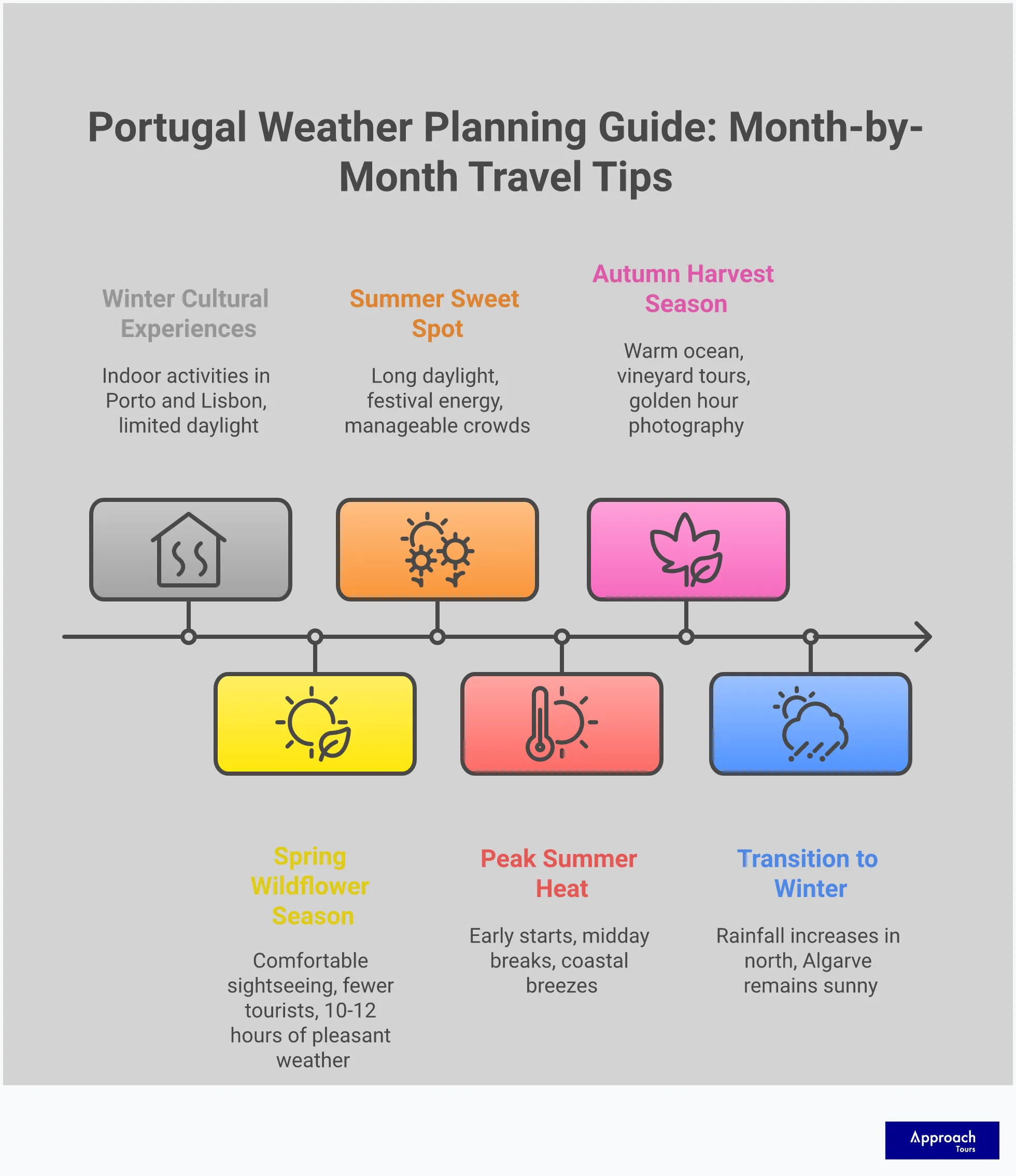
The Sweet Spot: Why We Love Spring and Autumn
For many travellers the shoulder seasons of spring and autumn are pure perfection. From March to May the countryside bursts into colour with wildflowers and temperatures are comfortably mild ranging from 10°C to 22°C. It’s the ideal weather for strolling through Lisbon’s Alfama district or hiking in one of Portugal’s stunning natural parks. The air is fresh and the summer crowds have yet to arrive making for a relaxed and intimate experience.
Similarly autumn from September to October offers a delightful blend of warm days and cooler evenings. With temperatures between 15°C and 28°C you can still enjoy the outdoors comfortably. This is also harvest season in the wine regions a magical time for vineyard tours and tastings. You get all the beauty of Portugal with fewer people and a more authentic feel.
Planning a Summer Visit? What to Know
If your heart is set on sunshine and warm sea breezes summer is your season. From June to August Portugal is bathed in glorious sun with temperatures often climbing between 25°C and 35°C. The Atlantic waters warm up to a pleasant 20°C to 22°C making it the perfect time for a dip in the ocean or relaxing on the golden sands of the Algarve. The days are long and the energy is vibrant with festivals and events happening across the country.
However it’s good to know that July and August are the peak months for tourism. This means popular cities and beaches can get quite crowded and prices for accommodations may be higher. If you’re travelling in the summer be prepared for the buzz and the heat.
The Quiet Charm of a Winter Getaway
A winter trip to Portugal is a well-kept secret. From December to February the country offers a peaceful retreat with a mild climate that’s a welcome escape from the Canadian cold. Temperatures generally hover between 8°C and 17°C. While you can expect some rain especially in the north the sun still makes frequent appearances. The Algarve region in the south remains particularly mild and is lovely for coastal walks without the crowds.
Winter is an excellent time for a city break in Lisbon where you can explore museums palaces and cozy cafés at your own pace. You’ll get a real sense of local life as you wander through quiet streets and enjoy the festive lights in December. For travellers who prefer cultural immersion over sunbathing a winter visit offers a uniquely tranquil and charming experience.
Don’t Believe Everything You Hear About Portugal’s Weather
Portugal’s weather is a topic of much discussion and sometimes a little confusion. You might hear it’s always sunny or that it rains constantly in winter. The truth is a bit more nuanced and much more pleasant. The country’s long coastline and varied geography create a delightful mix of microclimates making it a fantastic place to visit year-round. So let’s clear the air and set the record straight on a few common weather myths. Understanding the real story will help you pack perfectly and get excited for the beautiful days ahead on your tour. This isn’t a country of extremes but one of gentle shifts and regional character which is part of its undeniable charm. From the green hills of the north to the sun-kissed shores of the south each region offers its own unique atmospheric experience. Knowing what to really expect means you can focus on the important things like soaking in the history and savouring every last bite of a pastel de nata.
Will You See Snow?
For most travellers visiting Portugal’s popular cities and coastal areas the answer is a simple no. Snow is a rare sight reserved for the country’s highest mountain peaks primarily in the Serra da Estrela region during the winter months. While it makes for a beautiful scene if you happen to be in the mountains it’s not something you’ll encounter while strolling through Lisbon’s Alfama district or enjoying the sea breeze in the Algarve. You can safely leave your snow boots at home and pack comfortable walking shoes instead. Our tours focus on the cultural hearts of the country where mild temperatures are the winter norm.
Is It Always Raining?
The idea of a perpetually rainy Portuguese winter is another myth worth busting. While the country does have a rainier season typically from November through February the showers are most frequent in the northern regions around Porto. As you travel south the clouds tend to part. Lisbon and the Algarve enjoy a surprising number of bright sunny days even in the heart of winter making them wonderful for off-season exploring. A light raincoat or an umbrella is always a wise addition to your suitcase during these months but don’t expect your plans to be a complete washout.
Is It Always Hot?
While Portugal is famous for its sunshine it isn’t always scorching hot. The winters are comfortably mild with daytime temperatures often hovering around 10°C (50°F). Summers can certainly be hot especially in July and August in the inland regions where temperatures can climb. However the coastal areas where many of our tours spend time benefit from refreshing Atlantic breezes that moderate the heat. The climate of Portugal is generally Mediterranean meaning you can expect warm pleasant weather for most of the year not just a few sweltering months. This makes spring and autumn particularly perfect for sightseeing.
Does All of Portugal Have the Same Climate?
Not at all. This compact country packs a surprising amount of climate diversity. The northwest is known for its lush green landscapes thanks to mild rainy winters and warm summers. The northeast interior experiences more extreme temperatures with colder winters and very hot summers. As you move to the centre and south the climate becomes distinctly more Mediterranean with mild winters less rainfall and long glorious summers. This regional variation is part of what makes Portugal so fascinating to explore. It’s a country where you can experience different atmospheres and landscapes all within a few hours on a comfortable coach.
How to Plan Your Perfect Portugal Tour
With a better sense of Portugal’s climate you can begin to picture your perfect tour. A little planning goes a long way in ensuring you feel comfortable and prepared for every moment. From what to pack to the best activities for each season this guide will help you fine-tune the details for an incredible adventure.
What to Pack for Every Season
Packing smartly for Portugal means preparing for variety and layers are your best friend. For a summer tour pack light clothes a sun hat and a light scarf for coastal breezes but always include a sweatshirt for cooler evenings. In winter your packing strategy changes by region. In Lisbon and the Algarve a mid-weight coat and a rain jacket will do. For Porto and the north you’ll want a heavier jacket and a hat. A good pair of walking shoes is non-negotiable any time of year. Thinking about your travel essentials ahead of time makes all the difference.
Choosing Activities Based on the Weather
Portugal’s seasons offer a unique backdrop for different experiences. Spring is magnificent for seeing the countryside burst into bloom with wildflowers making it ideal for walks in historic cities and hikes through natural parks. Summer’s warmth is perfect for exploring dramatic coastal cliffs and enjoying seaside towns. Autumn brings the grape harvest a wonderful time for vineyard tours in regions like the Douro Valley. Even winter has its charms with mild sunny days in the south that are perfect for exploring cities on foot without the large crowds of peak season.
Why Portugal is a Year-Round Destination
Portugal’s welcoming climate makes it a fantastic destination no matter the month. While summer is popular the shoulder seasons of spring and autumn are often the sweet spot. During these months you’ll find pleasant warm weather and fewer crowds. Don’t discount a winter visit especially to the south. The Algarve region remains remarkably mild offering a sunny escape perfect for outdoor activities when it’s cold back home. While the north sees more rain cities like Lisbon have plenty of attractions to enjoy. Portugal truly offers something special for travellers all year long.
Related Articles
- Weather in Portugal: When’s the Best Time to Go?
- Portugal Weather in May: A Complete Travel Guide
- What is the best time of year to travel?
Frequently Asked Questions
What is the best time of year to visit Portugal for comfortable sightseeing? For many travellers the sweet spot is during the shoulder seasons of spring (March to May) and autumn (September to October). During these months the weather is wonderfully mild and pleasant perfect for walking through historic city centres and exploring the countryside. You get to enjoy all the beauty and culture with fewer crowds than in the peak summer months.
I’m concerned about the summer heat. Is it a good time to travel? Summer in Portugal is beautiful and sunny but it can get quite hot especially in July and August. However a well-planned tour takes this into account. We focus our activities during the cooler morning hours and you can relax during the hottest part of the afternoon. Plus Portugal’s long coastline is blessed with refreshing Atlantic breezes that provide natural air conditioning making it much more comfortable than you might expect.
How much does the weather really change from north to south? The difference is quite noticeable and part of what makes the country so interesting. The north which includes Porto is generally cooler and receives more rain keeping the landscape incredibly green and lush. As you travel south toward Lisbon and the Algarve the climate becomes progressively drier and sunnier. This means on a single tour you can experience the misty green hills of wine country and the sun-drenched coast of the south.
What are the most essential items I should pack for a trip to Portugal? Regardless of the season the key is to pack layers. A comfortable pair of walking shoes is the most important item you can bring. Even in summer a light jacket or sweater is useful for cooler evenings or breezy coastal areas. For spring and autumn trips a waterproof jacket is a smart addition for occasional showers. This approach ensures you’ll be comfortable whether you’re exploring a sun-drenched plaza or a cool stone monastery.
Should I avoid visiting in the winter because of the rain? Not at all. A winter visit offers a completely different and quieter charm. While you should expect some rain particularly in the north it often creates a cozy atmosphere perfect for exploring museums and historic port cellars. The south remains much sunnier and milder offering a peaceful escape. With far fewer travellers you can enjoy a more intimate experience and a wonderful sense of connection to the local culture.