Many travellers assume summer is the only time for a European adventure but the Iberian Peninsula shines year-round. While summer offers undeniable energy it also brings intense heat and the biggest crowds. The shoulder seasons of spring and fall present a delightful balance with pleasant weather and a more relaxed atmosphere. Even winter has a quiet magic with festive markets and the chance to experience local life more authentically. The best time to visit Portugal and Spain might just be when you least expect it. Let’s look beyond the peak season to discover the unique charms and advantages of travelling throughout the year.
Key Takeaways
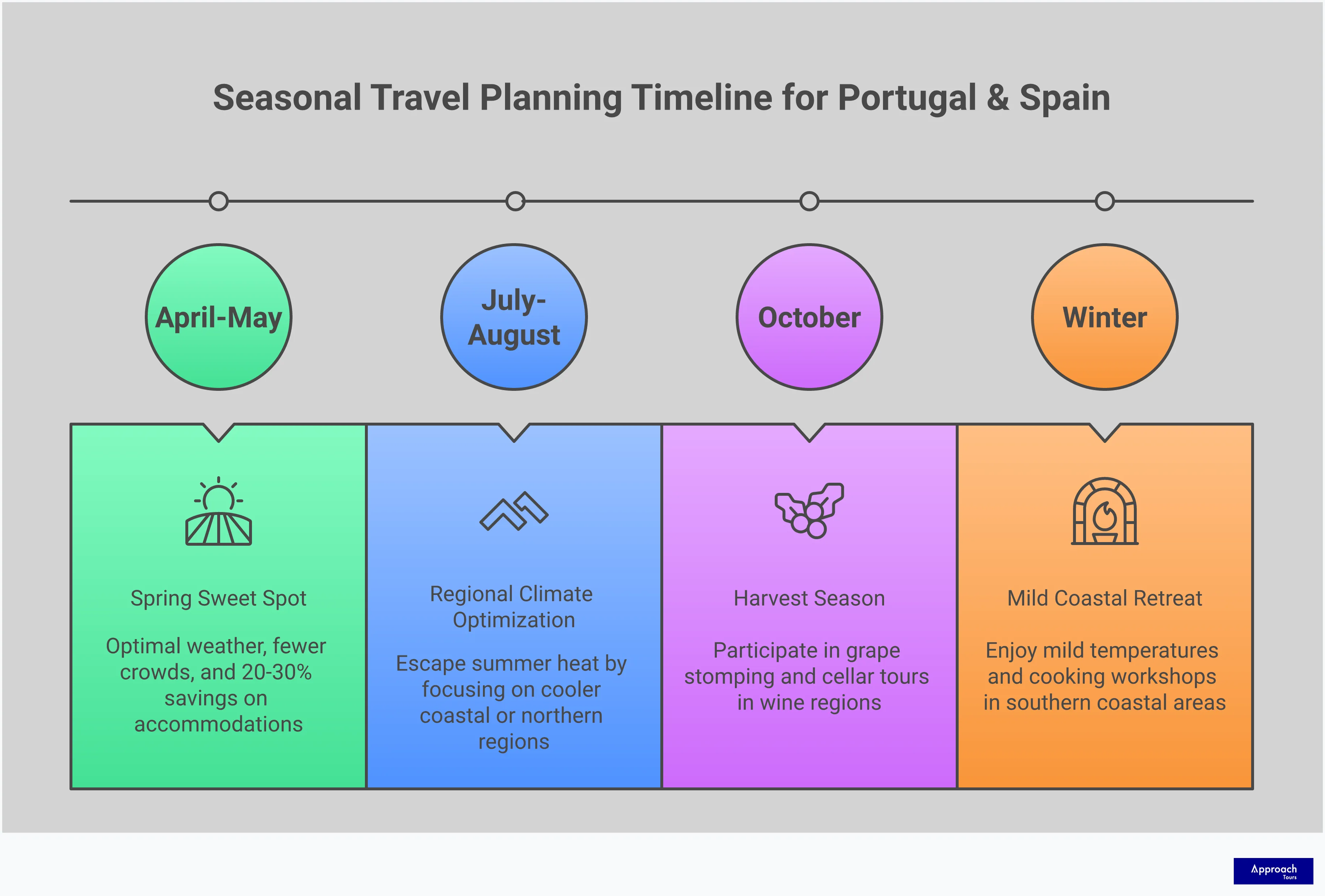
- Find your sweet spot in spring and fall: For pleasant weather fewer crowds and comfortable sightseeing the shoulder seasons of April-May and September-October offer an ideal travel experience.
- Choose between summer energy and winter calm: A summer tour means long sunny days and a lively atmosphere while winter offers a quieter more intimate chance to connect with local culture without the crowds.
- Use regional climates to your advantage: Escape intense summer heat by exploring Portugal’s coast or northern Spain. In winter seek out the mild sunny weather in southern regions like Andalusia and the Algarve.
When is the best time to visit Portugal and Spain?
Deciding when to travel to the Iberian Peninsula is almost as exciting as choosing what to pack. Each season offers a completely different way to experience the vibrant cultures sun-kissed landscapes and rich history of Portugal and Spain. Whether you dream of wandering through blooming almond groves or sipping wine during a golden autumn harvest there’s a perfect time for your adventure. The best season for you depends on what you want to see and do. Let’s explore what each time of year has to offer so you can find your ideal fit.
Spring: See the landscapes awaken
Spring is a magnificent time to visit as the countryside bursts into life. The weather is generally mild and pleasant making it ideal for exploring ancient cities and scenic trails without the intense summer heat. From March to May you’ll find a land renewed with colour and energy. This is a season of festivals rebirth and comfortable exploration. The days grow longer the flowers are in full bloom and a sense of excitement is in the air. It’s a photographer’s dream and a traveller’s delight.
- March: Enjoy mild days and budding scenery As winter fades the Iberian Peninsula awakens. March brings mild temperatures and the first signs of spring with wildflowers carpeting the fields and almond trees blossoming in a sea of pink and white. The scenery is lush and green from the winter rains. It’s a wonderful time for photography and enjoying the fresh air before the peak season crowds arrive. You can wander through historic plazas and coastal towns feeling the gentle warmth of the returning sun.
- April: Experience vibrant festivals and perfect walking weather April is famous for its incredible festivals. Spain comes alive with the solemn yet beautiful processions of Semana Santa (Holy Week) offering a profound cultural experience. The weather is typically warm and sunny perfect for long walks through historic city centres or countryside hikes. It’s a month of celebration and renewal that showcases the region’s deep traditions. The air is filled with the scent of orange blossoms in Seville and the energy of local fairs is contagious.
- May: Soak up the sun as the countryside blooms Many consider May the absolute best time to visit. The weather is reliably warm and sunny perfect for dining al fresco at a seaside cafe. The landscapes are at their most vibrant with flowers in full bloom. It’s the sweet spot before the summer heat and crowds set in giving you the best of both worlds for a comfortable and beautiful tour. It’s warm enough for the beach but still cool enough for pleasant city exploration.
Fall: Discover the Iberian Peninsula’s golden season
As the summer sun softens autumn paints Portugal and Spain in warm golden hues. The pace of life slows a little and the air turns crisp making it a wonderful time for cultural immersion and culinary delights. The crowds of summer have thinned and a more relaxed atmosphere settles over the cities and countryside. This season is a feast for the senses from the changing colours of the vineyards to the rich flavours of the harvest. It’s a time for savouring the moment and enjoying the comfortable climate.
- September: Catch the last of the summer warmth September holds onto the warmth of summer without the scorching intensity. Along the coasts the Mediterranean Sea is still warm enough for a pleasant swim. It’s a fantastic month for travel as you can enjoy the long sunny days and lively evenings that feel like an extension of summer but with fewer people. The light takes on a golden quality perfect for afternoon strolls and enjoying a glass of wine on a terrace.
- October: Taste the flavours of the fall harvest October is a food lover’s dream. It’s harvest season across the peninsula and many wine regions like Portugal’s Douro Valley and Spain’s Rioja are buzzing with activity. You can taste freshly pressed olive oil and join in the celebration of the grape harvest. The weather is generally mild and the autumn colours create a stunning backdrop for your travels. It’s a perfect time for culinary tours and scenic drives through the countryside.
- November: Enjoy local life without the crowds By November the main tourist season has wound down. This offers a unique opportunity to experience daily life like a local. While it can be one of the wetter months especially in the north it’s a great time to explore museums cozy up in traditional cafes and enjoy the cities without the queues. You can connect more deeply with the culture and people finding a more intimate and authentic side of Iberia.
Summer: Is a sun-drenched trip right for you?
Summer in Portugal and Spain is a season of pure energy. The days are long hot and full of life. From bustling beach towns to vibrant city festivals there is an undeniable buzz in the air. If you love the sun and a lively atmosphere this could be your perfect time to visit. The entire peninsula seems to celebrate the season with outdoor concerts markets and late-night dinners under the stars. It’s a time of joy and vibrancy where the culture is on full display.
- The Appeal: Embrace the heat and lively atmosphere From June to August the weather is consistently hot and sunny. It’s the ideal time for those who want to relax on beautiful beaches and enjoy the vibrant nightlife. The cities are alive with outdoor concerts festivals and terraces filled with people enjoying the long warm evenings. The energy is infectious and it’s a wonderful time to experience the social and celebratory side of Spanish and Portuguese culture.
- The Reality: What to expect from peak season travel There’s no sugarcoating it: summer is hot crowded and more expensive. Inland cities like Seville and Madrid can experience intense heat making midday exploring a challenge. Coastal areas are packed with travellers so you’ll need to be prepared for busy attractions and restaurants. It’s the peak season for a reason but it’s important to set realistic expectations for your tour.
- Pro Tip: Find your comfort zone from coast to countryside If you’re travelling in July or August plan your days wisely. Explore cities in the cooler morning and evening hours and use the hot afternoon for a siesta or a visit to an air-conditioned museum. Consider visiting the northern regions of Spain like Galicia or the Basque Country which tend to be cooler than the south. This strategy allows you to enjoy the best of summer without getting overwhelmed by the heat.
Winter: Uncover the quiet magic of the off-season
While many travellers flock to Iberia in the warmer months winter holds a special charm of its own. It’s a season of mild weather festive traditions and a slower more intimate pace of life. You’ll have the chance to connect with the culture on a deeper level without the distraction of crowds. The soft winter light casts a beautiful glow on historic architecture and the crisp air is invigorating. It’s a time for cozy moments and discovering a different side of these beloved destinations.
- The Climate: Enjoy mild coastal weather and festive lights Compared to a Canadian winter the climate here is wonderfully mild especially in the southern regions of Andalusia and the Algarve. The cities are beautifully decorated for the holidays creating a magical atmosphere. You can comfortably explore historic sites and enjoy the festive spirit without needing your parka. It’s a refreshing escape from the snow and cold back home.
- The Pace: Find hidden gems and local favourites Winter is the off-season which means fewer travellers and a more authentic experience. While some attractions may have shorter hours you’ll have more space to yourself at major landmarks. It’s the perfect time to linger over a meal chat with locals and discover the hidden gems you might miss during the busier months. This slower pace allows for a more meaningful connection with the places you visit.
- The Culture: Explore Christmas markets and cozy traditions From November through early January you can wander through enchanting Christmas markets sipping mulled wine and shopping for unique crafts. It’s also a wonderful time to enjoy the region’s hearty winter cuisine and cozy up in a historic tavern. The festive season offers a unique and heartwarming glimpse into local traditions making it a truly special time to be travelling.
How do crowds and costs shift with the seasons?
Understanding the flow of the travel seasons can help you plan a tour that perfectly balances your budget comfort and desired experiences. Portugal and Spain have distinct peak shoulder and off-seasons each offering a different atmosphere. Knowing what to expect can make all the difference in crafting your perfect trip allowing you to choose the experience that best suits your style. Whether you prefer a bustling atmosphere or a quiet escape there’s a season for you.
- Peak Season: Plan ahead for summer and holidays High season runs from May through September plus major holidays like Easter. During this time you can expect the largest crowds the highest prices and the hottest weather. It’s essential to book accommodations and tours well in advance. While bustling it’s also when you’ll find the most activities and attractions open with the longest hours. This is the time for travellers who love a lively energetic environment.
- Shoulder Season: Find the sweet spot for value and comfort The shoulder seasons of spring (April-May) and fall (September-October) are often considered the ideal time to visit. You’ll enjoy pleasant weather fewer crowds than in summer and more moderate prices. It’s a fantastic balance that allows for comfortable sightseeing and a more relaxed experience. This is the perfect choice for travellers who want great weather without the peak season intensity.
- Off-Season: Get an authentic feel with fewer crowds The off-season from November to March offers the lowest prices and the fewest crowds. While the weather can be cooler and wetter it’s a chance to see Portugal and Spain from a local’s perspective. It’s perfect for travellers who prioritize cultural immersion and don’t mind packing a few extra layers. You’ll feel less like a tourist and more like a part of the local scene.
What cultural experiences define each season?
The cultural calendar in Portugal and Spain is rich and varied with each season bringing its own unique celebrations and activities. Aligning your tour with these events can create unforgettable memories. From sacred religious processions to passionate musical performances the rhythm of life here is deeply connected to the changing seasons. Participating in these traditions offers a deeper understanding of the Iberian soul and a chance to create lasting connections with the culture.
- Spring: Witness lively processions and Easter traditions Spring is a time of profound tradition particularly in Spain. The elaborate and moving processions of Semana Santa (Holy Week) are a sight to behold. This season is also filled with local fairs and flower festivals celebrating the return of warmth and life to the land. It’s a visually stunning and emotionally resonant time to experience the deep-rooted customs of the region.
- Summer: Feel the rhythm of Fado and flamenco Summer nights are made for music. In Portugal the soulful melodies of Fado drift from candlelit taverns in Lisbon’s Alfama district. In Spain the passionate fiery rhythms of flamenco echo through the plazas of Andalusia. It’s a season where the artistic soul of the peninsula comes alive. These performances are not just entertainment they are powerful expressions of history and emotion.
- Fall: Join harvest celebrations and culinary tours Autumn is a feast for the senses. It’s the season of the grape and olive harvests a time of celebration in the countryside. You can participate in wine tastings tour historic vineyards and indulge in seasonal delicacies like wild mushrooms and roasted chestnuts. It’s the perfect time for a culinary-focused adventure connecting you to the land and its bounty.
- Winter: Get hands-on with cooking and craft workshops The quieter winter months are ideal for immersive cultural experiences. You can take a cooking class to learn the secrets of paella or pastéis de nata or try your hand at a traditional craft like pottery or tile painting. These hands-on workshops offer a wonderful way to connect with local artisans and bring a piece of Iberian culture home with you.
How does the weather differ between Portugal and Spain?
While they share the Iberian Peninsula Portugal and Spain have surprisingly diverse climates due to their unique geography. Understanding these differences will help you pack appropriately and choose the best destinations for your chosen season. From the green hills of the north to the sun-drenched beaches of the south the weather can vary dramatically within just a few hours of travel by coach. This diversity is part of what makes the region so fascinating to explore.
- Portugal: What to expect from the Atlantic coast Portugal’s entire coastline faces the Atlantic Ocean which has a moderating effect on its climate. This means summers are generally not as scorching as in central Spain and winters are mild and wet especially in the north. The southern Algarve region remains the sunniest and driest part of the country year-round making it a pleasant destination in any season.
- Spain: From sunny shores to cooler mountains Spain’s weather is incredibly varied. It boasts both an Atlantic coast in the north which is cool and green and a long Mediterranean coast in the east and south which is hot and sunny. The central Meseta is a high plateau with very hot summers and cold winters. This diversity means you can find a comfortable climate in Spain no matter the season.
- Planning Your Trip: Pick the right spot for your perfect season When planning your tour consider these regional differences. If you’re travelling in summer you might prefer the milder temperatures of Portugal’s coast or northern Spain. In winter the sunny shores of Spain’s Costa del Sol or Portugal’s Algarve are excellent choices. Matching the destination to the season ensures you’ll be comfortable and can make the most of your time exploring.
Related Articles
Frequently Asked Questions
I want pleasant weather but hope to avoid the biggest crowds. What’s the best time for me? You are looking for the sweet spot and you will find it during the shoulder seasons. Spring from April to May and fall from September to October offer the perfect balance. During these months the weather is comfortably warm and ideal for walking through cities or relaxing on a cafe terrace. You will get to experience the beauty of the landscapes whether it is the spring wildflowers or the golden vineyards of autumn without the intense crowds and heat of the summer peak season.
We are food and wine lovers. When would we have the best experience? For a trip focused on culinary delights plan to travel in the fall. October is particularly special as it is the heart of the harvest season. This is when the wine regions in both Portugal and Spain are alive with activity celebrating the grape harvest. You can also enjoy freshly pressed olive oils and markets brimming with seasonal produce like mushrooms and chestnuts. It is a wonderful time to connect with the land and taste the rich authentic flavours of the Iberian Peninsula.
Is it a bad idea to travel to Spain and Portugal in the summer? Not at all it just depends on the type of experience you want. Summer is undeniably hot and busy but it is also a time of incredible energy and celebration. The days are long and sunny and the evenings are filled with music festivals and outdoor dining. If you thrive on a lively atmosphere and do not mind the heat it can be a fantastic time to visit. To stay comfortable you can plan your sightseeing for the cooler mornings and evenings or focus your tour on the milder northern coasts.
What is travelling in the winter really like? Will everything be open? Winter offers a completely different and magical perspective on Spain and Portugal. The weather is mild compared to a Canadian winter especially in the south making it perfect for comfortable exploration. All major landmarks and museums remain open and you will have the incredible advantage of seeing them without the queues. It is a chance to experience daily life at a local pace enjoy cozy taverns and see the cities sparkle with beautiful holiday lights and festive markets.
How should I pack for the weather? Is it the same in both countries? While they are neighbours the weather can differ. Portugal’s climate is influenced by the Atlantic Ocean which generally means milder summers and winters than in the centre of Spain. Spain’s climate is more varied with a hot dry interior a temperate Mediterranean coast and a cooler green northern coast. For any season the best strategy is to pack layers. A light jacket or sweater will always be useful for cooler evenings or air-conditioned coaches and museums ensuring you are comfortable no matter where your day takes you.