Cape Town’s weather is a character in its own right a force shaped by two oceans and a world-famous mountain. Locals often say you can experience all four seasons in a single day and it’s not much of an exaggeration. This charming unpredictability is part of the city’s magic but it can make packing a challenge. To truly enjoy every moment from a sunny beach day to a cool evening in the Winelands you need to be prepared. This guide is your key to understanding the city’s unique rhythms. We will break down the Cape Town weather by month so you can pack with confidence and embrace every beautiful surprise the Mother City has in store for you.
Key Takeaways
- Match the Season to Your Ideal Tour: Cape Town’s climate is predictable. Aim for the warm dry summer (December to March) for beach days or the mild green winter (June to August) for whale watching and cultural sights without the crowds.
- Embrace Layering for All-Day Comfort: The city’s weather can shift quickly from cool mornings to warm afternoons. Packing items like a light jacket, a sweater and a scarf allows you to adapt easily and stay comfortable everywhere you go.
- Prioritize Sun and Wind Protection: The African sun is strong year-round, making a hat, sunglasses and sunscreen essential. A light windbreaker is also a must-have, especially in summer, to stay comfortable during gusts from the famous “Cape Doctor” wind.
What is Cape Town’s Climate Really Like?
Cape Town’s weather is a character in its own right shaped by two oceans and a world-famous mountain. It’s a city with a delightful Mediterranean climate that offers something for travellers year-round. Unlike the tropical weather found in other parts of Africa its seasons are distinct and its moods can change in an instant. Understanding its unique patterns is the key to packing perfectly and making the most of every moment on your tour. Let’s look at what you can really expect from the weather in this beautiful corner of the world.
A Look at Seasonal Rhythms and Temperatures
Cape Town enjoys a classic Mediterranean climate with four distinct seasons. Summers from December to March are wonderfully warm and dry perfect for exploring the coastline. February is typically the warmest month with average highs reaching a pleasant 29°C. Winters from June to August are mild and bring the rain that turns the landscape a lush green. July is the coolest month but temperatures are still quite gentle rarely dipping below 7°C overnight. Throughout the year you can expect comfortable temperatures that make sightseeing a joy. It’s a climate made for discovery without the extremes of humidity or cold you might find elsewhere.
How the Ocean and Mountains Shape the Weather
The city’s stunning geography plays a huge role in its daily weather. The Atlantic and Indian Oceans meet here and their cool waters help moderate the summer heat keeping things from getting too intense. Occasionally a hot dry mountain wind known as the ‘Berg’ wind can sweep down and raise temperatures for a day or two. More famous is the southeasterly summer wind affectionately called the ‘Cape Doctor.’ This brisk wind is named for its power to blow away pollution and haze leaving the air crisp and the skies brilliantly clear. It’s a refreshing natural feature of a Cape Town summer.
Understanding Cape Town’s Unique Microclimates
Locals have a saying that in Cape Town you can experience all four seasons in one day and it’s not much of an exaggeration. The city’s position between mountain and sea creates numerous small microclimates. This means the weather in the city bowl can be completely different from the conditions on top of Table Mountain or in the nearby winelands. This fascinating variety is part of the city’s charm. It also means the secret to comfortable exploring is to dress in layers. A light jacket or sweater is always a good idea even on a sunny day as conditions can change quickly when you move from one beautiful area to another.
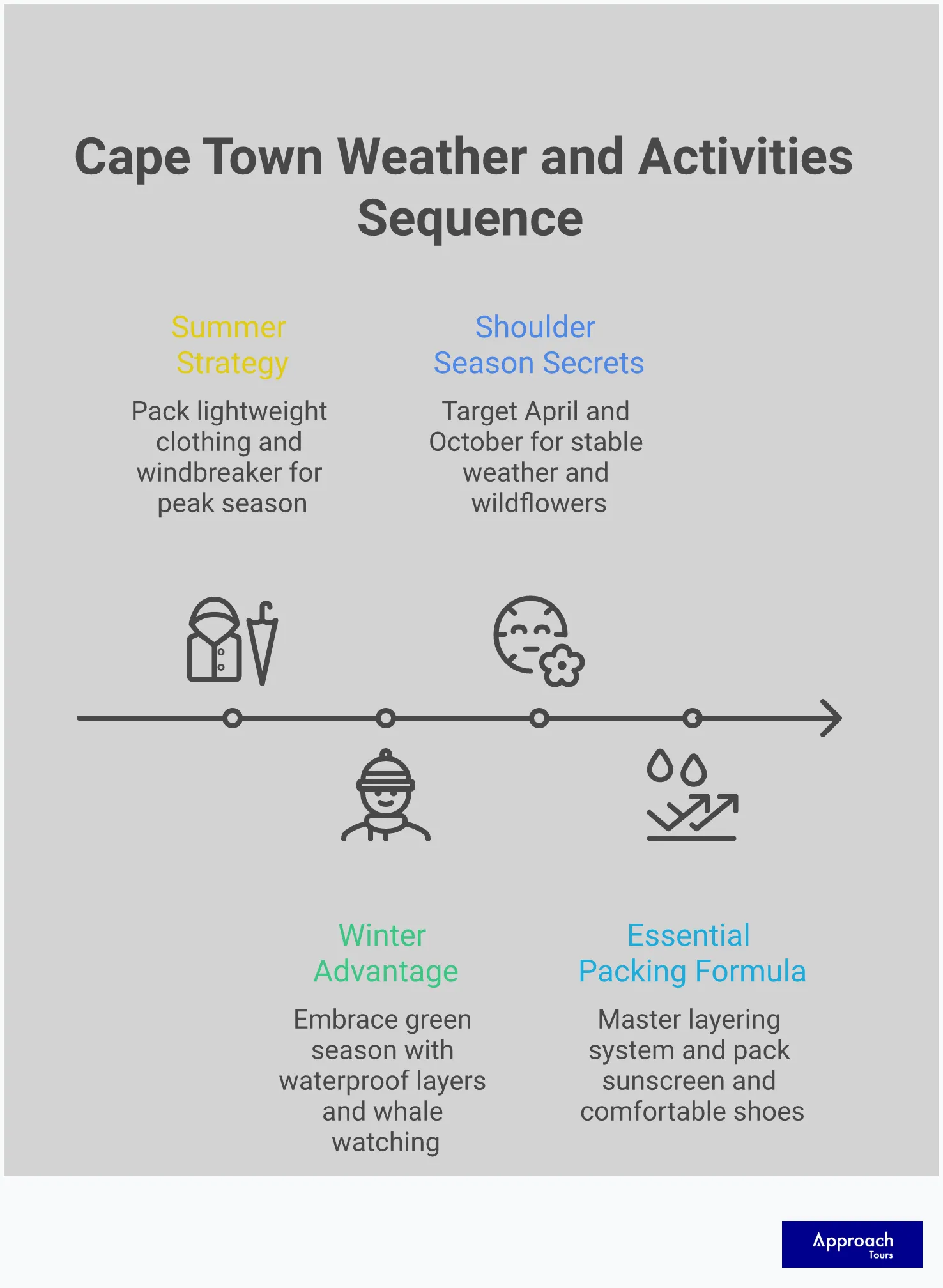
Your Guide to Summer in Cape Town (December to February)
Summer in Cape Town is a spectacular affair. From December to February the city sheds its cool winter layers and embraces a season of brilliant sunshine long days and boundless energy. This is the peak season for travellers and for good reason. The weather is consistently warm and dry making it the perfect time to explore the city’s world-famous beaches hike its iconic mountains and dine al fresco with a glass of local wine in hand. The days stretch out lazily with the sun rising early and setting late giving you ample time to soak in every moment.
The atmosphere is electric. Streets are filled with a cheerful buzz as locals and visitors alike take advantage of the glorious conditions. Whether you’re strolling along the V&A Waterfront watching the seals play in the harbour or taking a scenic drive along Chapman’s Peak you’ll feel the vibrant spirit of a city in full bloom. While it’s the busiest time of year the energy is part of the charm. It’s a season of celebration where the natural beauty of the Cape is on full display under endless blue skies. Just remember your sun hat and a light jacket for the evenings when a cool breeze might drift in from the ocean.
December: Festive Sunshine and Warm Days
December ushers in the summer with a festive flourish. As Canadians are bundling up Cape Town is basking in hot dry weather with temperatures often climbing into the high 20s and low 30s Celsius. The days are long and drenched in sunshine creating the perfect backdrop for outdoor adventures. This is an ideal time to feel the soft white sand of Clifton or Camps Bay beaches between your toes. The city is alive with holiday spirit and the warm evenings are perfect for enjoying the local culinary scene. It’s a month of pure celebration under the African sun.
January: Peak Heat and the Famous “Cape Doctor” Wind
January continues the summer heatwave with average highs hovering around a delightful 28°C. This month is also known for a famous local phenomenon: the “Cape Doctor”. This strong southeasterly wind sweeps through the city and while it might catch you by surprise it’s a welcome guest. The wind provides a natural air conditioner offering a refreshing break from the midday heat. More importantly it clears away any haze leaving the skies exceptionally clear and the views from Table Mountain absolutely breathtaking. It’s a unique element of Cape Town’s climate that makes January’s sunny days feel crisp and clean.
February: The Warmest Month for Sun-Seekers
For those who truly love the heat February is paradise. Often the hottest month of the year temperatures can easily reach 29°C or higher. It’s also the driest and sunniest period with beautifully clear skies an incredible 87% of the time. This is the perfect month for sun-seekers to fully embrace the coastal lifestyle. Imagine a leisurely day exploring the Cape Winelands where the grapes are ripening on the vine or relaxing by the hotel pool with a good book. The weather is reliably gorgeous making it easy to plan your days without worrying about a sudden shower. Just be sure to pack your lightest clothing and plenty of sunscreen.
Discovering Autumn in Cape Town (March to May)
As the vibrant energy of summer gently fades, Cape Town eases into its magnificent autumn season. This is a truly special time to visit, a period cherished by locals for its golden light, comfortable warmth and tranquil atmosphere. The intense summer crowds have thinned, yet the weather remains glorious, offering the perfect conditions for exploration without the peak-season heat. From March to May, the city is draped in a soft, warm glow. The days are long and sunny enough for any adventure you have in mind, from ascending Table Mountain to wandering through the colourful streets of Bo-Kaap. The evenings become pleasantly mild, ideal for enjoying world-class cuisine at a waterfront restaurant or sipping a celebrated local wine as the sun dips below the horizon. For many travellers, autumn represents Cape Town at its most inviting, striking a perfect balance between sunshine and serenity. It’s a season that encourages a slower pace, allowing you to truly soak in the stunning landscapes and rich culture without feeling rushed. The air is clear, the light is perfect for photography and the overall mood is one of relaxed contentment. This is the Cape Town that invites you to linger over a coffee, take that extra scenic drive and simply be present in its breathtaking beauty.
March: Balmy Days and Pleasant Evenings
March holds onto the last beautiful whispers of summer. The days are consistently warm and dry, with temperatures often hovering around a perfect 25°C. This is weather that invites you to be outdoors, soaking in the sunshine on a scenic coach ride along Chapman’s Peak Drive or feeling the gentle sea breeze at Boulders Beach. The ocean, having been warmed all summer, is still pleasant for a quick dip. Evenings are especially magical, carrying a soft warmth that makes dining al fresco a delight. It’s a month of balmy days and pleasant evenings, where you can comfortably enjoy a sunset cruise from the V&A Waterfront without needing more than a light sweater.
April: Mild Temperatures and Perfect Sightseeing Weather
Many seasoned travellers and locals will tell you that April is the best month in Cape Town. The air loses the intense heat of summer but retains a comfortable, mild warmth under endless blue skies. The sunshine is brilliant but gentle, creating the most perfect conditions for sightseeing. This is the time to fully immerse yourself in the region’s wonders. You can explore the lush Kirstenbosch National Botanical Garden or spend a full day tasting your way through the Cape Winelands without feeling overwhelmed by the heat. The clarity of the air is often exceptional, promising breathtaking panoramic views from every vantage point. April delivers weather that feels tailor-made for discovery and enjoyment.
May: The Gentle Arrival of Cooler, Greener Days
May signals a subtle and beautiful shift in the seasons. The month ushers in the gentle arrival of cooler temperatures and the first promising rains that begin to awaken the landscape’s winter greenery. While you can still expect many bright and sunny days, the evenings become crisper and you’ll notice a refreshing quality in the air. This is when the region’s famous fynbos begins to flourish, and the vineyards take on a deep, verdant hue. These cooler, greener days offer a different kind of beauty, a time of quiet transition that is wonderful for photography and peaceful walks. It’s the perfect time to cozy up in a Stellenbosch cafe after a day of exploration.
Cape Town’s Cozy Winter Season (June to August)
While many travellers dream of Cape Town’s sun-drenched beaches winter offers a completely different and equally magical experience. From June to August the city sheds its summer crowds and settles into a cozy rhythm. This is the celebrated “green season” when life-giving rains transform the landscape into a lush emerald paradise. The air is crisp the light is soft and the city’s world-class restaurants museums and wineries feel more intimate. It’s a time for savouring a glass of Pinotage by a crackling fire watching dramatic clouds roll over Table Mountain and discovering the soulful side of the Mother City. Winter invites you to slow down and connect with the culture and stunning natural beauty in a more personal way.
June: Cool Days and the Start of the Rains
June ushers in the winter season with cooler days and the beginning of the rains that rejuvenate the region. Average daily temperatures hover around a pleasant 18°C (64°F) though evenings can be brisk dropping to about 8°C (46°F). While you should pack a raincoat the showers are often interspersed with clear sunny spells. This is the perfect weather for exploring indoor attractions like the vibrant V&A Waterfront or diving into history on Robben Island. The rain turns the surrounding landscape intensely green making a drive through the Constantia wine valley particularly breathtaking. It’s a month where the city feels fresh and full of life ready for a new season.
July: The Heart of the “Green Season”
July is the heart of winter in Cape Town typically the coolest and wettest month. With average high temperatures around 17°C (63°F) it’s the ideal time to embrace cozy indoor activities. The surrounding Winelands are particularly inviting with historic estates offering tastings in warm cellars and restaurants serving hearty farm-to-table meals. This is also the beginning of the spectacular whale watching season. A trip along the coast to Hermanus offers some of the best land-based whale watching in the world as southern right whales arrive to calve in the sheltered bays. The dramatic winter skies and verdant scenery provide a stunning backdrop for any excursion making July a photographer’s dream.
August: Crisp Air with Bursts of Sunshine
As winter begins to wane August brings a wonderful mix of crisp cool air and brilliant bursts of sunshine. The weather can be changeable so packing layers is key but the clear days are truly magnificent. Temperatures remain mild and the heavy rains of mid-winter start to ease. Towards the end of the month the Western Cape bursts into colour as the first spring wildflowers begin to bloom especially along the West Coast. It’s a fantastic time for a walk through the Kirstenbosch National Botanical Garden or for taking in the panoramic views from Table Mountain on a clear day without the summer haze. August offers the best of both worlds: the lushness of winter with a hopeful hint of the coming spring.
Spring in Cape Town: A City in Bloom (September to November)
Spring in Cape Town is a spectacular transformation. After the gentle winter rains the entire region bursts into life with colour and energy. From September to November the landscape sheds its winter green for a vibrant floral coat the days grow longer and warmer and a sense of excitement builds in the air. This season offers some of the most pleasant weather of the year making it an ideal time for exploring everything the city and its surroundings have to offer. Whether you are marvelling at endless fields of wildflowers or enjoying a glass of wine in the sunshine spring reveals a truly magical side of the Western Cape. It is a time of renewal perfect for travellers who want to see the region at its most beautiful and comfortable.
September: Wildflowers and Warmer Temperatures
September officially welcomes spring and the change is immediate and beautiful. The winter rains begin to taper off replaced by more frequent sunshine and comfortably warm days. This is the month when the Western Cape puts on its most famous natural show: the wildflower bloom. Just north of the city vast landscapes transform into a carpet of brilliant colours. It is a photographer’s dream and a nature lover’s paradise. The West Coast National Park becomes a key destination where fields of daisies and other native flowers create a breathtaking spectacle. The air is fresh the crowds are manageable and the city feels reawakened and ready to be explored.
October: Clear Skies and Comfortable Days
October is arguably one of the most pleasant months to visit Cape Town. The weather truly settles into a perfect rhythm with average temperatures hovering between 20–25°C. The rainy season is a memory leaving behind clear blue skies and abundant sunshine that is warm without being overwhelming. This makes it an ideal time for any outdoor activity from strolling through Kirstenbosch Botanical Gardens to exploring the Cape Peninsula. It is also one of the last chances of the year for incredible whale watching as the southern right whales begin their journey back to Antarctica. It is a month of pure comfort and stunning natural beauty.
November: A Taste of the Coming Summer
November feels like an early summer bringing hot dry and sunny days that invite you to the coastline. Temperatures regularly climb into the high 20s and the long sun-filled days are perfect for enjoying the city’s world-class beaches before the peak season crowds arrive. You can feel a vibrant energy building across Cape Town as cafes spill onto the sidewalks and local markets buzz with activity. It is a fantastic time to experience the city’s lively atmosphere. The weather is consistently beautiful making it easy to plan days exploring the V&A Waterfront or taking a scenic drive along Chapman’s Peak with the windows down.
When Can You Expect Rain in Cape Town?
Unlike much of Canada Cape Town has a Mediterranean climate which means its seasons are distinct and its rainfall is concentrated in the winter months. Understanding this pattern is key to packing properly and planning your days. While a sudden shower is always possible the city’s weather follows a fairly predictable rhythm. Knowing when to expect rain helps you make the most of your time in this beautiful city.
The “Green Season”: Winter Rains
Cape Town’s winter from June to August is often called the “Green Season” and for good reason. This is when the region receives most of its annual rainfall transforming the landscape into a lush vibrant spectacle. About seventy percent of the rain arrives between June and September brought in by stormy cold fronts from the Atlantic. These rains are essential for the health of the unique Cape Floral Kingdom a world heritage site celebrated for its biodiversity. While you can expect showers it’s a wonderful time to see the city’s natural beauty come alive without the summer crowds.
Sun-Soaked Summers: The Dry Season
If your ideal vacation involves long sunny days then Cape Town’s summer is for you. From December through March the city experiences a very dry period with little to no rain. This is the perfect time for exploring stunning beaches visiting the V&A Waterfront or taking the cable car up Table Mountain for uninterrupted views. February is typically the driest month averaging just over one day of rain. The days are warm and the evenings are pleasant making it the peak season for travellers seeking sunshine. Just be sure to pack your sunscreen.
A Month-by-Month Look at Rainfall
The transition seasons of autumn and spring offer a beautiful middle ground. Rain begins to taper off in September and by November summer’s dry spell is approaching. Conversely rain starts to pick up in April and May marks the true start of the wetter months. June is the wettest month of the year with an average of about eight rainy days. For those who want specifics you can find detailed year-round weather averages to help you plan. This knowledge helps you pack layers and a light rain jacket especially if travelling during the shoulder seasons.
What is the “Cape Doctor” Wind?
If you visit Cape Town in the summer you will quickly meet one of its most famous residents: a powerful southeasterly wind affectionately known as the “Cape Doctor”. This isn’t just any breeze. It’s a force of nature that shapes daily life and is as much a part of the city’s character as Table Mountain itself. The wind is born from differences in air pressure between the cool Atlantic and the warmer land creating a powerful current of air that sweeps through the city.
For centuries locals have given this wind its clinical name because of its perceived healing effects. It arrives with gusto blowing away the haze and pollution of the bustling city and leaving behind brilliantly clear skies and fresh clean air. While it can be blustery and strong it is a fundamental part of the summer experience. Understanding the Cape Doctor is key to appreciating the city’s unique rhythm and its deep connection to the natural world. It’s a reminder that even in a vibrant metropolis nature is always present and often in charge.
The “Doctor’s” Benefits: Fresh Air and Clear Skies
The Cape Doctor earned its name for a wonderful reason. It acts as the city’s personal physician performing a daily cleansing that benefits everyone. This powerful wind sweeps through the Cape Town City Bowl and across the Cape Flats clearing away smog and leaving the air crisp and revitalized. The result is stunning visibility and some of the freshest city air you will ever breathe. One of its most magical effects is the creation of the famous Table Mountain “tablecloth”. As the wind pushes moist air up the mountain’s slopes it cools and condenses forming a thick beautiful layer of cloud that drapes over the flat summit like a celestial linen.
How the Wind Affects Your Plans and Activities
While the Cape Doctor brings many benefits its strength can sometimes influence your daily plans. On particularly blustery days a relaxing afternoon on a sandy beach might be off the table and the Table Mountain Aerial Cableway may temporarily close for safety. But this is simply part of the authentic Cape Town experience. Our local guides and your Group Guru are experts at reading the day’s mood. They will masterfully adjust the itinerary to ensure your comfort and enjoyment perhaps swapping a windy coastal walk for a delightful exploration of the sheltered Kirstenbosch National Botanical Garden or a fascinating museum visit. It’s just the price of admission for life in this glorious coastal city.
When to Expect the Wind and How to Prepare
The Cape Doctor is most prominent during the summer months from November to February with January often being the windiest period. If you are travelling during this time a few simple packing tricks will make all the difference. A light windbreaker or jacket is essential for staying comfortable when the gusts pick up. A secure hat or a stylish scarf can help manage your hair and protect you from the sun. Sunglasses are also a must-have not just for the bright sunshine but to shield your eyes from any blowing sand or dust. With a little preparation you will be perfectly equipped to embrace this exhilarating natural phenomenon and enjoy everything the city has to offer.
When is the Best Time to Visit Cape Town?
Deciding on the best time to visit Cape Town truly depends on the kind of experience you’re dreaming of. This vibrant city at the tip of Africa offers a different kind of magic with each passing season. Whether you envision yourself relaxing on a sun-drenched beach exploring lush vineyards or watching majestic whales from the shoreline there is a perfect time for your tour. Think about what activities make your heart sing and let that be your guide. From the warm festive energy of summer to the cozy cultural pursuits of winter Cape Town is ready to welcome you.
For Beach Lovers: December to March
If your ideal day involves warm sand and the sound of waves then Cape Town’s summer is calling your name. From December to March the city basks in glorious sunshine making it the perfect time to visit its world-famous beaches. Imagine sinking your toes into the soft white sand of Camps Bay with the dramatic Twelve Apostles mountain range as your backdrop. The days are long and hot perfect for a refreshing dip in the Atlantic. While the famous “Cape Doctor” wind can make an appearance it often brings clear skies and keeps the summer heat comfortable. It’s a lively season filled with vibrant energy.
For Wine Enthusiasts: A Year-Round Delight
For those who appreciate a fine glass of wine the good news is that any time is a wonderful time to explore the Cape Winelands. The region’s temperate Mediterranean climate means the vineyards are beautiful year-round. Summer offers sunny days for sipping crisp Sauvignon Blanc on a shaded patio. The cooler winter months from June to August are particularly cozy for indoor tastings. You can settle in by a crackling fireplace at a historic wine estate savoring a bold Pinotage while the vineyards outside turn a lush green. It’s a sophisticated and relaxing way to experience the area’s rich history and celebrated wines.
For Whale Watchers: June to November
Witnessing the gentle giants of the ocean is an unforgettable experience and Cape Town offers a front-row seat. The official whale watching season runs from June through November when Southern Right whales migrate from Antarctica to these warmer waters to calve and nurse their young. The coastal town of Hermanus just a scenic coach ride from Cape Town is famed for offering some of the best land-based whale watching in the world. Seeing these magnificent creatures breach and play so close to shore is a truly moving sight and a highlight for many travellers visiting during these months.
For Hikers: April, May, September and October
If you enjoy lacing up your walking shoes and exploring on foot the shoulder seasons are your best bet. The autumn months of April and May and the spring months of September and October offer mild weather and spectacular scenery. During this time the temperatures are pleasant and the trails are less crowded. In spring the landscape bursts into colour with blooming wildflowers creating a breathtaking carpet across the mountainsides. These months provide the most ideal hiking conditions for exploring the iconic trails of Table Mountain or Lion’s Head where stunning panoramic views of the city and sea await you at every turn.
For Museum and Culture Fans: The Winter Months
Cape Town’s winter from June to August is known as the “Green Season” for good reason. The winter rains transform the landscape into a lush emerald paradise. While you can expect some cooler days and rain showers it’s the perfect time to immerse yourself in the city’s rich cultural scene. This season is excellent for unhurried winter activities like exploring the poignant exhibits at the District Six Museum or admiring contemporary African art at the Zeitz MOCAA. You can enjoy the city’s world-class restaurants and cozy cafes without the summer crowds making it a wonderful time for a more intimate and reflective tour of Cape Town’s history and heritage.
Your Smart Packing List for Cape Town
Packing for Cape Town requires a bit of strategy. Thanks to its position between two oceans and the iconic Table Mountain the city’s weather is famously changeable. With the right items in your suitcase you will be comfortable and ready for any adventure whether you are exploring the V&A Waterfront or tasting your way through the Winelands. Think versatility and you will be perfectly prepared for a fantastic tour.
The Secret to Comfort: Pack in Layers
Locals often say you can experience all four seasons in a single Cape Town day and they are not wrong. The secret to staying comfortable is to dress in layers. The morning might start cool and crisp but by midday the sun can be quite warm. A versatile wardrobe built on layers means you can easily adapt. Start with a base layer like a cotton t-shirt or camisole. Add a long-sleeved shirt a light cardigan or a fleece for warmth. Top it off with a light jacket or a pashmina that you can peel off as the day heats up. This approach ensures you are always prepared for the city’s unique microclimates.
Don’t Forget Sun Protection (Even on Cloudy Days)
Cape Town is blessed with abundant sunshine throughout the year. While this is wonderful for sightseeing the African sun is strong and can be deceptive especially on overcast or windy days. Sun protection is non-negotiable. Be sure to pack a wide-brimmed hat to shield your face and neck. A good pair of UV-blocking sunglasses is essential for protecting your eyes. Most importantly bring a high-SPF broad-spectrum sunscreen and apply it generously before you head out for the day. Your skin will thank you for taking these simple sun safety precautions.
Why Great Walking Shoes are a Must
From the colourful streets of Bo-Kaap to the lush paths of Kirstenbosch Botanical Garden Cape Town is a city that invites exploration on foot. A pair of comfortable well-broken-in walking shoes is perhaps the most important item you will pack. Choose footwear with good support that you know you can wear for hours without issue. Sturdy sandals can also be a great option for warmer days. We recommend packing a second slightly dressier pair of comfortable flats or sandals for evenings out enjoying the city’s incredible culinary scene.
Essential Accessories for Wind and Rain
Cape Town is known for its wind particularly the famous southeasterly gale known as the “Cape Doctor.” A lightweight windbreaker or waterproof jacket is a smart addition to your luggage year-round. It will protect you from gusts of wind and unexpected showers. A stylish scarf or pashmina is another versatile accessory. It can add a layer of warmth on a cool evening protect your neck from the sun and help you manage windblown hair. If you are travelling during the winter months (June to August) a compact travel umbrella is also a wise choice.
Related Articles
- The Best South Africa Trips for First-Timers
- Ultimate Guide to South Africa Tours: Plan Your Dream Trip
- Tours to South Africa: A Traveller’s Guide
Frequently Asked Questions
You mention dressing in layers, but how necessary is it really? It is genuinely the golden rule for comfort in Cape Town. The city’s unique geography means you can leave a warm and sunny hotel in the city centre and arrive at the base of Table Mountain to find a cool breeze and mist. A short coach ride to the coast could present completely different conditions. Having a light sweater or a versatile pashmina on hand means you can adapt in moments and stay perfectly comfortable as you move between the city’s beautiful and varied landscapes.
I’m visiting in the summer. Just how strong is the “Cape Doctor” wind? The Cape Doctor can certainly be gusty, but it is more of a refreshing local character than a nuisance. Think of it as nature’s air conditioner on a hot day. While it might make for a blustery walk along the sea front, it is also responsible for those famously clear blue skies and the magical “tablecloth” of cloud over Table Mountain. Your Group Guru and local guides are experts at working with the day’s weather, ensuring the wind never gets in the way of a wonderful experience.
Is the ocean water warm enough for swimming? While the beaches are absolutely stunning, the Atlantic Ocean here is quite chilly year-round due to a cold current coming up from Antarctica. You will certainly see locals and brave travellers taking a quick, refreshing dip to cool off from the summer sun, but it is not the kind of warm water you can lounge in for hours. It is perfect for a brisk paddle to feel the ocean between your toes.
I’m travelling during the winter. Should I expect it to rain all day? Not at all. Cape Town’s winter is called the “Green Season” because the rain transforms the landscape, but it does not mean constant downpours. Winter rain often arrives in showers or spells, frequently followed by periods of brilliant sunshine and clear, crisp air. It is the perfect time for cozy activities like wine tasting by a fireplace or exploring the city’s fantastic museums, and you will still have plenty of beautiful weather for sightseeing.
What is the single most important item I should pack for Cape Town? Without a doubt, a pair of comfortable, well-worn walking shoes is the most essential item for your suitcase. Cape Town is a city best explored on foot, from the cobblestone streets of the Bo-Kaap to the winding paths of the Kirstenbosch National Botanical Garden. Great footwear will ensure you can comfortably enjoy every discovery without a second thought, allowing you to fully immerse yourself in the beauty around you.