You’ve likely heard the famous saying that New Zealand can experience “four seasons in one day.” It’s absolutely true and part of the country’s wild charm. One moment you can be enjoying brilliant sunshine and the next you’re reaching for a light jacket as a cool breeze rolls in. But this unpredictability shouldn’t be a cause for concern. It simply means that being prepared is the key to comfort. By understanding the patterns of new zealand weather by month you can master the art of layering and be ready for anything the dramatic Kiwi skies have in store for your adventure.
Key Takeaways
- Layering is your best strategy: New Zealand’s weather can change in an instant. To stay comfortable, dress in layers you can easily add or remove, such as a base shirt, a warm fleece and a waterproof outer jacket.
- Think in reverse for seasons and regions: As a Canadian traveller, remember that New Zealand’s seasons are opposite to ours. The climate also varies greatly from the subtropical North Island to the cooler, alpine South Island, so pack according to your specific tour itinerary.
- Take sun protection seriously: The sun in New Zealand is much stronger than you might expect, even on overcast days. Packing a wide-brimmed hat, sunglasses and high-SPF sunscreen is non-negotiable for staying safe and comfortable during your explorations.
What is New Zealand’s Climate Really Like?
Thinking about New Zealand’s weather can feel a bit like trying to describe Canada’s. It’s a country of incredible diversity packed into a much smaller space. The weather is just as varied as the landscape from the tip of the North Island to the base of the South. One of the most important things for us Canadians to remember is that its seasons are the opposite of ours. When we’re bundling up for winter you’ll find Kiwis enjoying the summer sun.
New Zealand has a largely moderate maritime climate. This means you won’t find the extreme temperatures we often experience. The ocean’s influence keeps winters mild and summers warm without being scorching. This makes it a wonderful place to explore year-round. However the weather can change in a flash. Locals often say you can experience four seasons in one day and they aren’t wrong. Being prepared with the right clothing is key to enjoying every moment of your tour.
A Land of Four Seasons
Because New Zealand is in the Southern Hemisphere its seasons are a mirror image of our own. Summer shines from December to February with long sunny days perfect for exploring beaches and coastal walkways. Average daytime temperatures are a comfortable 20–25°C. Winter which runs from June to August is cooler with temperatures between 12–16°C. This is when snow blankets the Southern Alps creating breathtaking scenes. Autumn (March to May) and spring (September to November) are lovely shoulder seasons with mild temperatures and their own unique beauty from golden leaves to blooming flowers. This overview of the seasons can help you visualize your trip.
From the Subtropical North to the Alpine South
New Zealand’s two main islands have distinctly different climates. The North Island is known for its subtropical weather especially in the far north. Think warm humid summers and mild winters. It’s a landscape of beautiful beaches and lush forests. As you travel south things begin to cool down. The South Island is home to the majestic Southern Alps and its climate is more dramatic. Here you’ll find cooler temperatures year-round with heavy snowfall in the mountains during winter. This regional climate variation means your packing list will change depending on which island you’re exploring.
A Snapshot of Yearly Temperatures
To help you plan here’s a quick look at what to expect throughout the year. January and February are the warmest months while July is the coldest. Of course these are just averages and the “four seasons in one day” rule always applies.
- Summer (December to February): Average daytime temperatures range from 20–25°C.
- Autumn (March to May): You can expect pleasant daytime temperatures between 17–21°C.
- Winter (June to August): Days are crisp and cool with average temperatures of 12–16°C.
These moderate temperatures make New Zealand an inviting destination no matter when you choose to travel.
Your Month-by-Month Guide to New Zealand Weather
New Zealand’s place in the Southern Hemisphere means its seasons are the reverse of ours in Canada. When we’re bundling up for winter you’ll find Kiwis basking in summer sunshine. The country’s long narrow shape also creates distinct climates from the subtropical north to the temperate south. This means that no matter when you decide to travel you’ll find a region at its best. Understanding these patterns is the first step in planning your perfect tour. Let’s walk through what you can expect from the weather season by season so you can pack your bags with confidence and get ready for an incredible adventure.
Summer Bliss (December – February)
New Zealand’s summer is a delight with long sunny days and warm temperatures perfect for exploring. The North Island typically sees temperatures between 20 and 28°C while the South Island is slightly cooler at 18 to 25°C. This is the country’s high season for a reason. The weather is generally dry and settled making it ideal for everything from strolling along golden beaches to enjoying dinner outdoors. It’s a wonderful time to discover the country’s stunning scenic trails and vibrant city life without worrying about a chill in the air.
Autumn’s Golden Hues (March – May)
As summer fades autumn paints the landscape in spectacular shades of gold red and orange. The days are still pleasantly mild with crisp clear mornings and comfortable afternoons. Temperatures on the North Island usually range from 10 to 24°C and the South Island sees averages between 6 and 22°C. This season is a favourite for many travellers as the summer crowds have thinned but the weather remains lovely for sightseeing. It’s a particularly beautiful time to visit the wine regions as the grape harvest gets underway creating a wonderful buzz in the air.
Crisp Winter Days (June – August)
Winter in New Zealand brings a different kind of magic. While it is the coldest and wettest time of year it offers breathtaking scenery with snow-capped mountains creating a dramatic backdrop especially on the South Island. The North Island is generally milder with temperatures between 5 and 15°C while the South Island is colder hovering between 0 and 12°C. This is the perfect season to visit geothermal wonders like the hot pools around Rotorua or enjoy the cozy atmosphere of a local café. With fewer travellers around you can experience many popular spots in a more peaceful setting.
Spring’s Vibrant Awakening (September – November)
Spring is a time of renewal across New Zealand as the country bursts into colour. You’ll see landscapes dotted with blooming wildflowers and lambs frolicking in green pastures. The days grow longer and warmer making it a fantastic time for exploration. On the North Island temperatures range from 12 to 22°C while the South Island sees a range of 8 to 20°C. The weather can be a bit unpredictable with sunny days mixed with cool winds and spring showers so packing layers is key. It’s a season of fresh energy and a beautiful time to witness nature’s vibrant return.
Find the Perfect Activities for Every Season
No matter when you decide to travel New Zealand offers a unique tapestry of experiences tailored to the season. The country’s diverse geography means that each time of year brings its own distinct charm and a fresh set of adventures waiting to be discovered. From the sun-drenched beaches of summer to the golden landscapes of autumn every season paints the islands in a new light.
This variety is what makes planning so exciting. You can design your tour around the activities you love most. Imagine sipping world-class wine as amber leaves fall around you or feeling the gentle spray of a powerful waterfall surrounded by spring blossoms. Whether you’re drawn to the vibrant energy of the warmest months or the serene beauty of a crisp winter morning there is a perfect New Zealand moment for you. The key is knowing what each season holds so you can match your travel style to the rhythm of the islands. Let’s look at the best activities each season has to offer.
Bask in Summer Sun and Coastal Breezes
Summer in New Zealand from December to February is a celebration of long sunny days and warm coastal air. This is the time to embrace the country’s stunning shorelines where you can stroll along golden sands and listen to the gentle waves. It’s perfect for enjoying a meal at an outdoor café in a vibrant city like Auckland or finding a quiet spot to read with a spectacular view. The extended daylight hours mean there’s no rush. You can take your time exploring scenic walking trails that wind along the coast or through lush native bush feeling the warmth on your skin and the breeze in your hair.
Sip and See Your Way Through Autumn
As summer fades autumn arrives from March to May transforming the landscape into a breathtaking canvas of red gold and orange. The days are mild and the mornings are crisp creating the perfect atmosphere for exploration. This season is ideal for a scenic drive through regions like Central Otago where the changing colours are simply spectacular. It’s also the prime time for visiting New Zealand’s famous wine regions. Imagine a leisurely afternoon spent at a vineyard in Marlborough sampling a crisp Sauvignon Blanc while surrounded by golden vines. Autumn is a feast for the senses a quieter time to appreciate the country’s rich beauty.
Cozy Up with Winter Wonders and Warm Springs
Winter from June to August reveals a different kind of magic. The mountains of the South Island are draped in snow and the air is clear and still. While it’s the season for skiing it’s also the perfect time for more serene wonders. A journey through the dramatic landscapes of Fiordland National Park is unforgettable with its towering peaks and dark waters. On a clear night the stargazing is unparalleled especially in a dark sky reserve. And for the ultimate cozy experience nothing beats soaking in a natural geothermal hot pool in a place like Rotorua letting the warm mineral-rich water melt away any chill.
Explore Blooming Landscapes in Spring
Spring from September to November is a time of vibrant awakening across New Zealand. The country bursts into life with colourful wildflowers blooming gardens coming alive and waterfalls roaring with melted snow. It’s a wonderful season for gentle hikes where you can see the landscape at its freshest and greenest. You might even spot adorable newborn lambs frolicking in the fields a classic Kiwi sight. The warming temperatures make it pleasant to explore coastal areas or cycle through parks and gardens. Spring is a time of renewal and energy offering a beautiful and refreshing start to the warmer months ahead.
North Island vs South Island: A Tale of Two Climates
Thinking of New Zealand as one single climate is a common mistake. The country’s two main islands offer distinct weather experiences shaped by latitude and landscape. The long spine of the Southern Alps acts as a great divider creating dramatic weather patterns that can change in the time it takes to travel by coach from one coast to the other. This incredible diversity is part of New Zealand’s charm. It means you can experience lush rainforests sun-drenched vineyards and glacier-carved fiords all in one tour.
Understanding the key differences between the North and South Islands is the first step in preparing for your travels. The North Island is known for its subtropical warmth and volcanic wonders while the South Island is famous for its alpine grandeur and cooler temperatures. Each island has its own rhythm and its own wardrobe requirements. Knowing what to expect will help you pack smartly so you can stay comfortable while soaking in every magnificent view.
The Warmer Subtropical North
The North Island enjoys a climate that feels almost subtropical especially in the northernmost regions. Think warm humid summers and mild winters. This is where you’ll find Auckland New Zealand’s largest city and the beautiful Bay of Islands. Coastal areas tend to have the most moderate weather year-round. As a general rule the New Zealand weather and climate is warmer and wetter in the north. Even during the winter months from June to August the North Island remains relatively mild making it a pleasant place to explore without the biting cold found further south.
The Dramatic Alpine South
The South Island is a land of epic landscapes and the weather is just as dramatic. Its climate is cooler and more varied thanks to the mighty Southern Alps. These mountains are a spectacular sight and they create a much cooler alpine environment. In places like Queenstown and Aoraki/Mount Cook National Park you can expect crisp air and even snowfall in the winter. The weather and climate in New Zealand’s South Island can be quite harsh in the mountains so packing warm layers is essential no matter when you visit. This is where you’ll find the famous glaciers and breathtaking fiords that make the island a world-renowned destination.
Weather from Coastline to Mountaintop
New Zealand’s long narrow shape and mountainous terrain create fascinating microclimates. The Southern Alps are a perfect example of this. They force moist air from the Tasman Sea to rise and cool which results in heavy rainfall on the West Coast. This is why the region is home to lush temperate rainforests. Just a short drive away on the other side of the mountains the land is much drier. This is known as a rain shadow effect and it’s a key part of the overview of New Zealand’s climate. This means you can experience vastly different conditions within a single day of travel.
Preparing for “Liquid Sunshine”
Rain is a possibility at any time of year in New Zealand. Locals sometimes affectionately call it “liquid sunshine” because it’s what keeps the landscapes so intensely green and vibrant. While summers are generally drier than the rest of the year showers can pass through at any time. The key is to be prepared. A lightweight waterproof jacket is a non-negotiable item for your packing list. The good news is that rain showers often move on quickly. They rarely linger long enough to disrupt a full day of sightseeing so you can get back to enjoying the country’s stunning scenery.
How to Pack for New Zealand’s Unpredictable Weather
Packing for New Zealand is an adventure in itself. The local saying is that you can experience “four seasons in one day” and it’s absolutely true. One moment you might be basking in brilliant sunshine and the next you’re reaching for a jacket as a cool breeze rolls in from the mountains. But don’t let this intimidate you. With a smart approach to packing you’ll be comfortable and ready for anything the dramatic Kiwi skies have in store. The key isn’t to bring more but to bring the right things. Since we handle all the major logistics on our tours you can focus on preparing your wardrobe for the incredible landscapes you’re about to see.
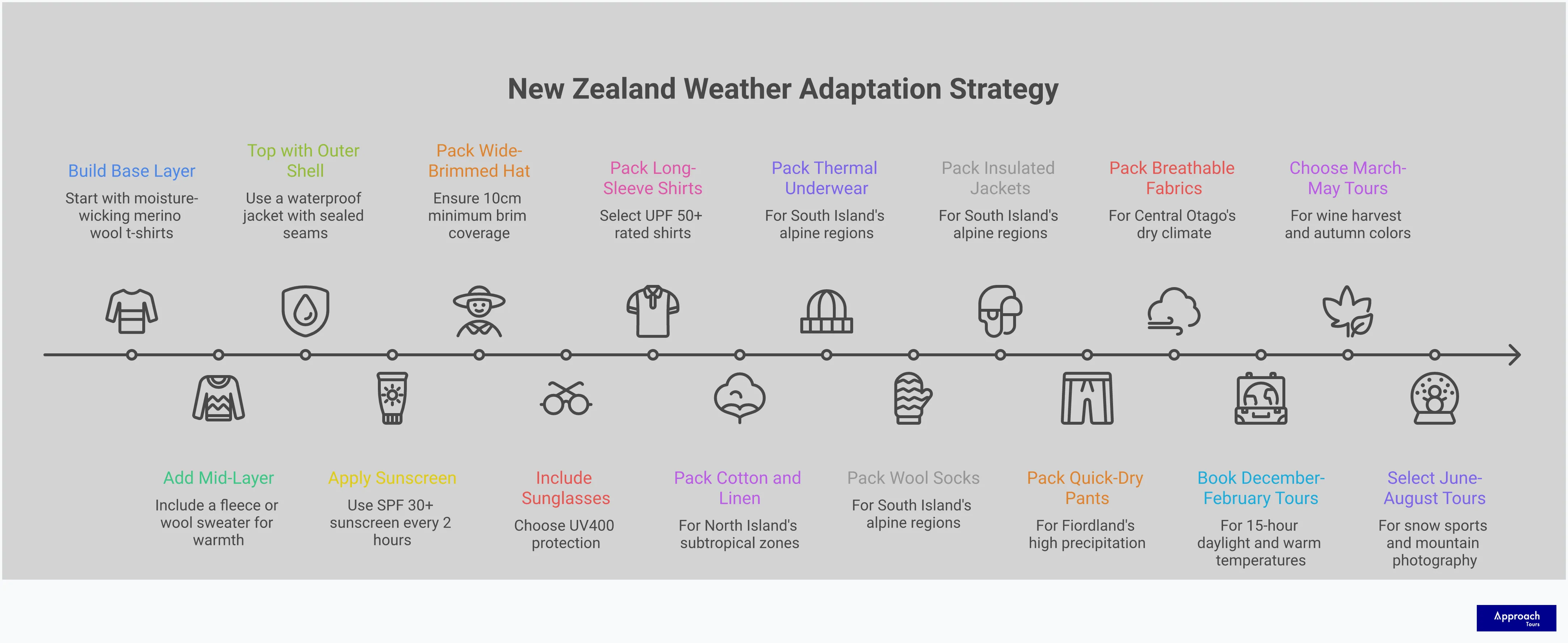
Your Seasonal Packing Checklist
No matter when you travel to New Zealand a few core items are essential. A high-quality waterproof and windproof jacket is your best friend for fending off that famous “liquid sunshine” and brisk winds. Comfortable walking shoes with good grip are non-negotiable as you’ll be exploring everything from charming towns to national parks. For summer tours pack lightweight clothing made from natural fibres like cotton or linen plus a swimsuit for beach opportunities. In the cooler months of autumn and winter you’ll want to add warmer layers like merino wool sweaters a fleece jacket, gloves and a cozy hat. And of course a camera is a must-have for every season.
The Art of Layering for Any Forecast
The secret to staying comfortable through New Zealand’s quick-changing weather is mastering the art of layering. A typical day might start with a cool misty morning that calls for a sweater and a jacket. By midday the sun could be shining brightly making a simple t-shirt the perfect attire. Layering allows you to adapt instantly. Start with a comfortable base layer like a t-shirt. Add a mid-layer for warmth such as a fleece or a merino wool sweater. Top it all off with a waterproof and windproof outer shell. This simple system lets you add or remove pieces as the day unfolds ensuring you’re always prepared for the local forecast.
Staying Safe Under the Kiwi Sun
One thing that often surprises visitors is the intensity of the sun in New Zealand. Due to its clear air and position under the ozone layer the sun’s UV rays can be particularly strong even on cloudy days. Protecting your skin is essential for a comfortable and safe tour. We always recommend packing a wide-brimmed hat sunglasses with UV protection and a high-SPF broad-spectrum sunscreen. You’ll be glad you have them when we’re strolling through a sun-drenched vineyard or enjoying a scenic coastal walk. A little preparation goes a long way in keeping you safe from the powerful Kiwi sun.
Must-Have Rain Gear and Walking Shoes
If there are two items you should invest in before your tour they are a reliable rain jacket and excellent walking shoes. For rain gear look for something that is truly waterproof not just water-resistant. Sealed seams and a good hood will keep you dry and cheerful during an unexpected downpour. When it comes to footwear comfort is king. Our tours include plenty of opportunities to explore on foot so you’ll want shoes that are already broken in and provide great support. Whether you choose sturdy walking shoes or light hiking boots make sure they can handle varied terrain. Happy feet make for a happy traveller on every step of the adventure.
What to Expect as a Canadian Traveller
As Canadians we understand diverse weather but New Zealand offers its own unique climate quirks. While you might find the landscapes feel familiar in their grandeur the weather patterns are shaped by entirely different forces. The key is understanding that while our countries share a Commonwealth heritage they do not share a hemisphere. This simple fact changes everything about planning your tour. Knowing these differences will help you pack smarter and get the most out of every moment of your adventure from the Bay of Islands to the dramatic fiords.
Remember: Our Summer is Their Winter
The most important thing to remember is that New Zealand’s seasons are the opposite of ours. When we’re enjoying long summer days in July and August Kiwis are in the middle of their winter. Likewise our cold snowy January is their peak summer. This seasonal flip is a wonderful thing. It means you can escape the Canadian winter for sunshine and warmth. The best time to visit truly depends on the experience you seek whether it’s basking on a summer beach or admiring snow-dusted mountains from a cozy lodge.
How the Ocean Shapes the Weather
New Zealand is an island nation surrounded by the sea and this has a massive impact on its weather. Unlike Canada’s continental climate which brings extreme temperature swings New Zealand enjoys a much milder maritime climate. The ocean keeps things from getting too hot or too cold. You won’t find the biting -30°C days of a prairie winter or the humid heat of an Ontario summer. Instead you can expect moderate temperatures and a good amount of sunshine. As a general rule temperatures get cooler the further south you travel toward the Southern Alps.
Why You Should Always Expect the Unexpected
If there’s one piece of local wisdom to take to heart it’s to be ready for anything. New Zealand is famous for experiencing “four seasons in one day.” A morning can start with brilliant sunshine give way to a sudden rain shower and then return to clear skies by the afternoon. This is especially true in mountainous areas. These sudden shifts are part of the country’s charm. Your Group Guru and local guides are experts at adapting the day’s plans to the forecast ensuring your comfort and safety no matter what the sky has in store.
A Quick Note on Sun Intensity
The sun in New Zealand feels different and it’s important to be prepared. Due to the country’s clean air and its position under a thinner part of the ozone layer the sun’s UV rays are incredibly strong. You can get a sunburn much faster than you would at home even on a cool or cloudy day. This is true throughout the year not just in summer. Sun protection is not optional here. Packing a good hat sunglasses and high-SPF sunscreen is essential for staying comfortable and safe while you explore the country’s stunning outdoor beauty.
Find the Best Time to Visit for Your Travel Style
New Zealand offers a different kind of magic in every season. The best time for your tour depends on what you want to see and do. Whether you dream of sun-drenched coastlines or cozy cultural explorations matching your travel style to the season is the key to an unforgettable experience. Let’s find the perfect time for your New Zealand adventure.
For the Adventurous Spirit
If your idea of a perfect day involves exploring scenic trails and breathing in fresh air New Zealand’s summer and winter have you covered. Summer from December to February brings long sunny days perfect for walking along golden beaches or hiking through lush national parks. The warm weather invites you to be outdoors from dawn until dusk. Winter from June to August offers a completely different kind of beauty. Imagine crisp clear days with snow-covered mountains creating a stunning backdrop for exploring majestic fjords or stargazing in some of the world’s darkest skies. The New Zealand climate provides a dramatic stage for adventure all year round.
For Those Who Love Comfort and Culture
For travellers who appreciate mild weather and vibrant culture the shoulder seasons are ideal. Autumn from March to May paints the landscape in brilliant shades of gold and orange. The days are mild and the mornings are crisp making it a wonderful time for scenic drives through historic towns or enjoying a tour of local vineyards. Spring from September to November is a time of renewal. The country bursts into life with blooming flowers and lush greenery. It’s a fantastic season for leisurely hikes past cascading waterfalls or cycling through gardens as temperatures rise and the days grow longer. These seasons offer comfortable conditions for soaking in New Zealand’s natural beauty and local charm.
For the Food and Wine Lover
If your travels are guided by your taste buds plan your tour around New Zealand’s bountiful seasons. Autumn from March to May is especially delightful as it’s harvest time in the country’s famed wine regions. You can enjoy scenic drives to vineyards for tastings and see the winemaking process in action. The weather is mild and perfect for exploring local farmers markets overflowing with seasonal produce. Summer from December to March also offers incredible culinary experiences. Warm temperatures create the perfect atmosphere for outdoor dining. You can enjoy fresh seafood by the coast or indulge in local delicacies while soaking up the sun. Many New Zealand activities revolve around its incredible food and wine scene.
Let Us Handle the Details of Your New Zealand Tour
Planning a trip halfway around the world comes with its own set of questions and packing for New Zealand’s famously changeable weather is often at the top of the list. The country’s position in the South Pacific creates a unique temperate maritime climate which means conditions can shift quickly. One moment you might be basking in sunshine and the next you could be reaching for a light jacket. While this makes for dramatic green landscapes it can make planning feel a bit daunting.
That’s where we come in. Instead of spending your time studying weather charts we invite you to leave the logistics to us. Our team thoughtfully crafts each New Zealand tour with the seasons in mind. We know the best times to visit specific regions to maximize sunshine and comfort. We plan activities that shine in the current season whether it’s enjoying a coastal walk during the warm summer months from December to February or admiring the vibrant foliage with a glass of wine in hand during the crisp autumn air.
Our goal is to remove any uncertainty so you can simply anticipate the adventure ahead. We provide you with detailed packing guidance ensuring you’re perfectly prepared with the right layers for any forecast. From the moment you book until you return home our team and your on-tour Group Guru handle all the details. You can relax knowing that your comfort is our top priority letting you fully immerse yourself in the stunning beauty of Aotearoa without a single worry about the weather.
Related Articles
- Auckland Weather by Month: Your Complete Guide
- Best Time to Visit Queenstown: Your Seasonal Guide
- Best New Zealand Tours for a Luxurious Escape
Frequently Asked Questions
What does “four seasons in one day” really mean for my tour? This popular Kiwi saying simply means the weather can change very quickly. You might start the day with clear blue skies and then experience a brief rain shower followed by a cool breeze all before lunchtime. For your tour it means being prepared is more about flexibility than anything else. Your Group Guru and local guides are experts at reading the day’s forecast and will always have a plan to ensure you are comfortable and can enjoy the sights without worry. It’s less of a disruption and more a part of the country’s dynamic charm.
I’m not a fan of cold weather. Is winter a bad time to visit? Not at all. A New Zealand winter is very different from a Canadian one. The climate is much milder thanks to the ocean so you won’t find the extreme cold we’re used to. While the South Island’s mountains will be beautifully snow-capped daytime temperatures in most areas are crisp and cool rather than freezing. It’s a wonderful time to visit geothermal hot pools see dramatic landscapes without the summer crowds and enjoy the cozy atmosphere of local cafes. With the right layers it can be a magical and peaceful time to explore.
How much will the weather differ between the North and South Islands on my tour? You will definitely notice a difference as you travel between the islands. The North Island generally has a warmer subtropical climate with mild winters and warm summers. As you travel south toward the Southern Alps the air becomes cooler and the weather more alpine. This is why our tours are planned so carefully. We ensure the activities and pacing are perfectly suited to the regional climate you’re in. Think of it as experiencing two distinct and beautiful countries in one seamless tour.
Do I really need to worry about sunscreen outside of the summer months? Yes this is one of our most important tips for travellers. The sun in New Zealand is surprisingly strong all year round due to the country’s clear air and its position under a thinner part of the ozone layer. You can get a sunburn much more quickly than you might expect even on a cool or overcast day in spring or autumn. We always recommend making a good hat sunglasses and high-SPF sunscreen part of your daily routine to stay safe and comfortable while you explore.
What is the single most important packing strategy for New Zealand? The absolute best strategy is to pack layers. Instead of bringing heavy single-purpose items think about bringing several lighter pieces you can wear together. A base layer like a t-shirt a warm mid-layer like a fleece or merino sweater and a waterproof outer jacket will prepare you for almost any weather situation. This system allows you to easily add or remove clothing as conditions change throughout the day ensuring you’re always comfortable whether you’re exploring a city or admiring a mountain view.