Beyond its famous nickname “Windy Welly” lies a city with a surprisingly mild and enjoyable climate. You won’t find extreme heat or snow here. Instead you’ll discover a temperate maritime environment with comfortable summers and cool winters. The wind is simply a feature of the landscape keeping the air fresh and creating dramatic beautiful skies over the harbour. It’s a city that invites you to be outside. To help you make the most of your time we’ve broken down the Wellington weather by month. This detailed look will show you the nuances of each season from the calm golden light of autumn to the vibrant blooming gardens of spring so you can arrive feeling completely prepared.
Key Takeaways
- Embrace layering for all-day comfort: A simple system with a base shirt, a warm fleece and a protective outer jacket lets you easily adapt to Wellington’s famous four seasons in a day.
- Match the season to your ideal tour: Summer offers warm, sunny days perfect for festivals and waterfront strolls. For fewer crowds and beautiful autumn colours, consider March to May. Winter is best for unhurried museum visits, while spring provides a vibrant, blooming landscape.
- Prioritize a windproof and waterproof jacket: This is the single most important item for your suitcase. It will keep you warm and dry during sudden showers or brisk winds, allowing you to enjoy the city’s sights without interruption.
Wellington’s Weather: A Traveller’s Guide to Every Season
Wellington’s weather has a personality all its own. Known affectionately (and sometimes exasperatedly) as “Windy Welly” it’s a city where the sky can change its mind in a heartbeat. One moment you might be basking in brilliant sunshine on the waterfront and the next you’re pulling your jacket a little tighter as a breeze sweeps in from the harbour. But this dynamic climate is part of what makes the city so vibrant and alive. It’s a place that reminds you of the power of nature right in the heart of a bustling capital. Don’t let its reputation for unpredictability worry you. With a little insight you’ll find it’s easy to enjoy everything the city has to offer no matter the forecast.
Understanding Wellington’s seasons is the key to a comfortable and delightful tour. It’s not a city of extreme temperatures. You won’t find sweltering heat or deep snow. Instead you’ll experience a temperate maritime climate with mild summers and cool damp winters. The real trick is preparing for the delightful unpredictability. Packing layers is not just a suggestion here it’s a way of life. This guide will walk you through what to expect month by month so you can pack your bags with confidence and be ready for whatever beautiful weather Wellington decides to share with you. From the golden light of autumn to the crisp air of spring every season offers a unique way to experience New Zealand’s capital.
What is Wellington’s Climate Really Like?
Wellington enjoys a temperate climate with comfortable summers and cool wet winters. Throughout the year temperatures generally hover between a mild 7°C and 20°C. It’s quite rare for the mercury to dip below 3°C or rise above 23°C so you can leave your heavy-duty winter parkas and extreme summer gear at home. The city is partly cloudy for much of the year which creates a soft beautiful light perfect for photography. While it’s known for being windy and having its share of rain the overall Wellington climate is moderate making it a wonderful place to explore on foot whenever you travel.
Why Weather Can Change from Street to Street
You’ll often hear locals talk about experiencing “four seasons in one day” and it’s not much of an exaggeration. This rapid-fire weather change is due to Wellington’s unique geography. The city sits on the edge of the Cook Strait a narrow channel of water separating New Zealand’s North and South Islands. This strait acts as a natural wind tunnel funneling breezes that can bring a sudden chill or a passing shower. This New Zealand climate guide explains how this geography creates such a dynamic system. One neighbourhood might be enjoying calm sunshine while another just a few streets over is getting a brisk gust of wind. This is why layering your clothing is the best strategy for staying comfortable.
Summer in Wellington: December to February
Summer is when Wellington truly shines. From December through February the city sheds its layers and embraces long sunny days perfect for exploring. This is the most popular season for travellers and for good reason. The weather is at its warmest and most reliable making it ideal for everything from waterfront walks to al fresco dining. The city buzzes with energy as locals and visitors alike take to the streets parks and beaches to soak up the sunshine. While you might still need a light jacket for the evenings the days are generally pleasant and bright offering the perfect backdrop for your New Zealand adventure.
December: A Mild and Welcoming Start to Summer
December marks a gentle and inviting start to Wellington’s summer season. The weather is comfortably mild with average highs hovering around 20°C (68°F). It’s warm enough to enjoy the city’s outdoor cafes and laneways without the intense heat of mid-summer. This is a wonderful time to explore on foot as the days are long and the air is fresh. You’ll feel a festive excitement building throughout the month as the city decorates for the holidays. It’s the perfect weather for discovering the vibrant Cuba Street precinct or simply finding a sunny spot to relax.
January: Long Sunny Days and Little Rain
January is the heart of a Wellington summer characterized by long sun-drenched days and very little rainfall. It’s one of the driest months of the year meaning you can confidently plan your outdoor activities. With the sun sticking around late into the evening you have ample time to see everything on your list. This is the ideal month for a visit to the magnificent Wellington Botanic Garden where the floral displays are in full bloom. The consistent sunshine and pleasant temperatures create a perfect setting for exploring the city’s stunning natural landscapes.
February: The Warmest Month for Seaside Strolls
As the warmest month of the year February invites you to enjoy Wellington’s beautiful coastline. Average temperatures are at their peak reaching a comfortable 20°C (68°F) with warmer evenings than earlier in the season. This is the perfect time for a leisurely stroll along the waterfront culminating at Oriental Bay the city’s beloved golden-sand beach. You’ll see locals enjoying the water and relaxing on the shore. The city’s famous breeze provides a gentle coolness keeping the climate pleasant rather than humid. It’s an excellent month for enjoying a meal with a view of the harbour.
Autumn in Wellington: March to May
As summer’s vibrant energy gently fades autumn arrives in Wellington with a soft golden glow and comfortable temperatures. This season from March to May is a truly wonderful time for travellers to explore the capital. The summer crowds begin to thin out and the city settles into a more relaxed pace that’s perfect for discovery. The air grows cooler and crisper each month creating the ideal conditions for long walks through the city’s charming streets and lush parks. It’s a time when Wellington feels both alive and serene.
Autumn offers a beautiful transition. You can enjoy the last of the warm sunny days before embracing the cozy atmosphere of Wellington’s renowned cafes and world-class museums. The changing light casts a magical spell over the harbour and surrounding hills making it a picturesque time for sightseeing and photography. It’s a season that invites you to slow down and savour the city’s unique character. Imagine admiring the brilliant autumn leaves in the Botanic Garden or enjoying a perfectly made flat white while watching the world go by from a comfortable seat. Packing layers is the secret to enjoying everything this delightful season has to offer from a sunny afternoon stroll to a cool evening out.
March: Golden Light and Vibrant City Life
March in Wellington feels like a lovely extension of summer. The weather remains mild and pleasant with average daytime temperatures sitting around 16°C. The sun casts a warm golden light across the city making it an ideal time for exploring on foot without the intense heat of the previous months. The vibrant buzz of summer is still in the air and you’ll find the waterfront promenade and outdoor cafes are full of life. It’s a fantastic month to simply stroll and soak in the city’s lively atmosphere before the cooler weather gradually sets in. This is your chance to enjoy the best of both seasons.
April: Crisp Air and Changing Colours
April brings a noticeable shift as the air becomes crisper and the first true signs of autumn appear. Temperatures cool down to around 15°C during the day. This is when the city’s parks and green spaces put on a spectacular show. The leaves on deciduous trees turn brilliant shades of gold red and orange. A visit to the Wellington Botanic Garden is a must to see the stunning seasonal display. It’s the perfect time for a leisurely walk wrapped in a light jacket to enjoy the fresh air and beautiful scenery.
May: Cozying Up as Cooler Weather Arrives
By May autumn is in full swing and the city prepares for the coming winter. Days are cooler with average highs around 11°C inviting travellers to discover Wellington’s cozy indoor attractions. This is the perfect time to explore the incredible national museum Te Papa Tongarewa which offers fascinating exhibits on New Zealand’s art history and culture. You can also duck into one of the city’s many artisanal cafes on Cuba Street to warm up with a hot drink and a delicious treat as you watch the city go by.
Winter in Wellington: June to August
Winter in Wellington offers a unique and undeniable charm. As the summer crowds disperse the city settles into a cozy rhythm perfect for thoughtful exploration. This season is ideal for travellers who appreciate a more intimate experience. Imagine sipping a flat white in a warm café while watching the dramatic weather unfold over the harbour or spending an unhurried afternoon with the national treasures at Te Papa Tongarewa. The air is crisp the light is soft and the city’s vibrant cultural heart beats just as strongly. While you will certainly need to pack layers and a good raincoat the rewards are plentiful. It’s a time for indoor discoveries from world-class museums and galleries to the quirky boutique shops lining Cuba Street. With your Group Guru handling all the details you can simply immerse yourself in the city’s rich atmosphere knowing a comfortable coach and first-class hotel are always ready to welcome you back. Winter reveals a quieter more personal side of Wellington a perfect backdrop for creating lasting memories without the hustle and bustle of peak season. The city’s culinary scene truly shines during these months with restaurants offering warm comforting dishes that celebrate local produce. It’s the perfect time to indulge in a long dinner and share stories with fellow travellers.
June: Expect Rain and Indoor Adventures
June officially welcomes winter and it tends to be Wellington’s wettest month. You can expect rainy days and brisk winds which makes it the perfect time to discover the city’s incredible indoor attractions. This is your chance to spend an unhurried afternoon exploring the national Te Papa museum or browsing the masterpieces at the City Gallery. The moody weather outside only enhances the warmth and welcome you will find inside. A detailed look at the Wellington climate shows that preparing for rain and wind is key so a waterproof jacket and comfortable walking shoes are essential for your packing list.
July: Wellington’s Coolest and Quietest Month
July is Wellington’s coolest month with average temperatures hovering around 12°C. It is also one of the quietest times for tourism. This presents a wonderful opportunity for a more personal and tranquil experience of the city. You can enjoy popular spots with fewer people and get a real sense of local life. The weather remains unpredictable with a mix of rain and wind but the city’s vibrant café culture provides plenty of cozy refuges. For those wondering about the best time to visit Wellington July offers a peaceful pace for travellers who enjoy savouring every moment without the hustle and bustle.
August: Chilly Days Before Spring’s Arrival
As winter’s final month August brings a sense of anticipation for the coming spring. The days are still chilly and the weather can famously feel like four seasons in one day. You might experience a bright sunny morning followed by a brisk windy afternoon. This variability is part of Wellington’s character. It’s a great time to enjoy the last of the winter quiet before the city begins to buzz with springtime energy. The broader New Zealand climate is known for its surprises and Wellington in August is no exception so packing versatile layers is the smartest way to prepare for your adventures.
Spring in Wellington: September to November
Spring arrives in Wellington with a burst of energy, shaking off the quiet of winter and painting the city in vibrant colour. From September to November, the capital city awakens with blossoming gardens, longer days and a palpable sense of excitement for the coming summer. This season is a time of beautiful contradictions. One moment you might be enjoying a sunny walk along the waterfront and the next you’ll be pulling your jacket a little tighter against a brisk southerly breeze. That’s the classic Wellington experience.
This unpredictability is part of its charm and it rarely stops locals or travellers from enjoying the city. The key is to dress in layers. Think of your wardrobe like a toolkit, ready for whatever the day brings. Spring is the perfect time to explore the Wellington Botanic Garden, where tulips and rhododendrons create a spectacular display. It’s a season of renewal and the perfect backdrop for discovering a city that is always full of life, no matter what the weather forecast says. Just be sure to pack a light rain jacket alongside your sunglasses.
September: A Mix of Sun, Wind and Showers
September is a true transitional month in Wellington, offering a little taste of everything. You can expect bright, sunny spells perfect for a stroll, followed by brisk winds and the occasional shower. The weather can change quite quickly, so flexibility is your best friend. This is a wonderful time for nature lovers, as the city’s green spaces are just beginning their spring transformation. The air feels fresh and clean after a light rain and the first blossoms add a splash of colour to the landscape. It’s a great month for indoor and outdoor plans. You can visit a museum in the morning and enjoy a walk through the blooming gardens in the afternoon.
October: Famous Winds and Beautiful Blooms
October is when Wellington truly earns its nickname “Windy Welly.” The city is located on the edge of the Cook Strait, a channel that funnels wind and creates some powerful gusts, especially during this month. But don’t let that deter you. While the breezes are strong, the city is at its most beautiful. The spring blooms are in full force, creating a stunning contrast against the dramatic skies. Wellingtonians have a cheerful, resilient attitude toward the wind and you’ll find that life carries on with gusto. Just be sure to hold onto your hat and enjoy the spectacular, windswept views from the top of the cable car.
November: Warmer Days and the Promise of Summer
As spring draws to a close, November brings the first real promise of summer. The days grow noticeably longer and warmer, inviting everyone to spend more time outdoors. While the winds begin to settle and sunshine becomes more frequent, it’s still wise to be prepared for the occasional cool day or passing shower. This is a fantastic time to explore the city’s vibrant waterfront, perhaps stopping for a coffee at an outdoor café or enjoying the lively atmosphere at Oriental Bay. The feeling in the air is one of pleasant anticipation as the city gears up for its warmest and sunniest season.
How Much Rain Should You Expect in Wellington?
Wellington has a charming reputation for its “liquid sunshine” but please don’t let that put you off. A little rain is simply part of the city’s dynamic character and often brings with it the most dramatic beautiful skies over the harbour. The truth is Wellington is a city perfectly suited for all weather. Its compact downtown is filled with world-class museums cozy cafés and unique shops that offer a warm welcome on a drizzly afternoon. The city’s creative spirit thrives indoors just as much as it does outdoors. You’ll find that a rainy day is the perfect opportunity to discover a hidden laneway bookstore or spend an extra hour admiring the exhibits at the national museum Te Papa. Understanding the local weather patterns isn’t about avoiding the rain; it’s about embracing the experience and packing smartly so you can be comfortable no matter what the sky decides to do. With the right mindset and a good jacket you’ll find that Wellington’s energy shines through rain or shine making every moment of your tour memorable. A sudden shower is just an excuse to duck into a gallery find the perfect flat white or simply watch the weather roll in from the comfort of your hotel.
A Look at Rainfall Month by Month
Wellington receives a moderate amount of rain throughout the year with an annual average of about 1,250 mm. The seasons have a distinct feel. Winter which includes the wettest months of June and July sees about 3 inches of rain spread across nine or ten days each month. This is the perfect time for indoor cultural explorations. In contrast summer is much drier. January is typically the driest month of the year making it a wonderful time for strolling along the waterfront and enjoying the city’s outdoor spaces. Knowing the general Wellington climate helps you anticipate the rhythm of the city and pack accordingly for your tour.
How to Enjoy the City Rain or Shine
The weather in Wellington can be famously changeable shifting from bright sun to a sudden shower and back again in the span of an afternoon. This is all part of its coastal charm. The city is brimming with incredible indoor attractions that make any day an adventure. You can spend hours in the magnificent Te Papa museum explore the unique architecture of the Beehive Parliament Buildings or take the iconic red Cable Car up to the Kelburn lookout for stunning views even on a cloudy day. The city’s vibrant café culture provides the perfect refuge to wait out a passing shower with a hot drink. For travellers hoping for the best chance of sunshine the summer months from December to March are ideal for enjoying the many festivals and outdoor attractions. No matter when you visit a flexible attitude and a good waterproof jacket will ensure you can explore the city comfortably.
What About Wellington’s Famous Wind?
You may have heard Wellington’s nickname “Windy Welly” and it’s true the city is known for its breezy personality. But don’t let that deter you. The wind is simply part of the city’s character, carving out its dramatic coastal landscape and keeping the air fresh and clear. It’s not a constant gale but rather a dynamic feature of the local weather that changes with the seasons. Understanding its patterns is the key to a comfortable and enjoyable visit. With a little preparation you’ll be perfectly equipped to explore everything this vibrant capital has to offer, wind and all.
How the Wind Changes with the Seasons
The wind in Wellington isn’t the same year-round. It has a distinct rhythm that follows the seasons. The breeziest time of year typically runs from early September to early January. During these spring and early summer months you can expect stronger, more consistent gusts. October often sees the highest average wind speeds which adds a bit of drama to the beautiful spring blooms around the city. In contrast the calmer months are from late winter into autumn. Detailed climate information shows that knowing these patterns helps travellers anticipate the conditions and make the most of their time outdoors.
How to Dress for the Wind Chill
The most important thing to remember when packing for Wellington is the wind chill. The breeze coming off the Cook Strait can make the air feel significantly cooler than the actual temperature. Your best strategy is to dress in layers. A light shirt, a cozy fleece or sweater and a windproof jacket will give you the flexibility to adapt to changing conditions throughout the day. A good quality windbreaker is an essential item for your suitcase no matter the season. This simple layering system ensures you stay warm and comfortable while strolling along the waterfront or exploring the city’s charming streets, allowing you to fully enjoy the mild climate.
When is the Best Time for Outdoor Activities?
Wellington is a city that invites you to be outside whether you’re strolling along the waterfront or exploring its lush green hills. To make the most of your time it helps to match your plans with the season. Generally the weather is most pleasant for outdoor fun from late October through early May. During these months you can expect comfortable temperatures and clearer skies perfect for discovering the city’s natural beauty and vibrant street life.
Match the Season to Your Interests
Choosing the best time for your tour really comes down to what you love to do. If you dream of sunny days bustling harbourside cafes and a lively festival atmosphere summer is your season. For those who prefer a quieter experience with crisp air and stunning colours autumn offers a wonderful backdrop for scenic walks without the summer crowds. Spring is a delight for nature lovers as the city’s gardens burst into bloom. Even winter has its own charm offering a cozy setting to explore world-class museums and galleries.
Our Favourite Activities for Every Season
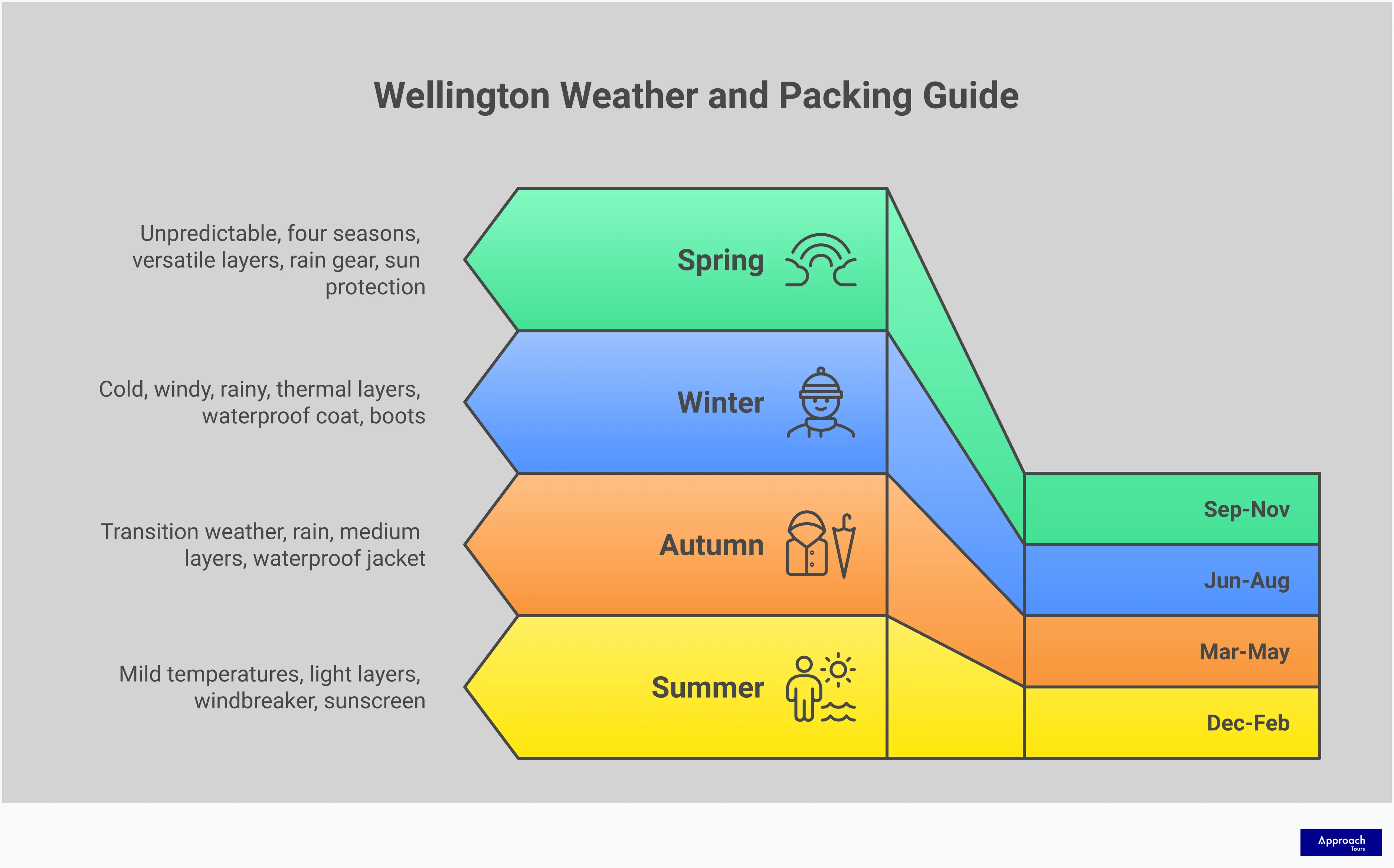
Each season in Wellington brings its own special moments. In summer (December to February) the city is buzzing. We love walking the waterfront relaxing at Oriental Bay and soaking up the energy of local events like the Wellington Pasifika Festival. Autumn (March to May) is perfect for enjoying the golden light and changing leaves in the Botanic Garden. In winter (June to August) you can take shelter in the magnificent Te Papa museum or find a cozy cafe. Spring (September to November) is the time for nature with colourful flowers and wildlife making an appearance on the city’s beautiful coastal trails.
How to Pack for Wellington’s Four Seasons in a Day
Wellington’s weather is famous for its delightful unpredictability. Locals and seasoned travellers often joke that you can experience all four seasons in a single day and they aren’t wrong. One moment you might be basking in brilliant sunshine on the waterfront and the next you could be pulling your jacket a little tighter against a brisk southerly breeze. But this charming variability is part of what makes the city so full of life and character.
The key to enjoying every moment is not to overpack but to pack smartly. With a few key pieces you can create a flexible travel wardrobe that will have you ready for anything the city throws your way. Forget checking the forecast every five minutes. The secret is to embrace the art of layering. This simple strategy allows you to adapt effortlessly as you move through your day from a fascinating museum visit to a scenic cable car ride up the hillside. By preparing for a little bit of everything you ensure your comfort is never left to chance. You can simply focus on the incredible sights and experiences Wellington has to offer.
Your Essential Layering Guide
Think of your outfits as a simple three-part system: a base layer a mid-layer and an outer layer. This approach is the best way to prepare for the New Zealand climate. Start with a comfortable base layer like a short-sleeved or long-sleeved top made from a breathable fabric like merino wool or cotton. Next add a cozy mid-layer for warmth. This could be a stylish fleece a cardigan or a lightweight sweater that is easy to take on and off. Finally top it all off with a protective outer layer. This system gives you complete control. Feeling warm in the sun? Just remove your mid-layer. When the wind picks up you can zip up your outer shell and stay perfectly comfortable.
Don’t Leave Home Without These Items
A few items are non-negotiable for a comfortable trip to Wellington. First and foremost is a quality showerproof and windproof jacket. Sudden showers can appear with little warning and the city’s position on the Cook Strait means a breeze is almost always part of the experience. You will be glad you have a reliable outer layer to keep you warm and dry. Also pack a few warm layers like a fleece or wool sweater to wear underneath. Even on a sunny day the wind can have a surprising chill. Lastly don’t forget sun protection. The sun in New Zealand can be strong so a hat sunglasses and sunscreen are essential for protecting your skin during your outdoor explorations.
Related Articles
- The Complete Guide to Queenstown Weather by Month
- Auckland Weather by Month: Your Complete Guide
- Best Time to Visit Queenstown: Your Seasonal Guide
Frequently Asked Questions
What is the single most important item I should pack for Wellington? Without a doubt a high-quality windproof and showerproof jacket is the most valuable piece of clothing you can bring. Wellington’s weather can change in an instant and a sudden breeze or a passing shower is common. This single outer layer will be your best friend allowing you to stay comfortable while exploring the city. It works perfectly over a fleece or sweater on cooler days or just over a t-shirt when you only need protection from the wind.
Is the wind in Wellington as intense as people say? Wellington has certainly earned its nickname “Windy Welly” but it’s more a feature of the city’s character than a constant problem. The wind is not a gale that blows all day every day. Instead it tends to come in gusts and is often more noticeable during the spring months. With the right layered clothing and a good windbreaker you will find it is perfectly manageable and adds to the dramatic beauty of the city’s coastal setting.
Will a rainy day spoil our plans? Absolutely not. A little “liquid sunshine” is the perfect excuse to discover Wellington’s incredible indoor attractions. The city is home to the magnificent Te Papa Tongarewa national museum countless art galleries and a world-class café scene perfect for waiting out a shower. Your tour is designed with flexibility in mind so you can be sure that a rainy day simply offers a different kind of adventure not a spoiled one.
Do I need to pack heavy winter gear for a winter tour? You can leave your heavy-duty winter parkas and insulated boots at home. Wellington’s winters are cool and damp not freezing. Temperatures rarely drop to the point of needing truly heavy gear. Your best strategy is to pack versatile layers. A warm fleece or a merino wool sweater worn under your windproof jacket will provide plenty of warmth for a winter day without the bulk.
So what is the ‘best’ season to visit Wellington? The ideal time to visit really depends on the experience you are looking for. Summer offers long sunny days and a vibrant festival atmosphere perfect for those who love being outdoors. Autumn provides beautiful golden light and comfortable temperatures with fewer crowds. Spring is a delight for garden lovers when the city’s parks are full of colour. Even winter has a cozy charm perfect for exploring museums and cafes at a relaxed pace. Every season has something special to offer.