Many travellers automatically assume that summer is the only time to experience South Africa’s beautiful coast. While the summer months are indeed glorious you would be missing out on some of the city’s most magical moments. The truth is the best time to visit Cape Town might just be during its quieter seasons. Picture lush green mountainsides clear crisp air and watching southern right whales from the shore. Picture the vineyards glowing in the soft light of autumn. This guide pulls back the curtain on the city’s year-round appeal helping you discover the incredible value and unique beauty of travelling outside the busiest months.
Key Takeaways
- Find Your Perfect Balance in Autumn and Spring: These shoulder seasons offer the best of both worlds with beautiful weather fewer travellers and better value making them ideal for a relaxed and comprehensive tour.
- Tailor Your Trip to Seasonal Highlights: Decide what you want to experience most. Choose summer for sun-drenched beaches and a lively social scene or plan a winter visit for spectacular whale watching and cozy indoor attractions.
- Travel Smarter by Understanding Seasonal Costs: Your budget will go furthest during the winter green season from June to August. Be prepared for premium pricing during the peak summer months from December to February.
Understanding Cape Town’s Seasons
Cape Town’s weather is one of its most charming and talked-about features. The city’s unique position at the tip of Africa gives it a distinct rhythm that shapes the entire experience of being there. Unlike the tropical climates found elsewhere on the continent Cape Town enjoys four very different seasons each offering its own magic. Understanding this flow will help you choose the perfect time for your adventure. From the sun-drenched days of summer perfect for exploring the coastline to the lush green landscapes of winter ideal for whale watching there is truly no wrong time to visit only different experiences to be had. This seasonal rhythm dictates everything from the flowers in bloom at Kirstenbosch to the best time for a wine tasting in the Cape Winelands. Let’s explore what each season holds.
A Mediterranean Climate in Africa
One of the first things to know about Cape Town is that it boasts a wonderful Mediterranean climate. This means you can expect long warm and dry summers followed by cooler wetter winters. It’s a climate pattern familiar to anyone who has travelled through Southern Europe or California and it makes for very pleasant living and travelling conditions. The summers are made for outdoor adventures with endless sunshine and balmy evenings. The winters while bringing necessary rain also transform the landscape into a vibrant green spectacle. This unique climate is the reason the region is so fertile particularly for growing the grapes that make the Cape Winelands world-famous. It’s a gentle climate that invites you to be outside and explore its natural beauty year-round.
Summer: Sun-Soaked Days (December to February)
Summer in Cape Town is a celebration of sun sea and vibrant energy. From December to February the city is bathed in glorious sunshine with long days that stretch into warm evenings. This is the peak season for a reason. The weather is perfect for lounging on iconic beaches like Camps Bay or taking the famous cable car up Table Mountain for breathtaking panoramic views. The city buzzes with activity festivals and outdoor concerts. It’s the most popular time for travellers so you can expect a lively atmosphere everywhere you go. If you dream of a classic sun-filled vacation with perfect weather for sightseeing and swimming this is your season. Just be sure to pack your sunscreen and a hat.
Autumn: Crisp Air and Rich Colours (March to May)
As summer’s heat softens autumn ushers in a period of serene beauty from March to May. The days are still warm and sunny but the intense heat gives way to a comfortable crispness in the air. This is arguably one of the best times to visit. The crowds begin to thin and a tranquil atmosphere settles over the city. It’s the ideal season for hiking and exploring the outdoors without the summer rush. For wine lovers autumn is harvest season in the Cape Winelands. The vineyards are a stunning tapestry of gold and crimson and it’s a fantastic time to tour the estates and sample their world-class wines. It’s a season of mellow fruitfulness and gorgeous light.
Winter: Cozy Season and Green Landscapes (June to August)
Winter in Cape Town from June to August is a time of dramatic beauty and cozy comforts. While it is the rainy season the showers often pass quickly leaving behind crystal-clear air and lush green landscapes. The mountains that were golden in summer are now covered in a vibrant emerald carpet. This is the perfect time to explore the city’s incredible indoor attractions from its world-class museums to its renowned restaurant scene. It’s also the beginning of whale watching season. Southern right whales arrive along the coast to calve offering spectacular sightings particularly from the nearby town of Hermanus. Winter offers a chance to see a different more intimate side of Cape Town with fewer travellers and excellent value.
Spring: A City in Bloom (September to November)
Spring is when Cape Town truly puts on a show. From September to November the landscape explodes into colour as wildflowers carpet the region in a breathtaking display. This is the best time to visit the world-renowned Kirstenbosch National Botanical Garden which is simply spectacular with blooming fynbos and other native flora. The weather is mild and pleasant with warming temperatures and plenty of sunshine making it perfect for any outdoor activity. The whales are still visible along the coast and the summer crowds have yet to arrive. Spring offers a perfect balance of wonderful weather stunning natural beauty and a relaxed pace making it an ideal time for travellers who want to experience the best of everything.
Find Your Perfect Time to Visit Cape Town
Deciding when to visit Cape Town is less about finding the “best” time and more about discovering your perfect time. The city transforms with the seasons offering a different kind of magic throughout the year. Whether you dream of sun-drenched beach days a quiet vineyard tour or the thrill of spotting a Southern Right Whale your ideal Cape Town experience is waiting. Consider what kind of traveller you are and let that guide your decision.
For Sun Worshippers and Festival Fans (December to February)
If your perfect day involves brilliant sunshine and the soft sound of waves then Cape Town’s summer is for you. From December to February the city is alive with energy. The days are long hot and perfect for relaxing on the city’s world-famous beaches from the chic sands of Clifton to the colourful beach houses at Muizenberg. This is peak season so the atmosphere is festive and vibrant with festivals and events. It’s also the busiest time of year so you’ll share the city’s beauty with many other travellers. Planning ahead is key to securing your spot in this summer paradise.
For the Best of Both Worlds (March to May & September to November)
For many travellers the shoulder seasons offer the perfect balance. In autumn from March to May the summer heat softens into a pleasant warmth and the Cape Winelands are bathed in gorgeous hues of red and gold. In spring from September to November the landscape bursts into life. The weather is mild and the region’s famous wildflowers carpet the West Coast in a breathtaking display. During these months you can enjoy the best of Cape Town’s attractions with fewer crowds and a more relaxed pace making it an ideal time for comfortable and in-depth exploration.
For Savvy Travellers and Whale Watchers (June to August)
Cape Town’s winter is a season of dramatic beauty and unique opportunities. While you can expect cooler temperatures and some rain you’ll also be treated to crisp clear days when the mountains look especially stunning. This is the “Green Season” when the landscape is lush and vibrant. It’s the perfect time for cozying up in a world-class restaurant or exploring the city’s excellent museums. Most excitingly this is the beginning of whale watching season. From June onwards you can witness the magnificent Southern Right Whales as they arrive in the coastal waters near towns like Hermanus to calve and nurse their young.
What to See and Do Each Season
Summer: Hit the Beaches and Hike Table Mountain
From December to February Cape Town is bathed in glorious sunshine. The long sun-drenched days are perfect for enjoying the city’s stunning coastline. Imagine yourself relaxing on the pristine sands of Clifton or Camp’s Bay with the turquoise Atlantic stretching before you. For a truly iconic experience a trip up Table Mountain is essential. The cable car whisks you to the summit for breathtaking panoramic views of the city and sea without a strenuous climb. The warm evenings are ideal for enjoying world-class dining at the V&A Waterfront or taking a scenic drive to Cape Point as the sun sets. Summer is a time of vibrant energy when the city truly comes alive.
Autumn: Sip Your Way Through Wine Country
As the summer heat softens from March to May the Cape Winelands enter their most beautiful season. The vineyards are a tapestry of gold red and orange and the air is crisp and clear. This is the perfect time to explore the historic towns of Stellenbosch and Franschhoek. You can spend your days visiting elegant wine estates for tastings and pairings. Many estates have outstanding restaurants where you can enjoy a leisurely lunch overlooking the vines. The milder weather is also wonderful for a gentle hike on trails like Constantia Nek. It’s a sophisticated and relaxing season that allows you to savour the region’s famous culinary scene at a comfortable pace.
Winter: Watch for Whales and Explore the Museums
Winter in Cape Town from June to August offers its own unique magic. This is the prime season for whale watching as southern right whales arrive along the coast to calve. A day trip to the nearby town of Hermanus provides some of the best land-based whale watching in the world. The cooler weather also invites you to explore Cape Town’s rich cultural offerings. You can spend an afternoon admiring contemporary African art at the Zeitz MOCAA or take a moving and insightful tour of Robben Island. Cozy restaurants with fireplaces become inviting havens and the city’s world-class theatres offer a spectacular lineup of performances. It’s a wonderful time to experience the city’s soul without the peak-season crowds.
Spring: Admire Wildflowers and Welcome the Whales
Spring from September to November is a time of spectacular rebirth across the Western Cape. The landscape explodes in a riot of colour as millions of wildflowers bloom. A visit to the West Coast National Park during this time is an unforgettable experience with fields carpeted in vibrant flowers. The whale watching season continues in full swing offering more opportunities to witness these gentle giants. The weather is pleasantly mild and the city feels fresh and revitalized. It’s an ideal time for outdoor enthusiasts who appreciate natural beauty from the blooming flora to the magnificent marine life that graces the coastline. Spring showcases a softer more colourful side of Cape Town.
Plan Your Budget by Season
Timing is everything when you’re travelling and in Cape Town the season you choose will have a direct impact on your budget. The city’s popularity ebbs and flows with its weather creating distinct travel seasons that affect the cost of flights accommodations and even some activities. Understanding this rhythm is the key to planning a tour that aligns perfectly with your financial comfort zone.
Whether you dream of vibrant sun-soaked streets or quiet gallery viewings there is a time to visit that suits your style and your wallet. The bustling energy of summer comes with a premium price tag while the tranquil green season offers incredible value for those who don’t mind packing a light jacket. By planning around these seasonal shifts you can make your travel funds go further without sacrificing the quality of your experience. Let’s look at how the calendar can shape your spending in the magnificent Mother City.
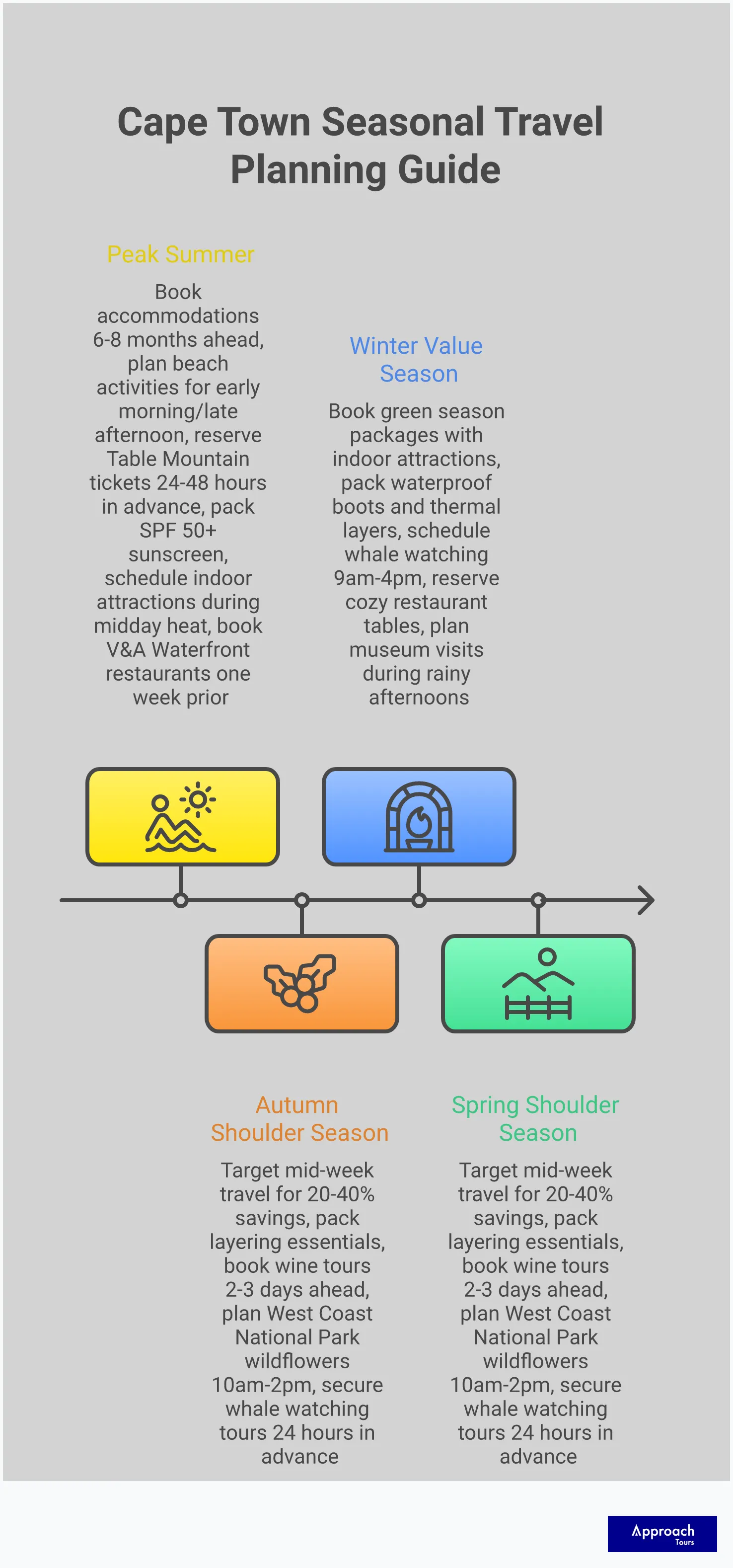
Peak Season: Expect Higher Prices
From December through February Cape Town is alive with sunshine and celebration. This is the city’s peak summer season and it coincides with major holidays like Christmas and New Year’s. The atmosphere is electric but this popularity means you’ll be sharing the city with many other travellers. Consequently this is the most expensive time to visit. You can expect higher prices for flights and hotels so it’s essential to book your arrangements well in advance to secure your spot. If your heart is set on a sun-drenched summer escape be prepared for a budget that reflects the high demand.
Shoulder Season: Great Value and Fewer Crowds
For many seasoned travellers the shoulder seasons offer the perfect balance. These periods from March to May and again from September to November are Cape Town’s sweet spot. The weather remains beautiful often with warm sunny days perfect for exploring but the large summer crowds have thinned out. This dip in demand translates to better value with more attractive pricing for airfare and accommodations sometimes offering significant savings. You get all the beauty and charm of the city with more room to breathe making it an ideal time for a relaxed and comfortable tour.
Off-Peak Season: The Most Affordable Time to Go
If getting the absolute best value is your top priority consider visiting during the off-peak winter season from June to August. This is when you’ll find the lowest prices on flights and hotels allowing your budget to stretch the furthest. While this is the coolest and rainiest time of year it has a unique charm. The landscape is lush and green and it’s the prime season for whale watching along the coast. It’s the perfect time to explore Cape Town’s world-class indoor attractions like museums and art galleries or cozy up in a cafe in the Cape Winelands without the crowds.
Weighing the Pros and Cons of Each Season
Every season in Cape Town offers a unique charm and a different set of experiences. Deciding when to go really depends on what you value most whether it’s brilliant sunshine bustling crowds or quiet moments of discovery. There’s truly no wrong time to visit this incredible city but understanding the trade-offs for each time of year will help you find your perfect fit. Let’s look at what you can expect from the weather the crowds and the overall atmosphere throughout the year.
Summer: Glorious Weather Meets Big Crowds
From December to February summer drapes Cape Town in brilliant sunshine and hot weather perfect for lazy days on its world-famous beaches. The city buzzes with an infectious energy as festivals and outdoor events fill the calendar. The trade-off for this glorious weather is the crowd. This is peak tourist season especially around the holidays so booking well in advance is essential. While the atmosphere is vibrant and exciting you’ll find that popular spots are busy. For those who love the heat and a lively social scene summer is an unbeatable time to experience the city at its most animated.
Autumn: Perfect Temperatures with a Chance of Rain
As summer’s intensity fades autumn arrives from March to May offering what many consider the perfect balance. The days are pleasantly warm and mild with fewer travellers than the preceding months. This is an ideal time to explore the Cape Winelands as the vineyards glow in shades of gold and crimson. The air is crisp and clear perfect for photography. While the chance of rain increases as May approaches the comfortable temperatures and quieter attractions make autumn a fantastic time for a relaxed and immersive tour. It’s a season that invites you to slow down and savour every moment.
Winter: Incredible Value Meets Cooler Weather
Winter from June to August is Cape Town’s cozy season. While you can expect cooler temperatures rain and wind it’s also a time of incredible value and unique opportunities. The landscape turns a lush vibrant green a sight to behold. This is the prime season for whale watching as southern right whales arrive along the coast. It’s also a wonderful time to explore the city’s excellent museums and enjoy intimate wine tastings by a crackling fire. For savvy travellers who don’t mind packing a jacket winter offers a chance to see a different side of the city without the crowds and at a lower cost.
Spring: Beautiful Blooms and Unpredictable Skies
Spring bursts onto the scene from September to November transforming the region into a painter’s palette of colour. This is the best time to witness the spectacular wildflower displays that carpet the West Coast. The weather is mild and pleasant though the skies can be unpredictable as winter gives way to summer. Like autumn spring is a shoulder season offering a sweet spot of fewer crowds and better value. It’s a time of renewal and beauty making it a wonderful period for nature lovers to explore the botanical gardens and coastal parks as they come alive.
Related Articles
- The Best South Africa Trips for First-Timers
- Ultimate Guide to South Africa Tours: Plan Your Dream Trip
- Tours to South Africa: A Traveller’s Guide
Frequently Asked Questions
You mention every season is great but if I had to choose one what’s the most popular time for a first-time visitor? For a first visit that captures the classic Cape Town experience many travellers find the shoulder seasons from March to May or September to November to be perfect. During these months the weather is wonderfully pleasant and warm without the intense heat of mid-summer. You get to enjoy all the iconic sights with fewer people around which makes for a more relaxed and personal experience. It truly feels like you have a bit more of the city to yourself.
I’m concerned about the winter rain. Will it ruin my tour? That’s a very fair question. While winter is the rainy season it’s not a constant downpour. Cape Town’s winter rain often comes in showers that pass through leaving behind crisp clear air and stunningly green landscapes. We always plan our days to make the most of the weather. It’s the perfect time to explore the city’s incredible museums and galleries or enjoy a cozy wine tasting in the Winelands. Plus it’s the best season for whale watching which is an unforgettable experience that more than makes up for a bit of rain.
When is the best time to see both the whales and the wildflowers? If you want to experience both of these natural wonders your best bet is to visit in September. This is the magical month when the two seasons overlap. The wildflower season is in full swing carpeting the West Coast in brilliant colour and the Southern Right Whales are still very active along the coast near Hermanus. It’s a truly spectacular time to witness the incredible biodiversity of the Western Cape.
How intense is the summer heat and will it affect our activities? Cape Town’s summer is beautifully warm and dry rather than humid and sticky so most people find it very comfortable. Temperatures are perfect for enjoying the beaches and coastline. We are always mindful of the sun and schedule our activities accordingly. For example we might visit an exposed location like Table Mountain in the morning to avoid the strongest midday heat. Your comfort is always our priority so you can simply relax and enjoy the sunshine.
What kind of clothing should I pack for a spring or autumn tour? Layering is your best friend during these beautiful seasons. The days are generally warm and sunny enough for short sleeves but the evenings can be cool and crisp. I recommend packing light sweaters a versatile jacket and a scarf. This allows you to easily adjust as the temperature changes throughout the day. Comfortable walking shoes are a must for exploring everything from the cobblestone streets of the city to the garden paths of the Winelands.