What do you dream of when you picture your South African tour? Is it the breathtaking sight of entire streets canopied in purple jacaranda blossoms? Perhaps it is the thrill of a safari where the dry season makes wildlife easier to spot near a waterhole. Or maybe you envision leisurely days exploring powerful museums and vibrant markets in perfectly mild weather. The truth is the best time to visit Johannesburg depends entirely on what you want to see and do. Each season offers a different lens through which to experience this dynamic city. This guide will help you match your travel wishes with the perfect time of year.
Key Takeaways
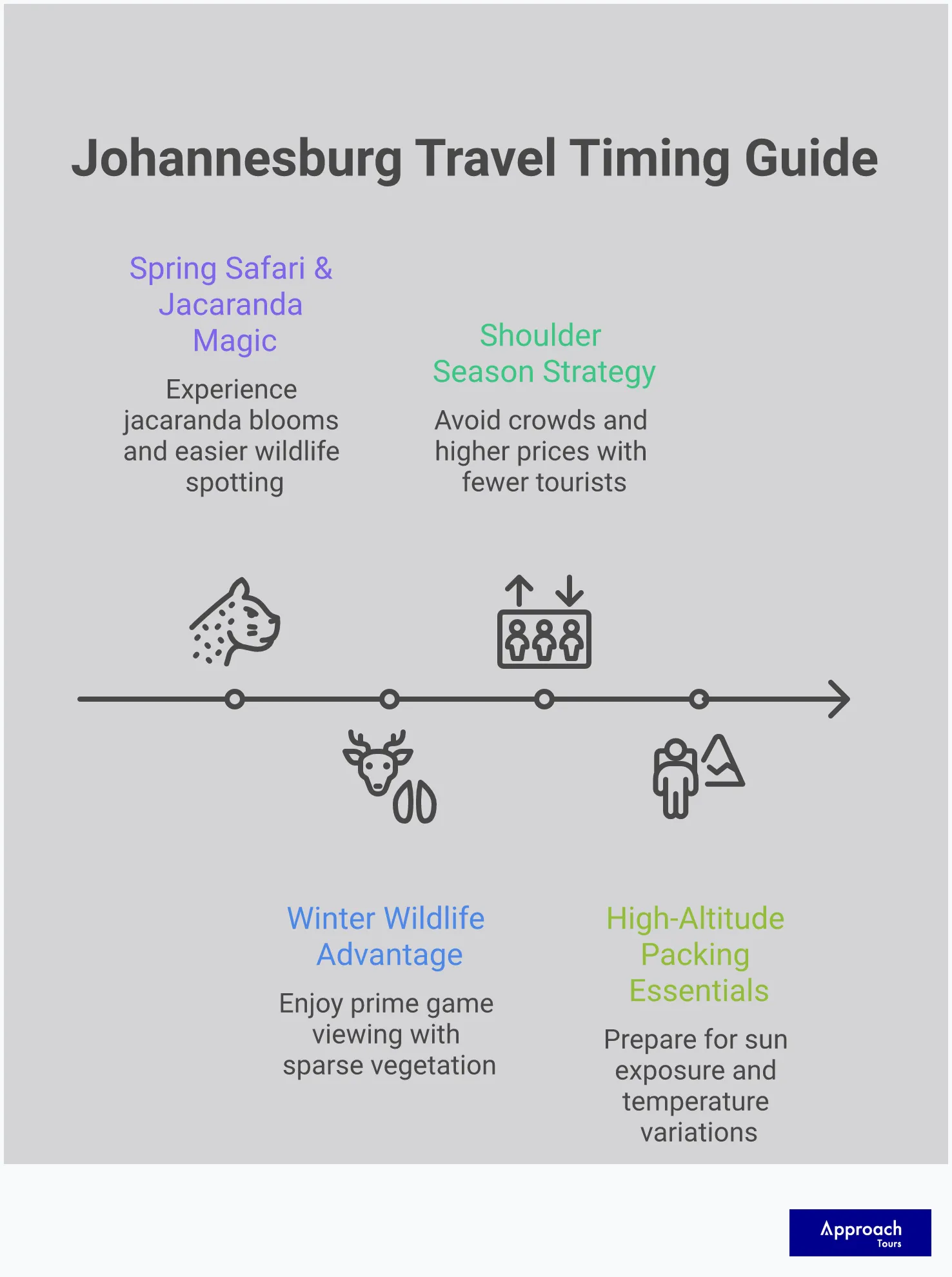
- Aim for Autumn or Spring: For the ideal balance of pleasant weather and smaller crowds, plan your visit during March to May or September to November. These shoulder seasons offer comfortable temperatures for exploring and the stunning bonus of the city’s famous jacaranda blooms in the spring.
- Choose Winter for the Best Wildlife Viewing: If a safari is high on your list, the dry winter season from June to August is unbeatable. The sparse vegetation and the tendency for animals to gather around water sources make for incredible and frequent wildlife sightings.
- Pack Smart with Layers and Sun Protection: Johannesburg’s high altitude means cool mornings and evenings even on sunny days, so layering is essential for comfort. The sun is also stronger year-round, making a wide-brimmed hat, sunglasses and high-SPF sunscreen non-negotiable items for your suitcase.
What is Johannesburg’s Climate Like?
Johannesburg’s high-altitude location gives it a truly delightful climate. Unlike the humid coastal cities you might picture Joburg enjoys a subtropical highland climate with four distinct seasons. This means you can expect dry sunny winters and warm summers with dramatic afternoon thunderstorms. Understanding the rhythm of its weather will help you pack perfectly and make the most of your time in this vibrant city. Let’s look at what each season has in store.
Summer (December to February): Hot and Wet
Summer in Johannesburg is a season of vibrant energy. Expect warm to hot days perfect for exploring the city’s markets and gardens. The air can feel humid but the real show begins in the afternoon. Powerful and brief thunderstorms often roll in clearing the air and leaving behind a fresh earthy scent and lush green landscapes. These storms are a spectacular part of the Highveld climate and rarely disrupt plans for long. Just be sure to pack light clothing a waterproof jacket and an umbrella for those sudden downpours.
Autumn (March to May): Mild and Pleasant
Many consider autumn the golden season in Johannesburg and for good reason. The summer humidity fades away replaced by a string of mild sunny days and comfortable cool evenings. The light takes on a soft golden quality and the city’s trees begin to show hints of amber and red. It’s the perfect weather for long leisurely walks through neighbourhoods like Melville or for enjoying a coffee at an outdoor café. With fewer crowds than in peak season you’ll find it’s an especially peaceful time to explore the city’s many attractions.
Winter (June to August): Cool and Dry
Johannesburg’s winter is characterized by its bright clear skies and dry air. Days are typically mild and sunny making it wonderful for sightseeing as long as you have a sweater handy. Once the sun sets however the temperature drops quite quickly. Evenings and early mornings are crisp and chilly so packing layers is essential. Think warm jackets scarves and cozy sweaters for when you head out for dinner or an early start. This dry season is also fantastic for wildlife viewing in nearby malaria-free reserves as animals gather around waterholes making them easier to spot.
Spring (September to November): Warm and Blooming
Spring is when Johannesburg truly puts on a show. From late September through October the city transforms into a sea of purple as thousands of jacaranda trees burst into bloom. It’s a breathtaking sight that you have to see to believe. The weather is simply gorgeous with temperatures warming up to a comfortable 15°C to 25°C. It’s an ideal time for any outdoor activity from visiting the botanical gardens to exploring the city’s vibrant street art. The jacaranda bloom is a celebrated local event and a magical backdrop for any tour of the city.
When Should You Visit to Avoid Crowds?
Johannesburg is a city that pulses with energy all year long but timing your visit can make a world of difference. If you prefer a more relaxed pace with fewer people at museums and markets this is for you. The key is to aim for the shoulder seasons. These periods just outside the main tourist rush offer a sweet spot of pleasant weather and thinner crowds. For Johannesburg that means travelling during autumn (March to May) or spring (September to November). You get all the benefits of this incredible city with a little more room to breathe. It’s the perfect way to feel like you’re getting an insider’s experience without the long lines. This approach allows for more spontaneous moments whether that’s lingering over a coffee at a sidewalk cafe or having a more personal interaction with a guide at a historical site. When the city is less crowded you can connect with its rhythm on a deeper level. It means less time waiting and more time discovering the art galleries vibrant neighbourhoods and poignant historical landmarks that make this city so compelling.
Peak Season: Crowds and Costs
The busiest time to visit Johannesburg and its surrounding areas is often during the dry winter months from May to September. This period is prime time for wildlife viewing in nearby game reserves which attracts travellers from around the globe. While the weather is beautiful this popularity means more people at major attractions and higher demand for flights and accommodations. Prices can increase to reflect this demand. An all-inclusive tour helps manage these details but it’s still helpful to know that you’ll be sharing the city’s highlights with many other enthusiastic visitors during these months.
Planning Around School Holidays
One of the great advantages of travelling when you’re retired is the freedom to go whenever you please. You aren’t tied to a school schedule and you can use that to your advantage. South Africa’s school holidays particularly during June and July can make popular tourist spots much busier. Families often use this time to explore their own country so you’ll find more local travellers alongside international visitors. A quick search for the South African school calendar can help you plan your dates for a quieter and more serene experience letting you connect more deeply with the places you visit.
Popular Festivals and Events
Johannesburg has a fantastic and lively cultural calendar. From music festivals that draw world-class performers to celebrations of food and art there is always something happening. Spring is especially vibrant with events like the Joburg Gin Festival and other celebrations that fill the city with excitement. While these events offer a wonderful glimpse into local culture they also attract significant crowds. It’s worth considering what kind of tour you want. If you thrive on the energy of a big event visiting during a festival could be a highlight. If you prefer a more tranquil atmosphere you might choose to schedule your visit around these larger gatherings.
Why Are Autumn and Spring the Best Times to Visit?
For many seasoned travellers the secret to a perfect tour is timing. Visiting a destination during its shoulder seasons, the periods between the peak and off-peak months, often provides the ideal balance of wonderful weather, manageable crowds and unique seasonal beauty. For Johannesburg this sweet spot falls in autumn and spring. These seasons offer a delightful escape from the intense summer heat and the crisp chill of winter nights. Imagine exploring the city’s vibrant neighbourhoods and historical sites under clear blue skies with a gentle breeze keeping you comfortable.
Spring breathes new life into the city with a spectacular floral display while autumn paints the landscape in warm golden hues. This is when Johannesburg feels most alive and welcoming. The atmosphere is relaxed and the pace is unhurried allowing you to fully immerse yourself in the local culture without the rush of peak season. Whether you are strolling through a botanical garden, enjoying a coffee at a sidewalk café or delving into the city’s profound history, these seasons provide the perfect backdrop for a memorable and comfortable adventure. It is truly the best time to visit South Africa for a well-rounded experience.
Enjoy Perfect Sightseeing Weather
The weather in Johannesburg during autumn (March to May) and spring (September to November) is simply sublime for sightseeing. With daytime temperatures typically ranging from a pleasant 15°C to 25°C you can comfortably explore all day long. You will not have to worry about the sweltering heat of summer or bundling up against the winter cold. This mild climate is perfect for walking tours through areas like Maboneng or Newtown where art and history fill the streets. You can spend hours discovering museums and galleries without feeling drained by the weather. The days are generally sunny and dry making it ideal for photography and creating lasting memories of your time in this dynamic city.
Find Fewer Crowds and Better Rates
One of the greatest advantages of travelling during the shoulder seasons is the noticeable lack of crowds. With the major school holidays of summer and winter behind you Johannesburg’s popular attractions are much more accessible. This means less time waiting in lines and more time engaging with the places you came to see. You can enjoy a more personal and peaceful visit to significant sites like the Apartheid Museum or Constitution Hill. This less crowded environment allows for a deeper connection with the city’s story. Furthermore travelling outside of peak times often results in more attractive rates for flights and accommodations making your tour an even greater value.
Experience Ideal Outdoor Conditions
Autumn and spring showcase Johannesburg’s natural beauty under the most favourable conditions. The mild weather is perfect for enjoying the city’s abundant green spaces from the tranquil Johannesburg Botanical Garden to the sprawling lawns of Emmarentia Dam. In autumn the air is crisp and the light is soft creating a beautiful setting for outdoor exploration. Spring however offers a truly magical spectacle. From late September to November the city is famously blanketed in the purple blossoms of its jacaranda trees. A drive or walk down streets lined with these iconic blooming trees is an unforgettable experience and a highlight for any traveller visiting during this vibrant season.
What Can You Experience Each Season?
Johannesburg offers a unique tapestry of experiences that shift with the seasons. Each time of year brings its own distinct charm and set of activities perfectly suited for curious travellers. Whether you dream of vibrant festivals or serene wildlife encounters there is a perfect season for your visit.
Summer: Cultural Festivals and Outdoor Adventures
Summer in Johannesburg from December to February is a time of lush greenery and vibrant energy. The days are hot and humid often punctuated by brief afternoon rain showers that leave the air feeling fresh and clean. This season is perfect for travellers who love a lively atmosphere. The city comes alive with a variety of cultural festivals celebrating local music and food. Imagine strolling through an outdoor market your senses filled with the sounds of local musicians and the delicious scents of street food. The landscapes are at their most verdant making it a beautiful time for scenic drives with your group.
Autumn: Wine Harvests and Comfortable Exploration
As summer’s intensity fades autumn arrives from March to May offering a gentler side of Johannesburg. The weather is wonderfully mild with comfortable temperatures and less humidity making it an ideal time for exploring the city on foot. With fewer crowds you can enjoy a more relaxed pace at museums and historical sites. This season also coincides with the end of the wine harvest in the nearby Cape Winelands a cause for celebration across the country. It’s a wonderful time to sample local vintages and appreciate South Africa’s rich culinary heritage without the peak season rush.
Winter: Wildlife Viewing and Cultural Attractions
Winter from June to August presents a golden opportunity for one of South Africa’s most iconic experiences: a safari. The days are typically dry and sunny with crisp cool air. This dry weather draws animals to waterholes making them easier to spot. Imagine the thrill of seeing elephants lions and giraffes gather in the wild. The cooler evenings are perfect for enjoying Johannesburg’s indoor attractions. You can spend an afternoon absorbed in the powerful exhibits at the Apartheid Museum and later enjoy a cozy dinner with your fellow travellers sharing stories from the day’s adventures.
Spring: Jacaranda Blooms and Vibrant Festivals
Spring from September to November is arguably the most beautiful time to visit Johannesburg. The city transforms into a sea of purple as thousands of jacaranda trees burst into bloom. Driving through the suburbs under a canopy of these magnificent flowers is an unforgettable sight. The weather is warm and pleasant perfect for enjoying outdoor cafes and markets. This season of renewal also brings a fresh wave of energy to the city with numerous festivals and events. It’s a time of celebration and natural beauty offering a truly picturesque backdrop for your South African tour.
How Does Weather Affect Your Safari?
A trip to South Africa isn’t complete without a safari and Johannesburg is the perfect gateway to some of the world’s most incredible wildlife reserves including the famous Kruger National Park. The season you choose for your tour will dramatically shape your safari experience from the colour of the landscape to the ease of spotting the Big Five. Each season has its own magic and understanding the differences will help you know what to expect when you head out on your first game drive. The time of year influences not just what you see but how you see it creating distinct memories depending on the month.
The biggest factor is the rain. South Africa has a distinct dry season (winter) and wet season (summer). During the dry winter months from May to September the bush thins out making animals easier to see. The lack of water also draws them to predictable rivers and waterholes. In contrast the wet summer months from October to April transform the landscape into a lush green paradise. This seasonal shift affects everything from animal behaviour to the types of photos you’ll capture. While there’s no “bad” time for a safari knowing the pros and cons of each season ensures your adventure meets your expectations. Let’s look at what this means for your adventure.
Why the Dry Season is Great for Game Viewing
If your main goal is to see as much wildlife as possible the dry winter season from May to September is your best bet. During these months the vegetation becomes sparse and the trees lose their leaves. This lack of cover makes it much easier to spot animals from your safari vehicle. As smaller water sources dry up wildlife congregates around the larger rivers and waterholes creating fantastic viewing opportunities. You might see a whole herd of elephants enjoying a drink or lions waiting for prey. The weather is also very pleasant with little rain and fewer mosquitoes making for a more comfortable safari experience.
Visiting Malaria-Free Reserves in Winter
Your health and comfort are always a top priority when you’re travelling. The dry winter season offers an added benefit: a lower risk of malaria in affected areas and fewer insects in general. The cooler drier air means mosquito populations drop significantly. While Kruger National Park has a low malaria risk in winter many travellers appreciate the extra peace of mind. This is also the perfect time to explore South Africa’s excellent malaria-free reserves like Pilanesberg or Madikwe. The cooler daytime temperatures make for comfortable game drives and are ideal for any walking safaris or other outdoor activities included in your tour.
What to Know About Summer Safaris
While the dry season is prime for game viewing a summer safari has its own unique charm. From October to April the rains turn the landscape into a vibrant green spectacle. The scenery is breathtakingly beautiful and it’s a photographer’s dream. This “Green Season” is also the best time for bird watching as thousands of migratory birds arrive. Keep in mind that the thick lush vegetation can make spotting larger animals more difficult. Summer days are hot and humid often with dramatic but short-lived afternoon thunderstorms that clear the air and create stunning sunsets. It’s a different kind of safari but just as memorable.
What Should You Pack for Johannesburg?
Knowing what to pack can make all the difference between a good trip and a great one. Johannesburg’s climate varies with its distinct seasons and its high altitude brings its own set of considerations. Packing smart means you can focus on the incredible experiences ahead without worrying about being unprepared. With a little planning you’ll be comfortable and ready for every adventure from city explorations to wildlife spotting. Your Group Guru will always be on hand with tips but here is a guide to get your suitcase started.
Packing for a Johannesburg Summer
Johannesburg summers are warm with frequent afternoon thundershowers so think light and practical. Pack breathable fabrics like cotton and linen to stay cool during the day. T-shirts short-sleeved blouses and comfortable shorts or skirts are perfect for daytime sightseeing. Don’t forget a light rain jacket or a compact umbrella for those sudden downpours. Comfortable walking sandals are an excellent choice especially for exploring vibrant markets or strolling through the Johannesburg Botanical Garden. A slightly dressier outfit for evening dinners will ensure you feel comfortable and chic as you enjoy the city’s nightlife.
Packing for a Johannesburg Winter
Winter in Johannesburg means crisp dry air and sunny days but chilly mornings and evenings. The key to comfort is layering. Start with long-sleeved tops and add warm layers like fleece jackets or cozy sweaters. A stylish scarf and a light pair of gloves will be your best friends during early morning excursions or after the sun sets. While the daytime sun can feel quite warm you’ll be grateful for those extra layers when the temperature drops. Comfortable closed-toe shoes are a must and packing a pair of warm socks will keep you comfortable on the coach and during your daily explorations.
Year-Round Essentials and Altitude Tips
Regardless of the season there are a few essentials you’ll always want in your bag. Johannesburg sits at a high altitude which means the air is drier and the sun is stronger. Pack a good lip balm and a rich moisturizer to keep your skin happy. It’s also wise to bring a reusable water bottle to stay hydrated throughout the day. Be sure to pack any personal medications you need along with a small first-aid kit for minor scrapes or headaches. For more detailed health and safety packing advice you can review the CDC’s recommendations for travellers visiting South Africa.
Don’t Forget Sun and Insect Protection
The African sun is powerful especially at Johannesburg’s elevation so sun protection is non-negotiable year-round. A wide-brimmed hat stylish sunglasses and a high-SPF broad-spectrum sunscreen are essential for protecting your skin during outdoor activities. While Johannesburg is not a high-risk malaria area insect repellent is still a good idea particularly if your tour includes visits to nature reserves or parks. It provides peace of mind and protection from pesky bites. The CDC offers helpful guidance to avoid bug bites so you can choose an effective repellent and enjoy your time outdoors without any unwanted guests.
A Month-by-Month Guide to Johannesburg’s Weather
Johannesburg’s position on the Highveld plateau gives it a truly delightful climate. The city enjoys dry sunny winters and warm summers punctuated by afternoon thunderstorms. This unique weather pattern means there is no bad time to visit but each season offers a distinct character. Understanding the rhythm of the year will help you picture your perfect tour and pack accordingly for the adventure ahead.
December to February: Summer Heat and Afternoon Storms
Summer in Johannesburg is a vibrant affair from December to February. The days are long hot and humid with the sun shining brightly until mid-afternoon. Then the skies often put on a spectacular show with dramatic thunderstorms that roll in quickly and leave just as fast cooling the air for the evening. This is the rainy season so the city’s parks and gardens are incredibly lush and green. It’s a beautiful time to see the landscape at its most lively. Just be sure to pack a light rain jacket alongside your sun hat for these warm beautiful days.
March to May: Cooling Temperatures and Decreasing Rainfall
As summer fades into autumn the city breathes a sigh of relief. From March to May the intense heat and humidity subside leaving behind wonderfully mild and pleasant weather. The rainfall lessens significantly making it an ideal time for long strolls through markets or relaxing at a sidewalk café. With fewer crowds than in the peak summer months you can enjoy a more tranquil experience. This season offers a perfect balance of comfortable temperatures and sunny skies making it a favourite for many travellers who explore South Africa.
June to August: Dry Winter Days and Chilly Nights
Johannesburg’s winter from June to August is characterized by endless blue skies and warm sunny days. It’s the driest time of year with virtually no rain. This makes it the absolute best season for wildlife viewing on a safari as animals gather at waterholes and the bush is less dense making them easier to spot. While the daytime is perfect for sightseeing the temperature drops sharply once the sun sets. You will want to pack warm layers and a cozy jacket for the crisp evenings and early mornings. It’s a small price to pay for such glorious daytime weather.
September to November: Warming Spring Weather and Jacaranda Season
Spring is when Johannesburg truly puts on a show. From September to November the weather is simply sublime with temperatures warming up to a comfortable range perfect for any activity. The city’s claim to fame during this season is its magnificent jacaranda trees. For a few weeks in October and November entire streets are transformed into breathtaking purple canopies. It’s a photographer’s dream and a magical time to be in the city. The famous jacaranda bloom is a major draw making this one of the most beautiful times to visit.
Experience Johannesburg in Any Season
Johannesburg is a city that pulses with energy all year long. From the jacaranda-lined streets of spring to the crisp clear days of winter there’s truly no bad time to visit. The key is knowing what to expect from each season and planning your activities accordingly. While some travellers love the buzz of the summer holidays others prefer the quieter pace of autumn. With an all-inclusive tour the logistics are handled for you so you can simply immerse yourself in the experience whatever the weather. This means you can focus on the vibrant culture complex history and incredible spirit of the city without worrying about the details.
Every season offers a unique lens through which to see Johannesburg. Summer brings lush green landscapes and a lively atmosphere while autumn offers mild temperatures perfect for exploring the city’s many outdoor markets and historical sites. Winter’s dry sunny days are ideal for wildlife viewing in nearby reserves and spring bursts into colour with blooming flowers that transform the urban scenery. We design our tours to showcase the best of the city from its world-class museums to its bustling neighbourhoods ensuring a memorable trip no matter when you arrive. The beauty of group travel is that every detail is thoughtfully considered allowing you to connect with the destination and your fellow travellers in a meaningful way.
The Benefits of All-Inclusive Group Travel
One of the greatest advantages of group travel is the sheer ease of it all. You don’t have to spend hours researching the best neighbourhoods or figuring out transportation. We handle everything. Visiting during the shoulder seasons of spring or autumn often means you’ll enjoy mild weather and fewer crowds which makes for a more relaxed and intimate group experience. Imagine strolling through the Apartheid Museum or exploring the Maboneng Precinct without the hustle of peak season. With a smaller group and all the planning done for you you can fully absorb the sights and sounds of Johannesburg at a comfortable pace creating deeper connections with both the place and the people you’re travelling with.
Your Group Guru: A Guide for All Seasons
No matter when you travel your Group Guru is there to ensure your experience is seamless and enriching. Think of them as your on-the-ground host dedicated to the group’s comfort and cohesion. Johannesburg is a city with a powerful story crucial for understanding modern South Africa. Your Group Guru working alongside expert local guides helps bring that story to life. They are your go-to person for everything from providing extra blankets on a cool winter evening to suggesting the perfect spot for a photo when the spring jacarandas are in full bloom. Their presence provides a layer of assurance allowing you to relax and engage with your surroundings confident that every detail is being looked after.
Discover Authentic Activities, Year-Round
Johannesburg’s cultural calendar is always buzzing. The city’s vibrant energy doesn’t fade with the seasons; it simply changes its tune. From art exhibitions and theatre productions to food markets and music events there is always something authentic to experience. We craft our itineraries to include meaningful activities that connect you with the local culture whether it’s a cooking class a visit to a craft market or a moving tour of Soweto. The city’s festival season is a perfect example of its year-round appeal offering world-class entertainment and a fantastic atmosphere. You can trust that your tour will be filled with thoughtfully chosen experiences that capture the true spirit of Johannesburg no matter the month.
Related Articles
- The Best South Africa Trips for First-Timers
- Ultimate Guide to South Africa Tours: Plan Your Dream Trip
- Best Time to Visit Kruger: A Guide to the Seasons
Frequently Asked Questions
I want to see the famous jacaranda trees. When is the absolute best time for that? The jacaranda bloom is a truly magical sight and you are smart to plan your tour around it. The peak season for these purple blossoms is typically from late September through October, with some years extending into early November. This period in spring offers the most breathtaking canopies of colour. The weather is also gorgeous at this time, with warm sunny days perfect for walking beneath the trees and capturing beautiful photos.
How cold does it actually get on a winter evening? While Johannesburg’s winter days are beautifully mild and sunny, the temperature drops quite quickly after sunset. You can expect evening temperatures to fall to around 4°C to 7°C, and it can sometimes dip closer to freezing. This is why packing layers is so important. A warm fleece or sweater combined with a jacket and a scarf is usually perfect for staying comfortable when heading out for dinner or returning to your hotel after a day of exploring.
Are the summer thunderstorms disruptive to the tour? This is a great question. While the summer thunderstorms are powerful, they are usually very brief and predictable. They tend to roll in during the late afternoon, last for an hour or so, and then clear up completely, leaving behind fresh air and stunning evening skies. Our itineraries are planned with this weather pattern in mind, so activities are typically scheduled to avoid the rain. Your Group Guru will always keep an eye on the forecast to ensure your day runs smoothly.
If I want the best wildlife viewing, do I have to travel in winter? Winter is traditionally considered the prime time for safaris because the dry, sparse vegetation makes animals easier to spot as they gather around waterholes. However, a summer safari offers its own unique rewards. The landscape is incredibly lush and green, which is stunning for photography, and it is the best season for birdwatching. While spotting big game can be more of a challenge in the thick bush, the experience is just as thrilling.
What is the main difference between visiting in spring versus autumn? Both spring and autumn are fantastic shoulder seasons with mild weather and fewer crowds. The biggest difference is the scenery. Spring, from September to November, is defined by the spectacular jacaranda blooms that cover the city in a sea of purple. Autumn, from March to May, has a different kind of beauty, with a soft golden light and comfortable, crisp air. It is a wonderfully peaceful time to explore the city’s historical sites and outdoor cafes.