The magic of a Kruger safari lies in its ever-changing character. The park undergoes a complete transformation twice a year shifting from a vibrant emerald green paradise teeming with newborn animals to a stark golden savanna where survival is on full display. Each season offers its own unique beauty and its own set of rewards. Choosing between them depends entirely on the experience you’re hoping for. Do you prefer lush landscapes and birdwatching or clear skies and easier game viewing? Determining the best time to visit Kruger is less about finding a single right answer and more about discovering the right time for you.
Key Takeaways
- Align Your Tour with the Right Season: For classic high-visibility game viewing aim for the dry winter months (May–September). If you dream of lush landscapes baby animals and incredible birdlife the vibrant wet season (October–April) is for you.
- Layering is Your Best Friend on Safari: Prepare for chilly mornings and warm afternoons by packing layers. A warm fleece a toque and gloves are essential for early game drives while lighter clothing in neutral colours will keep you comfortable as the day heats up.
- Consult a Professional for Health Advice: Kruger is in a malaria-risk zone so planning ahead is key. Speak with your doctor or a travel health clinic well before you depart to discuss preventative options and get personalized advice for a worry-free tour.
What Are Kruger’s Two Main Seasons?
Kruger National Park is a world of dramatic contrasts shaped by two distinct seasons: the dry season and the wet season. Each one transforms the landscape and dictates the rhythm of life for the animals that call this vast wilderness home. Choosing when to go depends entirely on the experience you’re hoping for. Do you dream of classic safari scenes with wildlife gathered around a waterhole under a vast blue sky? Or does the thought of lush green scenery dotted with newborn animals and colourful birds excite you more? Understanding the difference between these two periods is the first step in planning your perfect South African tour.
The Dry Season: May to September
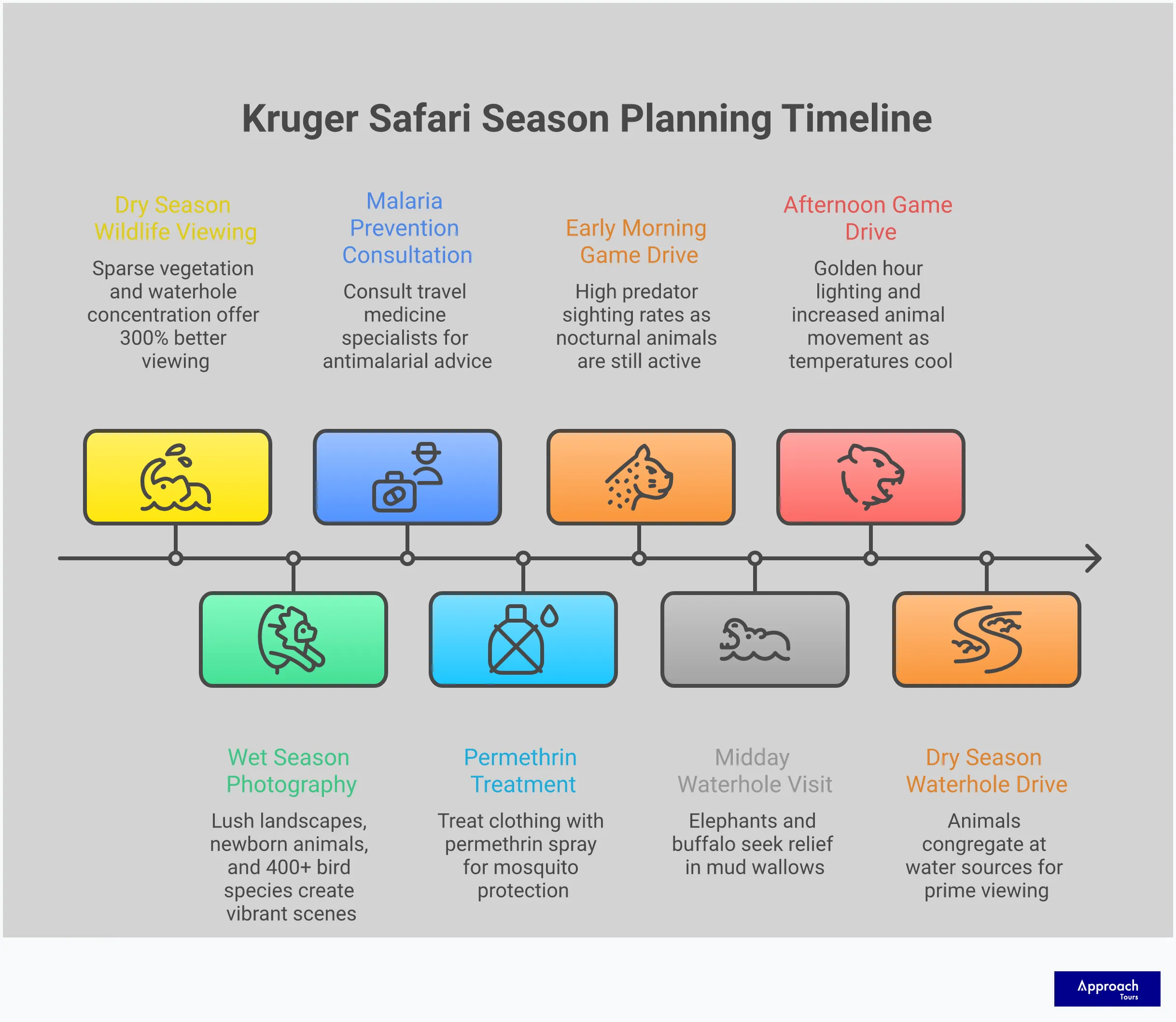
This is the classic safari season and for good reason. From May to September winter settles over the park. The rains cease and the landscape transforms. The lush greenery recedes revealing the golden grasses and sun-baked earth beneath. This sparse vegetation makes it much easier to spot wildlife as there are fewer places for animals to hide. Water becomes a precious commodity and animals are drawn to the few remaining rivers and waterholes. This predictable behaviour creates incredible opportunities for game viewing as elephants lions and herds of antelope congregate for a life-sustaining drink. It’s the Africa you’ve likely pictured in documentaries and a truly magnificent sight to behold.
The Wet Season: October to April
From October to April summer thunderstorms roll in and breathe new life into the park. The landscape undergoes a stunning transformation shedding its dusty winter coat for an emerald green cloak. While the thick vibrant foliage can make spotting animals a bit more of a challenge the rewards are unique and plentiful. This is the season of birth. In late November and early December the plains are filled with wobbly-legged impala calves and other baby animals taking their first steps. It’s also a paradise for birdwatchers as migratory birds arrive in their thousands adding a splash of colour and song to the lush scenery.
How the Seasons Change Animal Behaviour
The shifting seasons have a profound effect on how animals live and move within the park. During the dry winter months the scarcity of water is the main driver of behaviour. Wildlife must travel to permanent rivers and waterholes creating concentrated pockets of activity that are a dream for photographers and observers. As the dry season gives way to spring predators like lions leopards and hyenas often become more active. They take advantage of the weakened prey that has endured the lean months. In contrast the wet season sees animals disperse across the park. With water and fresh grazing available everywhere they no longer need to stick to specific areas making sightings more of a thrilling surprise.
Which Animals You’ll See and When
Kruger National Park is a year-round destination for incredible wildlife sightings. The park is home to an astonishing array of animals including the famous Big 5: lions leopards rhinos elephants and buffalos. You’ll also find zebras giraffes hippos wildebeests and cheetahs roaming the savanna. While these magnificent creatures are present throughout the year the season can influence your viewing experience. The dry season offers clearer more frequent sightings of large mammals at water sources. The wet season however is the prime time to see newborn animals and an explosion of birdlife. No matter when you travel our expert guides and your Group Guru will ensure you have the best possible chance to witness the magic of Kruger’s inhabitants.
When Is the Best Time for a Kruger Safari?
Deciding when to visit Kruger National Park is the first step in crafting an unforgettable safari experience. While the park is a wonder year-round each season offers a distinct character and unique viewing opportunities. The best time for your tour really depends on what you hope to see and do. For most travellers focused on spotting the iconic wildlife of the African bush the answer is clear. The dry winter months provide the most rewarding and comfortable conditions for game viewing.
Why Winter Is Peak Season for Game Viewing
The secret to spectacular game viewing is visibility. During Kruger’s dry winter season from May to October the park’s landscape works in your favour. The lush summer vegetation thins out and the grasses recede making it much easier to spot animals from a distance. With little to no rain the park’s water sources become scarce. This scarcity draws wildlife to predictable locations like rivers and waterholes. Instead of searching for animals dispersed through dense greenery you’ll find them congregating for a drink giving you a front-row seat to the daily drama of the bushveld.
A Month-by-Month Look at the Best Viewing Times
While the entire dry season is excellent the wildlife viewing in Kruger gets progressively better as the months go on. From May to July the weather is pleasant and the sightings are plentiful. As the season advances into August and September the landscape becomes even drier further concentrating the animals around the last remaining water sources. September is often considered the ultimate month for a safari. The weather is superb with warmer mornings than mid-winter and the animal viewing is at its absolute peak before the first rains arrive.
Where Animals Gather in the Dry Season
Imagine the scene: a vast herd of elephants making their way to a riverbank for their afternoon drink while a leopard waits patiently in a nearby tree. This is the magic of the dry season. As temporary pans and streams dry up wildlife must travel to permanent water sources to survive. This behaviour makes game drives incredibly fruitful. Your guide will know exactly where to find these hubs of activity like the Sabie and Crocodile Rivers. These life-giving waterways become magnets for everything from impala and zebra to the predators that hunt them creating unforgettable viewing opportunities.
The Best Time for Birdwatching
If your interests include the feathered inhabitants of the bush the wet summer season from November to April offers its own rewards. This is when Kruger transforms into a birdwatcher’s paradise. The park’s resident bird species are in their stunning breeding plumage and they are joined by a host of migratory birds from Europe and other parts of Africa. The air fills with new colours and songs. While the thicker vegetation can make spotting mammals more of a challenge the vibrant landscape and incredible diversity of birdlife make for a completely different yet equally enchanting safari experience.
Planning for Great Photos and Comfortable Drives
The dry winter season offers perfect conditions for photography and comfortable touring. The days are typically mild and filled with brilliant sunshine providing beautiful light for your photos without the harsh glare of summer. However the temperature can drop significantly once the sun goes down. Early morning and evening game drives are often chilly. We always recommend packing in layers. A warm fleece or jacket gloves and a toque will keep you cozy as you set out in the crisp morning air. As the day warms up you can shed layers for complete comfort.
Dry Season vs. Wet Season: Which Is Right for You?
Deciding when to visit Kruger National Park is less about finding the “best” time and more about discovering the right time for you. The park transforms dramatically between its two distinct seasons offering completely different but equally magical experiences. Your perfect safari depends on what you dream of seeing. Do you imagine spotting a leopard through sparse winter branches or watching a newborn zebra take its first wobbly steps in a sea of green?
The dry season from May to September is the classic safari period. With less rain the bush thins out and wildlife congregates around the remaining water sources making for spectacular game viewing. The air is cooler and less humid and the skies are generally clear and blue. It’s a time of high drama and easy sightings.
Conversely the wet season from October to April paints the landscape in lush vibrant greens. Afternoon thunderstorms clear the air and the park bursts with new life. It’s the season for baby animals and a paradise for birdwatchers as migratory species arrive in dazzling numbers. While the dense foliage can make animals a little harder to spot the scenery is breathtaking and the experience feels incredibly alive. Each season has its own rhythm and its own rewards.
The Pros and Cons of a Dry Season Visit
The dry winter months are prime time for wildlife viewing and for good reason. The lack of rain thins the vegetation and lowers the grasses making it much easier to spot animals from your safari vehicle. You won’t have to peer through dense leaves to catch a glimpse of a lioness lounging in the shade. More importantly animals are drawn to predictable water sources like rivers and waterholes. This concentration of wildlife means you’re likely to see a greater variety of species in a shorter amount of time. The trade-off is a landscape that can be dusty and brown and the early mornings can be quite chilly. But for many travellers these are small prices to pay for the unparalleled game viewing opportunities.
The Pros and Cons of a Wet Season Visit
Visiting Kruger during the wet summer season is like stepping into a different world. The landscape is transformed into a lush green paradise a stunning backdrop for photography. This is the season of new beginnings. You’ll have the chance to see adorable baby impalas wildebeest and zebras finding their feet. It’s also the best time for birdwatching as hundreds of migratory species flock to the park creating a symphony of colour and song. The main challenge is that the thick dense bush can make spotting game more difficult. Animals are also more dispersed since water is plentiful everywhere. The weather is hot and humid often with afternoon thundershowers but these storms are usually brief and bring a refreshing coolness.
What to Pack for Kruger’s Weather
Packing for Kruger is all about comfortable layers. During the dry season days are mild and sunny but the temperature drops significantly once the sun goes down. For those crisp early morning and evening game drives you’ll be grateful for a warm fleece or jacket gloves and a toque. As the day warms up you can shed layers for comfort. In the wet season lightweight breathable clothing is key. It gets very hot and humid so think cottons and linens in neutral colours. A light waterproof jacket is also a good idea for the afternoon showers. No matter the season a sun hat sunglasses and sunscreen are essential. Rest assured our comfortable air-conditioned coaches and accommodations offer a welcome retreat from the midday heat.
A Note on Crowds and Availability
The dry season’s fantastic game viewing makes it the most popular time to visit Kruger which can mean more vehicles at sightings. However the park is vast and a skilled guide knows how to find quieter areas. As an Approach traveller you never have to worry about the logistics. We handle all arrangements far in advance ensuring you have a seamless and comfortable experience away from the biggest crowds. The wet season is generally quieter offering a more serene and personal feel. This “green season” is a well-kept secret for those who prefer a more tranquil tour with fewer other travellers around. It allows for a peaceful immersion into the vibrant life of the African bush.
The Magic of the Wet Season: Baby Animals and Green Scenery
There is a unique magic to Kruger during the wet season. The first rains awaken the parched earth and the landscape erupts in an impossible spectrum of greens. The air smells clean and fresh after a thunderstorm and the golden light that follows is a photographer’s dream. This is the time of abundance and the park is filled with new life. Seeing herds of wobbly-legged baby animals is an experience that touches the heart. Impala lambs leap through the tall grass while tiny elephant calves stay close to their mothers’ legs. It’s a beautiful and hopeful sight that captures the endless cycle of life in the bush. This vibrant season truly showcases the resilience and beauty of the natural world.
Staying Healthy and Comfortable on Safari
A safari is an adventure of a lifetime and your comfort and well-being are our top priorities. With a little preparation and our team handling the details you can focus on the incredible sights and sounds of the African bush. From understanding the local environment to knowing what to pack we’ve gathered our best advice to ensure your Kruger experience is as relaxing as it is thrilling. We want you to feel prepared and excited for every moment from the crisp morning game drives to the cozy evenings at the lodge. Your Group Guru will be with you every step of the way ensuring everything is seamless so you can simply soak in the magic of South Africa.
Understanding Malaria Risk and Staying Safe
It’s natural to have questions about health and safety when travelling. Kruger Park is located in a region where there is a risk of malaria. While the risk of contracting malaria is considered low especially during the dry winter months it’s a topic to take seriously. The entire park is a malaria risk zone so there are no malaria-free areas within its borders. The best course of action is to consult your doctor or a travel health clinic well before your departure. They can provide the most current advice and discuss preventative options like anti-malarial medication so you can make an informed decision that is right for you.
Dressing for the Kruger Climate
Packing for a safari is all about comfortable layers. Early morning game drives can be quite chilly as you set out in an open-air vehicle before the sun is fully up. You’ll want a warm jacket or fleece a scarf and maybe even a toque. As the African sun climbs higher the day warms up considerably. You’ll be glad you can shed those layers for a light long-sleeved shirt. We recommend packing clothes in neutral colours like beige khaki and olive green to blend in with the bushveld. Don’t forget a wide-brimmed hat sunglasses and a good sunscreen to protect you from the sun during the day.
Tips for an Accessible and Enjoyable Tour
A safari adventure should be exhilarating not exhausting. We design our tours to be comfortable and accessible ensuring you can fully immerse yourself in the experience without worry. Game drives are paced thoughtfully with plenty of breaks and our safari vehicles are chosen for comfort and excellent viewing. After a day of exploration you’ll return to relaxing lodges that offer modern amenities and a peaceful atmosphere. Your Group Guru is always on hand to assist with any needs you may have. Our goal is to provide a safari experience tailored for seniors that is both thrilling and wonderfully restorative.
How We Handle the Details for a Worry-Free Trip
The beauty of travelling with Approach Tours is that we handle everything. From the moment you book your tour we manage all the complex logistics so you don’t have to. This includes securing comfortable accommodations arranging all your meals and organizing seamless transportation. On safari this means you’ll be in a private vehicle with an expert local guide who knows the park intimately. Your Group Guru is your dedicated point of contact on the ground ensuring every part of your tour runs smoothly. You can simply sit back relax and focus on spotting the Big Five knowing that every detail has been thoughtfully arranged for a worry-free trip.
What to Expect on a Morning Game Drive
There is nothing quite like a morning game drive in the African bush. Your day begins before dawn when the air is cool and crisp. With a warm blanket and a hot drink in hand you’ll set off in your safari vehicle as the sky begins to glow with soft morning light. This is a magical time when predators are often on the move and the wilderness is just waking up. As the sun rises and the day warms the scenery of the bush transforms around you. Your guide will share their incredible knowledge pointing out tracks and signs you might otherwise miss leading you to unforgettable wildlife encounters.
Related Articles
- Ultimate Guide to South Africa Tours: Plan Your Dream Trip
- The Best South Africa Trips for First-Timers
- Tours to South Africa: A Traveller’s Guide
Frequently Asked Questions
I just want to see the most animals possible. When should I book my tour? For the classic safari experience with frequent and clear wildlife sightings the dry winter season from May to September is your best bet. As the landscape dries out the vegetation thins and animals must gather at the few remaining rivers and waterholes. This makes them much easier to find and observe. The viewing gets even better as the season progresses with August and September often considered the absolute peak for game viewing before the rains return.
What should I actually wear on an early morning game drive? Think in comfortable layers. Those pre-dawn mornings in an open-air safari vehicle can be surprisingly chilly so you will be very glad to have a warm fleece or jacket a scarf and even a toque and gloves. As the sun rises the day warms up beautifully and you can begin to peel those layers off. By mid-morning you’ll likely be comfortable in a long-sleeved shirt.
Should I be concerned about malaria in Kruger Park? Kruger Park is in a region where malaria is present so it is wise to be prepared. While the risk is lower during the cool dry months it’s a topic to take seriously. The most important step you can take is to chat with your doctor or a travel health clinic well in advance of your tour. They will give you the most current information and help you decide on the best preventative measures for your personal health.
I love the idea of green landscapes and baby animals. Will I still see the Big 5 if I travel in the wet season? Absolutely. While the lush greenery of the wet season from October to April can make spotting wildlife more of a treasure hunt the Big 5 are present in the park year-round. Our expert local guides are incredibly skilled at tracking animals even in the dense bush. You’ll trade the concentrated viewing of the dry season for the breathtaking beauty of a vibrant green landscape filled with newborn animals and spectacular birdlife.
How physically demanding is a safari tour? Our tours are designed to be wonderfully relaxing and accessible. The most strenuous activity on most days is stepping in and out of our comfortable safari vehicle. Game drives involve sitting and observing the incredible scenery and wildlife as your guide handles all the driving. Your Group Guru is always with you to ensure everything is seamless and comfortable from the pace of the day to the relaxing lodges you’ll return to each evening.