What kind of memories do you want to bring home from Spain? Do you dream of witnessing the passion of a centuries-old festival in Seville? Perhaps you’d rather explore the masterpieces of the Prado Museum in Madrid with the space to truly appreciate them. Or maybe your perfect day involves tasting wine straight from the barrel during the fall harvest in La Rioja. The truth is the best time to visit Spain depends entirely on the experiences you wish to have. The country’s calendar is a rich tapestry of cultural events culinary seasons and ideal weather for different activities. This guide will help you align your travel dreams with the rhythm of the Spanish year.
Key Takeaways
- Embrace the Shoulder Seasons: For the best balance of pleasant weather and smaller crowds plan your tour for spring (April to June) or fall (September to October). This is Spain’s sweet spot for comfortable and immersive sightseeing.
- Match the Season to Your Travel Style: Decide if you prefer the vibrant energy and guaranteed sun of a summer tour the cozy cultural charm of winter or the rich harvest celebrations of an autumn visit. Each season offers a distinct personality.
- Pack for Multiple Climates in One Country: Spain’s weather is not one-size-fits-all; prepare for regional differences by packing versatile layers for the cool rainy north the hot central plateau and the sunny Mediterranean coast.
A Traveller’s Guide to Spain’s Four Seasons
Spain is a country that wears each season beautifully. From the sun-drenched beaches of summer to the festive glow of winter markets its character shifts with the calendar. Because of its varied geography—home to mountain ranges sweeping coastlines and vast plateaus—the experience can change dramatically from one month to the next. The green hills of the north experience different weather than the sun-baked plains of Andalusia. This means that while one part of the country is perfect for hiking another might be ideal for enjoying a seaside paella.
Deciding when to go really comes down to the kind of Spanish story you want to live. The rhythm of daily life changes with the temperature and the angle of the sun. In summer the days are long and evenings are spent lingering over dinner on an outdoor terrace. In winter the atmosphere becomes cozier with locals gathering in warm tapas bars. Do you dream of fragrant orange blossoms and lively street festivals or golden vineyards and cozy tapas bars? Each season offers a distinct pace and a unique palette of sights sounds and flavours for you to discover. Whether you prefer the vibrant energy of peak season or the quiet charm of a winter escape understanding the rhythm of the Spanish year is the first step in planning an unforgettable tour.
Spring: Blooming Flowers and Festive Air
Spring in Spain is a true delight as the country awakens in a burst of colour and energy. From March to May the weather is comfortably warm making it perfect for strolling through historic city centres or relaxing at a seaside café before the summer crowds arrive. The countryside is lush and green and the air is often filled with the scent of orange blossoms. This is also a season of celebration. You can witness the passion of Seville’s famous Feria de Abril a week-long spectacle of flamenco dancing colourful costumes and Andalusian culture. It’s a magical time to see Spain at its most vibrant and fresh.
Summer: Sun-Drenched Days and Vibrant Nights
Summer is when Spain truly sizzles. From June to August the country is bathed in brilliant sunshine and life spills out onto the streets plazas and beaches. While inland cities like Madrid and Seville can get intensely hot the coastal regions are spectacular. The Mediterranean lifestyle is in full swing with long lazy lunches vibrant nightlife and refreshing dips in the sea. It’s the most popular time for travellers so expect a lively bustling atmosphere wherever you go. This is the season for those who love the energy of a crowd and want to experience Spain’s world-famous coastal culture at its most animated.
Fall: Golden Hues and Harvest Flavors
As the summer heat softens fall casts a warm golden glow over Spain. From September to November the weather is typically mild and pleasant creating ideal conditions for exploring. The crowds begin to thin leaving more space to enjoy the sights at a relaxed pace. This season is a food lover’s dream as it’s harvest time across the country. It’s the perfect opportunity to sample new wines in famous wine regions or enjoy seasonal delicacies at local markets. The landscapes are painted in rich hues of red and gold making a drive through the countryside or a walk in a city park an unforgettable experience.
Winter: Cozy Charm and Holiday Lights
Winter in Spain offers a different kind of magic. From December to February the pace slows down offering a more intimate and tranquil travel experience. While the north can be cool the southern region of Andalusia often enjoys mild sunny days. Cities are adorned with twinkling lights and the air fills with festive spirit thanks to charming Christmas markets where you can sip on warm drinks and browse for handcrafted gifts. With fewer travellers you can explore museums and monuments without the queues. It’s a wonderful time to enjoy Spain’s cultural treasures and cozy up in a traditional tapas bar to savour the local cuisine.
What to Expect During Spain’s Peak Season
A Spanish summer is the stuff of dreams with its sun-drenched plazas and lively tapas bars. The peak season from June to August draws travellers for good reason but it’s wise to know what to expect. The energy is electric and the days are long but you’ll be sharing the magic with many others.
Prepare for Summer Crowds and Higher Prices
There’s no way around it summer in Spain is bustling. Millions of visitors arrive for the glorious weather which means popular sights can be quite crowded and prices for hotels and attractions are at their highest. Planning for this reality is key to a smooth trip. Think of it less as a challenge and more as part of the vibrant summer experience. The best time to visit Spain often depends on your tolerance for crowds and your budget.
Where Everyone Goes in Summer
During the summer months travellers flock to the big cities and coastlines. Barcelona’s Gothic Quarter and Madrid’s grand boulevards pulse with activity while the sun-soaked beaches of the Costa del Sol are packed with sunbathers. The high season can even begin as early as May in these popular spots. This creates a wonderfully festive atmosphere but if you’re looking for quiet contemplation you may want to explore some of the country’s hidden gems instead.
Tips for Booking Your Peak Season Tour
If you have your heart set on a summer trip booking well in advance is essential. This is where travelling on a tour really shines as your accommodations and major attraction tickets are secured for you long before you pack your bags. You should also be prepared for the heat. Summer temperatures especially in southern regions like Andalusia can be intense. Packing light clothing a sun hat and a reusable water bottle are non-negotiable tips for visiting Spain in summer.
How to Make the Most of a Summer Visit
A smart itinerary makes all the difference during peak season. Visiting famous landmarks like the Alhambra or the Sagrada Familia early in the morning or later in the evening helps you avoid the largest crowds and the most intense heat. A well-planned tour will build these considerations into the schedule. It’s also a wonderful time to embrace the Spanish lifestyle. Enjoy a long leisurely lunch during the hottest part of the day and save your exploring for the cooler more comfortable hours.
Why Shoulder Season is Spain’s Best-Kept Secret
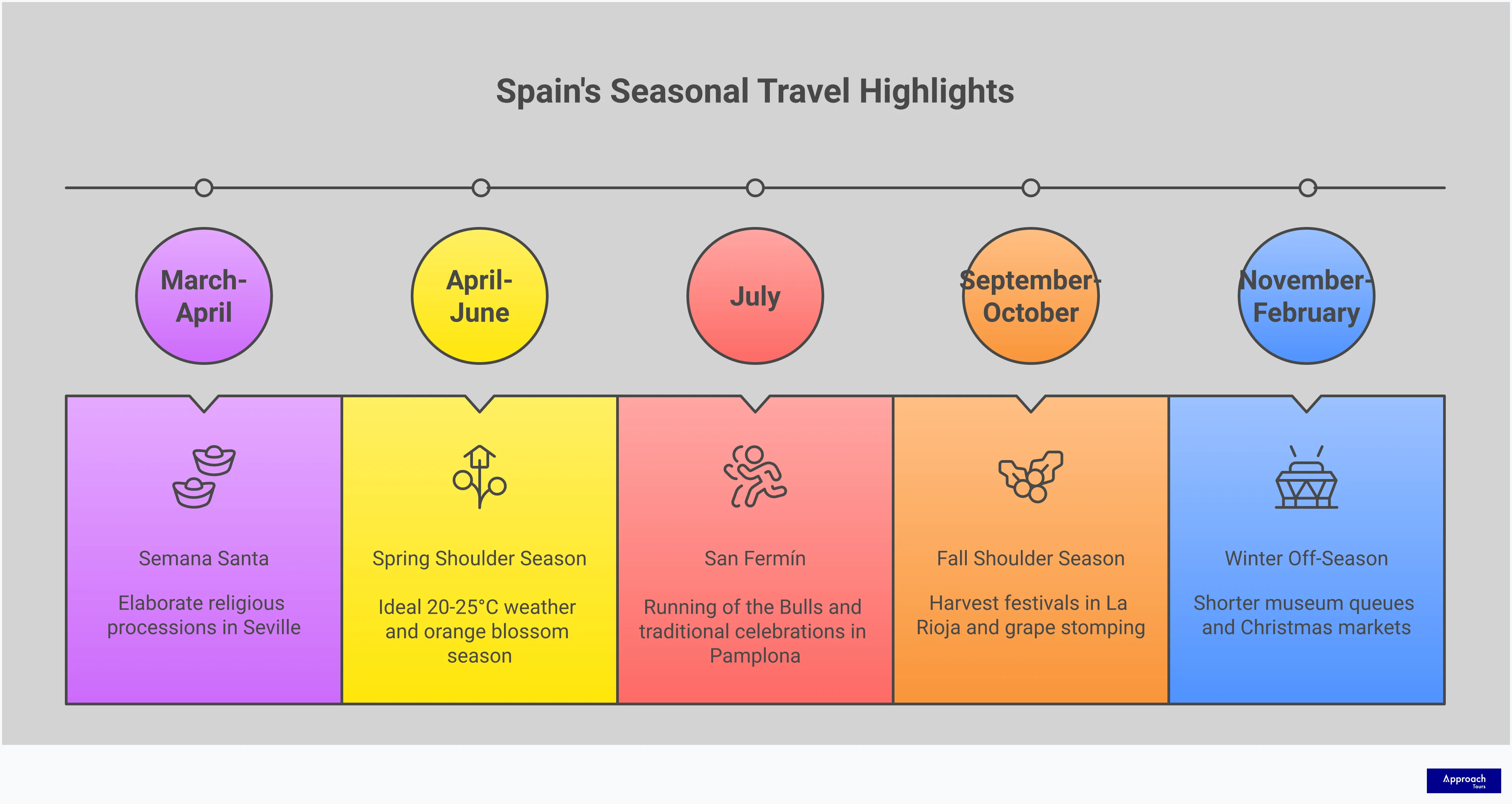
Ask any seasoned traveller and they will tell you the secret to a perfect trip is timing. In Spain this means embracing the “shoulder seasons” the beautiful periods just before and after the summer rush. These months are the country’s sweet spot offering the best of all worlds. Imagine strolling through sun-drenched plazas without the crowds exploring ancient monuments at a leisurely pace and enjoying the undivided attention of local artisans and chefs. This is the promise of shoulder season travel. It’s a time when Spain feels more authentic more relaxed and more yours. You get all the beauty and culture of this incredible country with an added layer of comfort and ease that makes for a truly unforgettable tour.
The Magic of Late Spring (April to June)
Late spring in Spain is a true delight for the senses. The countryside bursts into a riot of colour with wildflowers blooming under brilliant blue skies. The air is fresh and filled with the scent of orange blossoms especially in Andalusia. This is the perfect time to explore cities on foot as the weather is pleasantly warm but not yet scorching. You can enjoy a coffee at an outdoor café in Madrid or wander the historic streets of Seville in total comfort. The days are long and sunny giving you plenty of time for discovery. It’s also a season of celebration with many local Spanish festivals taking place before the summer crowds arrive.
The Beauty of Early Fall (September to October)
As the intense heat of summer fades Spain settles into a gorgeous golden autumn. The light is soft the air is mild and the Mediterranean Sea is still warm enough for a pleasant dip. This is harvest season a wonderful time for food and wine lovers. You can feel the buzz of activity in wine regions like La Rioja and Ribera del Duero. Early fall offers a more relaxed pace. The summer crowds have thinned but the vibrant energy remains. It’s an ideal time for sightseeing as you can explore iconic landmarks and charming villages comfortably. The balance of warm days and cooler evenings is just right for a full day of activities followed by a relaxing dinner.
Enjoy Perfect Weather with Fewer Crowds
One of the greatest advantages of shoulder season travel is the ideal climate. You can expect wonderfully pleasant weather perfect for any activity you have planned. Whether you’re exploring the architectural wonders of Barcelona or the ancient Roman ruins in Mérida you won’t be battling the oppressive heat of July and August. This comfortable weather is paired with significantly smaller crowds. Imagine visiting the magnificent Alhambra in Granada or the Prado Museum in Madrid with the space to truly appreciate the art and history around you. Fewer people mean shorter lines a more relaxed atmosphere and a more personal and immersive experience at every stop.
Find Better Value and Availability
While our tours are all-inclusive the value of travelling in the shoulder season extends beyond just price. With fewer travellers visiting the country the entire tourism infrastructure is less strained. This translates into a higher level of service and more authentic interactions wherever you go. Local guides have more time to share their stories and restaurant staff are less hurried. You’ll find that the overall pace is more relaxed allowing you to connect more deeply with Spanish culture. This calmer atmosphere makes for a more seamless and enjoyable tour from the moment you step off the plane to your final farewell dinner.
Experience Spain’s Unforgettable Festivals
Spain’s calendar is a vibrant tapestry of festivals and fiestas that offer a spectacular window into the country’s soul. From solemn religious processions that have unfolded for centuries to joyous harvest celebrations that fill the streets with music and laughter there is always something happening. Planning your tour around one of these events can transform a wonderful trip into an unforgettable one. These are not just parties; they are deeply ingrained cultural traditions where communities come together to celebrate their history faith and local identity. This is where you see the heart of Spain on full display a spectacle of colour sound and emotion.
Experiencing a festival firsthand allows you to connect with the local culture on a much deeper level. You can witness the passion of flamenco dancers in Seville taste the first wines of the harvest in La Rioja or wander through a glittering Christmas market in Madrid. Each festival tells a story about the region and its people. While some of the larger events draw huge crowds many smaller local fiestas offer a more intimate and authentic experience which can be a perfect fit for a small group tour. No matter when you decide to travel you will find that the spirit of celebration is never far away in Spain.
Spring Festivities and Semana Santa
Spring in Spain bursts forth not just with flowers but with some of the country’s most profound cultural events. The season is marked by Semana Santa or Holy Week a time of solemn yet beautiful religious processions. Cities like Seville and Málaga become open-air stages for spectacular parades featuring ornate floats and hooded penitents in a tradition that is both moving and deeply historic. Shortly after the somber reflections of Holy Week Seville erupts into the joyous Feria de Abril (April Fair). The fairgrounds fill with striped tents flamenco dresses and the elegant clip-clop of horses for a week-long celebration of Andalusian culture.
Iconic Summer Festivals
Summer brings a wave of heat and energy to Spain along with some of its most famous and boisterous festivals. While the high temperatures and large crowds aren’t for everyone it is when you will find world-renowned events like the San Fermín festival in Pamplona known for the Running of the Bulls. Another is La Tomatina a quirky and massive tomato-throwing fight held in the town of Buñol. These festivals are huge spectacles that attract travellers from all over the globe. They showcase a wilder more exuberant side of Spanish celebration but it is wise to be prepared for the intensity and scale of these massive summer gatherings.
Celebrate the Fall Harvest in Wine Country
As the summer heat softens into a golden glow fall becomes the perfect time to explore Spain’s celebrated wine regions. This is harvest season a time of great celebration and activity. In areas like La Rioja and Ribera del Duero towns host grape harvest festivals where you can witness traditional grape stomping and taste the season’s first pressings. The air is festive and the landscapes are painted in stunning shades of red and gold. It is a more relaxed and sensory experience perfect for anyone who loves food wine and beautiful scenery. Plus visiting during the fall harvest often means more affordable prices and fewer crowds.
Discover Winter Holiday Traditions and Markets
Winter in Spain has a cozy and magical charm especially during the holiday season. Major cities like Madrid and Barcelona come alive with twinkling lights and festive Christmas markets. You can wander through stalls selling handcrafted gifts and traditional sweets like turrón and polvorones. Beyond the markets you will discover unique Spanish traditions such as the intricate Belén (nativity scenes) displayed in public squares and churches. The season’s celebrations extend into January with the arrival of the Three Kings. For something different head to Andalusia where you can experience local olive oil festivals celebrating the new harvest with tastings and feasts.
The Quiet Charm of Spain’s Off-Season
While many dream of Spain under the summer sun a different kind of magic awakens in the winter. The off-season from November to February offers a more intimate and authentic look at Spanish life. The energy shifts from the bustling tourist season to a calmer more local rhythm. Imagine strolling through historic city centres without the crowds finding a seat at the most popular tapas bar with ease and truly connecting with the places you visit. This is the Spain that locals know and love a place of quiet beauty rich traditions and cozy charm. For travellers seeking a deeper cultural connection and a more relaxed pace the winter months are an undiscovered treasure.
The Perks of Winter Travel
Travelling during the winter months is your ticket to a more personal Spanish experience. With fewer travellers around you can linger longer in front of a Goya masterpiece at the Prado Museum or wander the grand halls of the Alhambra without feeling rushed. The shorter queues and open spaces allow you to soak in the history and artistry at your own pace. This quieter atmosphere also extends to daily life. You’ll find it easier to chat with shopkeepers watch artisans at work and experience the genuine warmth of Spanish hospitality. It’s a chance to see the country not as a tourist destination but as a living breathing place offering a truly authentic cultural experience.
What People Get Wrong About the Off-Season
A common myth about visiting Spain in the off-season is that everything simply closes down. This couldn’t be further from the truth. While some seasonal beach resorts may have limited hours Spain’s magnificent cities like Madrid Barcelona and Seville are as vibrant as ever. Theatres are full restaurants are buzzing with locals and museums maintain their regular schedules. In fact you’ll find a rich calendar of cultural events from concerts to local festivals. The off-season doesn’t mean a pause in Spanish life; it means you get to experience that life right alongside the people who live there sharing in their daily routines and celebrations.
What to Expect from the Weather
Spain’s winter weather is as diverse as its landscape. The central plateau where Madrid is located can be crisp and cold with bright sunny skies. The northern coast might see more rain which brings out the lush green of its famous countryside. Don’t let the chance of cooler temperatures deter you; it’s the perfect excuse to duck into a cozy café for churros and chocolate. Further south in Andalusia you’ll find milder days ideal for exploring ancient cities. Packing layers is key to enjoying the regional climate variations and staying comfortable on your tour.
Where to Go and What to Do in Winter
Winter opens up a whole new set of delightful activities across Spain. In December the country comes alive with festive spirit. Major cities like Madrid and Barcelona host enchanting Christmas markets where you can browse for unique handicrafts and sample seasonal treats. Imagine sipping mulled wine in the Plaza Mayor or seeing the Sagrada Família illuminated by holiday lights. Beyond the holidays it’s an ideal time for cultural pursuits. Enjoy an evening of soul-stirring flamenco in a cozy Andalusian tablao or take a cooking class to master the art of paella. The cooler weather makes exploring sprawling historic sites a much more comfortable and rewarding experience.
Dressing for Spain: A Regional Weather Guide
Packing for Spain can feel like preparing for several different tours at once. The country’s diverse geography means you can experience balmy coastal breezes crisp mountain air and dry inland heat all in one trip. Forget the idea of a single Spanish climate; from the lush green meadows of the north to the sun-drenched beaches of the south the weather varies dramatically. The key to comfort is packing smart and embracing layers.
Think of your suitcase as a collection of versatile pieces. A lightweight scarf a cardigan or a waterproof shell can make all the difference when the weather shifts. Before you start packing consider which regions your tour will visit. Are you exploring the art galleries of Madrid on the high central plateau? Strolling along the Mediterranean shores of Barcelona? Or perhaps sampling pintxos in the cooler Basque Country? Each destination has its own distinct character and climate. Understanding these regional differences is the first step to ensuring you’re comfortable and perfectly prepared for every moment of your Spanish adventure. This guide will help you plan your wardrobe for the specific climates you’ll encounter.
The Sunny Mediterranean Coast
Along Spain’s eastern and southern shores from the Costa Brava to the Costa del Sol you’ll find the classic Mediterranean climate many dream of. Expect long sun-filled days and warm temperatures especially from late spring through early fall. Your packing list should feature lightweight and breathable fabrics like cotton and linen. Think comfortable sundresses flowy trousers and casual tops. A swimsuit is essential for a dip in the sea or the hotel pool. Don’t forget sun protection; a wide-brimmed hat quality sunglasses and sunscreen are non-negotiable. For evenings a light sweater or elegant pashmina is perfect for seaside dinners when a gentle breeze rolls in.
The Green North: An Atlantic Climate
Often called “Green Spain” the northern coast including Galicia Asturias Cantabria and the Basque Country has a climate more like Ireland than the rest of Spain. Its beautiful lush landscapes are a result of higher rainfall and milder temperatures year-round. When packing for this region layers are your best friend. A reliable waterproof jacket is a must-have no matter the season. Pair it with comfortable sweaters or a fleece for exploring cities like Bilbao and San Sebastián. Even in summer the evenings can be cool so packing long trousers and closed-toe walking shoes will ensure you’re always comfortable while you discover the local culture.
The Heart of Spain: A Continental Climate
The vast central plateau or Meseta Central where Madrid is located experiences a continental climate with dramatic temperature swings. Summers are typically very hot and dry while winters can be quite cold. If you’re travelling in July or August pack light-coloured loose-fitting clothing to stay cool under the powerful sun. For spring and fall tours which offer milder and more pleasant weather layering is key. A stylish trench coat a few versatile scarves and comfortable shoes for walking on cobblestone streets are excellent choices. Winter travellers will need a warm coat gloves and a hat to stay cozy while enjoying the city’s festive atmosphere.
Andalusia and the Canary Islands: Year-Round Sun
Southern Spain specifically the region of Andalusia is famous for its Moorish architecture flamenco and scorching summer heat. Cities like Seville and Córdoba can be intensely hot in July and August so plan for a wardrobe of the lightest possible fabrics. The Canary Islands however boast a subtropical climate that delivers spring-like weather all year. This makes them an ideal destination anytime. For a visit to these beautiful islands pack for a beach vacation with swimsuits shorts and sandals but also include a light jacket or cardigan. The evenings can be cooler and the temperatures can drop at higher elevations if your tour includes exploring the volcanic landscapes.
Which Season is Right for You?
Spain is a country for all seasons and every type of traveller. Whether you dream of sun-drenched beaches cultural immersion or culinary delights there’s a perfect time for you to visit. Think about what makes an ideal trip for you. Is it basking in the sun with a cool drink in hand or is it exploring ancient streets without breaking a sweat? Your answer will point you to the perfect spot on the calendar. Let’s find the season that best matches your travel style so you can plan a truly unforgettable Spanish tour.
For the Sun Seeker
If your idea of a perfect day involves brilliant sunshine and the sparkling Mediterranean Sea then summer is calling your name. From June to August Spain’s famous coastlines come alive. This is the time for relaxing on golden beaches enjoying the vibrant nightlife and soaking up the energetic atmosphere. The days are long and hot perfect for those who truly thrive in the heat. Be prepared for high temperatures especially in inland cities like Seville where the sun can be quite intense. For travellers who love the warmth and want to experience Spain at its most lively summer is an unbeatable choice.
For the Culture Enthusiast
For those who travel to connect with history art and local life the shoulder seasons are pure magic. Spring from April to June and fall from September to October offer the best of all worlds. The weather is comfortably warm making it a pleasure to wander through historic city centers and explore architectural wonders. With fewer crowds than in summer you’ll have more space to appreciate iconic sites and discover hidden gems. These seasons are also brimming with cultural festivals giving you a chance to witness authentic Spanish traditions firsthand. It’s the ideal time for a deep and comfortable cultural immersion.
For the Food and Wine Lover
If your travels are guided by your taste buds consider a trip to Spain in the fall. As the summer heat softens the country’s culinary scene comes into full focus. Autumn is harvest season in Spain’s renowned wine regions like Rioja and Ribera del Duero. Imagine strolling through vineyards painted in gold and red hues and tasting the fruits of the harvest. Food markets are overflowing with seasonal produce and the cooler weather is perfect for enjoying hearty traditional dishes. As a bonus fall travel is often more affordable than a spring tour letting you indulge a little more in Spain’s incredible gastronomic offerings.
For the Outdoor Adventurer
Do you love to explore the world on your own two feet? Spain’s diverse landscapes offer incredible opportunities for walking and light hiking and the best times to enjoy them are in the spring and early fall. During these seasons the weather is ideal for outdoor activities. You can comfortably walk coastal paths explore lush national parks or wander through the rolling hills of the countryside. The trails are less crowded than in summer and nature is at its most beautiful whether it’s covered in spring wildflowers or the rich colours of autumn. It’s the perfect setting for an active yet relaxing experience in the great Spanish outdoors.
Related Articles
- The Ultimate Guide to Effortless Spain Tours
- How to Choose the Perfect Spain Tour for You
- What is the best time of year to travel?
Frequently Asked Questions
So when is the absolute best time to visit Spain? Honestly there is no single “best” time because it truly depends on the experience you are looking for. If you want to enjoy pleasant weather and see the country in full bloom or in its golden autumn phase the shoulder seasons of spring (April to June) and fall (September to October) are fantastic. They offer a wonderful balance of comfortable temperatures and fewer crowds making them ideal for exploring.
I’m not a fan of big crowds or intense heat. Is a summer tour a bad idea for me? Summer in Spain is beautiful and energetic but it is also the busiest and hottest time of year especially in the central and southern regions. If you prefer a more relaxed pace and milder weather you would likely feel more comfortable travelling during the spring or fall. These seasons allow you to enjoy the sights without the intensity of peak summer heat and with more space to yourself.
What’s the real difference between travelling in the spring versus the fall? Both seasons are wonderful but they have a slightly different character. Spring is a time of awakening with the countryside bursting into flower and the air filled with the scent of orange blossoms. It is a season of vibrant festivals like Seville’s Feria de Abril. Fall on the other hand is harvest season. It has a warm golden feel and is a fantastic time for food and wine lovers to experience the bounty of regions like La Rioja.
Will I be missing out if I travel during the winter off-season? Not at all. Winter offers a completely different and equally magical side of Spain. It is a much more intimate and local experience. You can explore world-class museums without the queues and enjoy the cozy atmosphere of traditional tapas bars. Cities come alive with charming Christmas markets and festive lights creating a truly special atmosphere that you would not see any other time of year.
How important is it to pack for different climates on a single tour? It is very important. Spain’s geography is incredibly diverse so you can easily experience different weather patterns on one tour. The north coast can be cool and damp while the central plateau is dry and the southern coast is warm and sunny. The best strategy is to pack versatile layers like a light jacket a sweater and a scarf that you can easily add or remove as you travel between regions.