When you think of weather in Africa you might picture relentless heat. Johannesburg however is a delightful exception. The city sits nearly 1,700 meters above sea level and this high altitude is the secret to its wonderfully mild climate. It enjoys abundant sunshine without the oppressive humidity you might find in other parts of the world. The seasons are well-defined offering a different experience throughout the year from dry sunny winters to warm summers refreshed by brief thunderstorms. To give you a true sense of this comfortable climate we will walk you through the Johannesburg weather by month showing you why it’s such a pleasant year-round destination.
Key Takeaways
- Know the two main seasons: Expect warm summer days with quick afternoon thunderstorms from October to March and enjoy dry sunny winter weather with cool nights from May to August.
- Pack for warm days and cool nights: Johannesburg’s high altitude means temperatures drop considerably after sunset, so layering with a sweater or light jacket is essential for comfort in any season.
- Aim for the shoulder seasons for ideal comfort: For the best sightseeing weather, plan your visit during autumn (March to May) or spring (September to November) to experience pleasant temperatures and the city’s famous jacaranda blooms.
What Is the Weather Like in Johannesburg?
Johannesburg is a city of sunshine. Its pleasant climate is one of its biggest draws for travellers looking to explore South Africa. Unlike the coastal humidity of Cape Town or Durban Johannesburg offers a drier more temperate experience thanks to its unique geography. The city enjoys a subtropical highland climate which means you can generally expect warm sunny days for most of the year. However the weather is distinctly seasonal with a rainy summer and a dry winter. Understanding these patterns is key to packing properly and making the most of your time in this vibrant city.
Understanding the seasons of sunshine
Johannesburg’s climate is defined by two main seasons. Summer which runs from November to March brings warm days and cool nights. While it’s mostly sunny you can expect dramatic but brief thunderstorms to roll in during the late afternoon. These showers often clear up by the evening leaving the air fresh and clean. Winter from May to August is the dry season. You’ll find the days are mild and filled with brilliant sunshine but the nights can get quite chilly often dropping close to freezing. It’s a season of clear blue skies and very little rain making it a wonderful time for outdoor activities.
How altitude shapes the city’s climate
One of the most important factors influencing Johannesburg’s weather is its high altitude. The city sits on a plateau known as the Highveld about 1,700 meters (or 5,600 feet) above sea level. This elevation is the secret to its mild climate. It keeps the summer heat from becoming too intense and contributes to the significant temperature drop between day and night. This high-altitude setting ensures that even on the warmest days the air feels less oppressive than in more humid coastal regions. For travellers this means a more comfortable experience whether you’re exploring city markets or relaxing after a day of sightseeing.
January to March: What to Expect in Summer
Johannesburg’s summer is a season of vibrant life. From January through March the city is warm sunny and lush with greenery. This is also the rainy season but don’t let that deter you. The rain often arrives in dramatic but brief afternoon thunderstorms that clear the air and leave behind fresh cool evenings. It’s a beautiful time to see the city’s parks and gardens in full bloom. With a little planning you can enjoy the brilliant morning sunshine and find a cozy spot to watch the spectacular storms roll in.
January: Hot days and afternoon storms
January is the peak of summer in Johannesburg bringing the warmest weather of the year. You can expect daytime temperatures to hover around a pleasant 26°C perfect for morning explorations. The evenings are comfortably cool dipping to about 15°C. The defining feature of a January day is the high likelihood of afternoon or evening thunderstorms. These storms are usually short-lived and offer a refreshing break from the heat. For your comfort we recommend packing lightweight clothing a sunhat and a light waterproof jacket for those sudden yet predictable showers. Planning museum visits or indoor activities for the afternoon is a great way to enjoy the day.
February: Lingering warmth and rainfall
The warmth of summer continues into February with similar temperatures to January. The city’s landscape remains incredibly green and vibrant as the wet season persists. The afternoon thunderstorms are still a regular occurrence so keeping a compact umbrella or rain jacket handy is a smart choice. This consistent rainfall makes the city’s botanical gardens exceptionally beautiful and the air feels clean and fresh. It’s a wonderful time for photography as the dramatic skies and lush scenery create stunning contrasts. Your Group Guru will always keep an eye on the forecast to ensure your daily activities are timed perfectly for the best weather.
March: Cooling temperatures and final showers
March signals a gentle transition from summer to autumn. The intense heat begins to soften and the daily thunderstorms become less frequent giving way to more consistently clear afternoons. The days are still wonderfully warm but the evenings start to feel a little crisper making it an ideal time for an evening stroll or dinner outdoors. This month offers a fantastic balance of pleasant weather and the lingering greenness of the rainy season. You’ll still want to pack layers including a light sweater or jacket for the cooler evenings but you can generally expect beautiful conditions for sightseeing and exploring the city on foot.
April to May: The Golden Days of Autumn
As Canada thaws into spring, Johannesburg settles into a glorious autumn. April and May are truly golden months here, offering some of the most pleasant weather of the year. The intense summer heat and rains have subsided leaving behind a city that feels fresh, mild and wonderfully inviting. The air is tinged with a gentle crispness and the sun casts a warm, flattering light over the landscape. This is the perfect time to explore Johannesburg at a relaxed pace, with comfortable conditions from morning until evening. The city seems to take a collective breath, shedding the intensity of summer for a more tranquil and approachable atmosphere. The days are long and sunny but without the draining heat, allowing you to fully immerse yourself in the sights and sounds around you. This is when Johannesburg shows off its comfortable side, a perfect match for travellers who want to experience the city’s vibrant culture without battling the elements. The predictable, lovely weather means your itinerary can unfold smoothly, letting you focus on making memories instead of worrying about the forecast. It’s a season that strikes a beautiful balance, making it an ideal window for your tour.
Enjoying mild days and minimal rain
During April and May, Johannesburg enjoys beautifully mild and dry weather. The summer’s rainy season is over, which means you can expect long stretches of clear, sunny days without the interruption of afternoon thunderstorms. Daytime temperatures are comfortably warm, perfect for sightseeing without the oppressive heat of mid-summer. This predictable, pleasant weather makes planning your days simple and stress-free. You can set out with your Group Guru and fellow travellers knowing the conditions will likely be perfect for whatever is on the agenda, from exploring vibrant neighbourhoods to discovering local markets.
Exploring the outdoors in perfect comfort
The mild autumn climate is ideal for spending time outdoors. The sun is warm enough for short sleeves during the day, creating perfect conditions for a stroll through the city’s beautiful green spaces like the Walter Sisulu National Botanical Garden. You can comfortably browse outdoor art installations or relax at a sidewalk café with a coffee. As evening approaches, the temperature drops to a cool, crisp level. It’s a good idea to pack a light jacket or a cozy sweater for dinners out or evening events, allowing you to transition seamlessly from a sun-filled afternoon to a refreshing night.
Appreciating clear skies and low humidity
One of the greatest comforts of visiting Johannesburg in autumn is the low humidity. The air feels dry and fresh, a welcome change from the stickiness that can accompany the summer months. This lack of moisture in the air leads to exceptionally clear blue skies and brilliant sunshine that makes the city’s colours pop. The visibility is fantastic, offering stunning views from the city’s high points. For anyone who enjoys photography, the clear, golden light of autumn is a dream. It’s a season where the city simply sparkles, providing a beautiful backdrop for your adventures.
June to August: A Dry and Sunny Winter
Johannesburg’s winter offers a delightful escape for travellers seeking sunshine and comfortable temperatures. From June to August the city enters its dry season a period marked by brilliant blue skies and virtually no rain. This creates ideal conditions for exploring everything the region has to offer from vibrant city markets to sprawling nature reserves. The lack of dense leafy vegetation during these months also makes it a prime time for wildlife viewing on safari as animals gather around waterholes and are easier to spot. It’s a season of pleasant contrasts with warm afternoons that give way to cool clear nights.
Preparing for cool days and crisp nights
While the word “winter” might conjure images of snow for us in Canada Johannesburg’s version is quite different. The season is very dry with days that are mild and sunny. However the nights get cold often dropping to near freezing temperatures. The key to comfort is layering your clothing. Think light shirts for midday explorations a cozy sweater for when the sun begins to set and a warm jacket for early mornings or evenings spent outdoors. This approach ensures you’re perfectly prepared for the full range of temperatures you’ll experience throughout the day.
July: The coldest month with brilliant sun
July is officially the coldest month in Johannesburg but it’s still wonderfully pleasant. You can expect average daytime highs around 17°C (62°F) perfect for walking tours and sightseeing without breaking a sweat. The temperature drops significantly after dark with lows averaging 3°C (37°F). These crisp nights are perfect for enjoying a delicious meal at one of the city’s excellent restaurants or relaxing by a fireplace with a glass of South African wine. The brilliant sun and low humidity make even the coolest days feel comfortable and invigorating.
Taking advantage of dry air and clear views
One of the greatest advantages of visiting Johannesburg in winter is the weather’s reliability. Unlike the summer which sees frequent afternoon thunderstorms the winter season is very dry. This means your plans are unlikely to be interrupted by rain. The dry air also results in crystal-clear skies and exceptional visibility. This is fantastic for photography and for appreciating the panoramic views from places like the Top of Africa observation deck. The clear conditions extend to nearby game reserves making our South Africa tours during this season especially rewarding for wildlife enthusiasts.
September to November: Jacarandas and Spring Showers
Spring arrives in Johannesburg with a spectacular flourish. This is the season when the city sheds the cool dryness of winter and bursts into colour most famously with the blooming of its iconic jacaranda trees. The streets and parks are transformed by a sea of purple blossoms creating a truly unforgettable sight. From September to November the weather is generally mild and sunny making it a delightful time to explore. The air warms day by day and the first rains arrive to wash the dust from the air and coax the gardens into full bloom. It’s a season of renewal and beauty offering a perfect backdrop for your South African tour. The city feels alive with energy as locals and travellers alike take to the streets to enjoy the pleasant conditions. This is a time of transition from the quiet introspection of winter to the vibrant social life of summer. For travellers it means comfortable days for sightseeing and evenings that are perfect for enjoying a meal outdoors as the city cools down. The gentle climate of spring ensures you can experience the best of Johannesburg without the intensity of summer heat or the chill of winter nights.
Feeling the temperatures begin to rise
After the crisp winter months spring brings a welcome warmth back to the city. While September nights can still carry a distinct chill the daytime temperatures become increasingly pleasant and comfortable. You can feel the sun’s strength returning as the season progresses. This mild weather is ideal for strolling through markets exploring historical sites or simply enjoying a coffee at an outdoor café without the intense heat of summer. It’s a wonderful time for travellers who prefer gentle warmth and sunshine for their daily explorations. The gradual warming trend means you can comfortably spend your days discovering all the city has to offer.
October: The transition back to the rainy season
October is a month of beautiful transition where the days often feel like early summer. The warmth builds and the city anticipates the return of the rain. The rainy season typically begins in mid-October often announced by the first dramatic afternoon thunderstorms. These storms can be impressive spectacles of sound and light but they usually pass quickly leaving the evenings fresh and clear. The arrival of the rain breathes new life into the landscape turning the dry winter grasslands a vibrant green. This shift marks the true end of the dry season and the beginning of a lusher more tropical period for the region.
Admiring blooming flowers in pleasant weather
Spring is arguably the most beautiful time to visit Johannesburg. The city’s parks and gardens come alive with an explosion of colour. Beyond the famous jacarandas countless other flowers are in bloom making it a stunning season for sightseeing and outdoor activities. Imagine a leisurely walk through the Johannesburg Botanical Garden surrounded by fragrant blossoms or a coach ride through suburbs where canopies of purple flowers arch over the streets. The combination of pleasant temperatures and breathtaking floral displays makes this an ideal time for photography and creating lasting memories of the city’s natural beauty.
December: The Return of Summer Heat
As the year draws to a close Johannesburg embraces the full warmth of summer. The city buzzes with a vibrant energy as long sunny days become the norm. December’s weather is a tale of two parts: glorious sunshine and building humidity that often culminates in spectacular late-afternoon thunderstorms. This pattern brings a refreshing rhythm to the day making the evenings cool and pleasant for dining outdoors or enjoying the city’s lively atmosphere.
Packing for increasing heat and humidity
December ushers in true summer temperatures often climbing into the high 20s and low 30s Celsius (mid-70s to mid-80s Fahrenheit). To stay comfortable you’ll want to pack lightweight breathable clothing. Think loose linens cotton tops and comfortable walking sandals. The humidity can be noticeable so fabrics that wick away moisture are your best friend. The Johannesburg weather pattern of hot days followed by rain means a light cardigan or wrap is perfect for cooler evenings once a storm has passed.
Welcoming the first storms of the season
The arrival of December also signals the start of the rainy season. Don’t let this deter you as the rain rarely lasts all day. Instead the city experiences dramatic and impressive afternoon thunderstorms that roll in quickly and leave just as fast. These downpours clear the air and provide a welcome break from the heat. As the city’s climate data shows this month is a precursor to the wetter weeks of January. It’s wise to pack a light waterproof jacket or a small travel umbrella for your daily explorations.
When Is Johannesburg’s Rainy Season?
Johannesburg’s weather is a delightful surprise for many travellers with its generous sunshine. But like many subtropical places it has a distinct rainy season. Knowing when to expect showers helps you pack properly and make the most of every moment on your tour. The rain here isn’t a day-long affair; it’s more like a dramatic daily performance with a beautiful finale. These short bursts of rain keep the landscape vibrant and green making for a stunning backdrop to your adventures.
Understanding summer precipitation from October to March
The city’s rainy season aligns perfectly with its summer stretching from October to March. This is when Johannesburg receives most of its annual rainfall. The wettest month is typically January when you might see rain on about half the days of the month totaling around 125 mm or 5 inches. This predictable seasonal pattern means the landscape is at its most lush and green. It’s a beautiful time to see the city’s parks and gardens bursting with life after a refreshing drink of water.
How to plan your day around afternoon storms
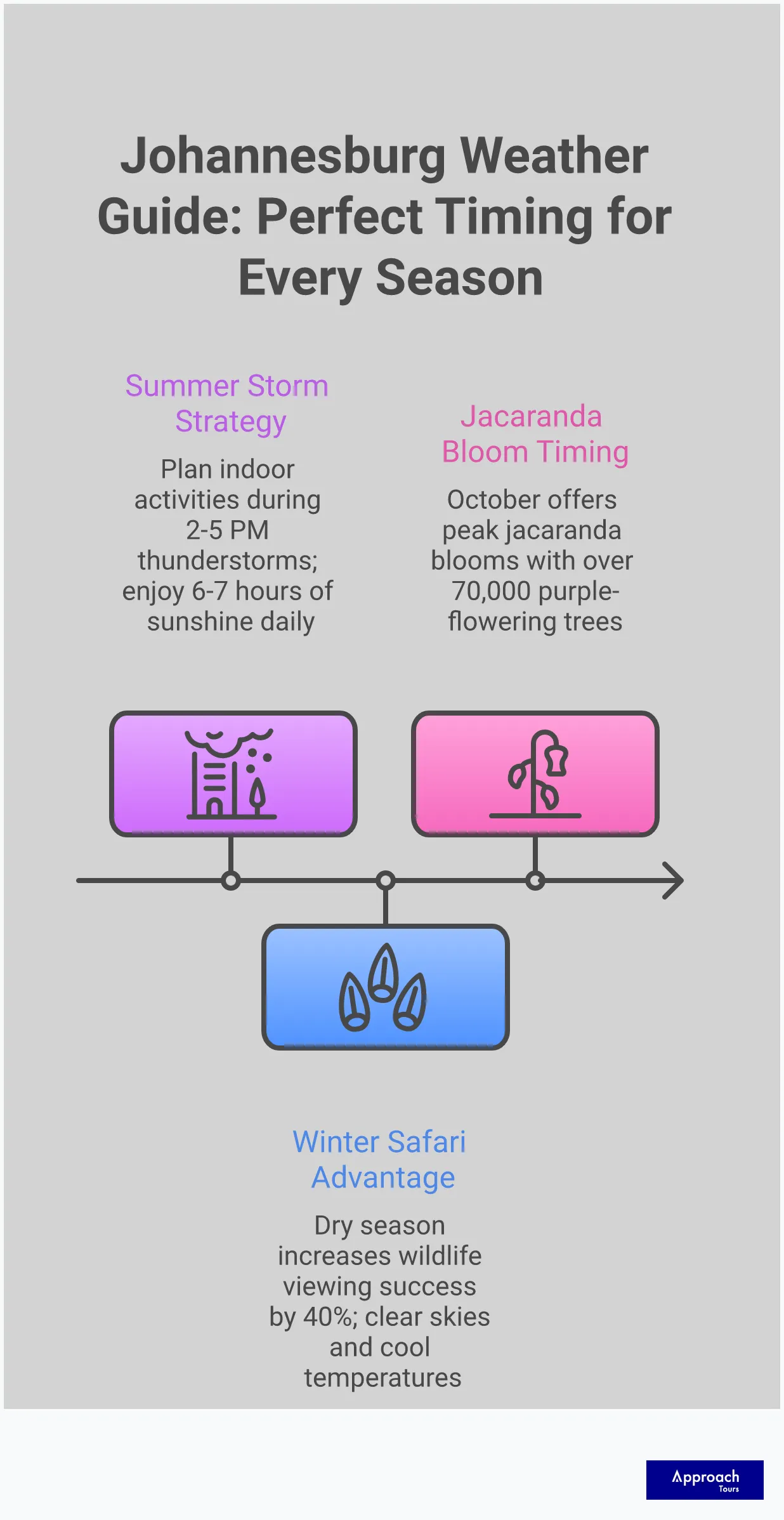
During these summer months the days are warm and sunny perfect for exploring. The rain almost always arrives in the form of spectacular afternoon or evening thunderstorms. These storms roll in quickly often with dramatic thunder and lightning but they are usually brief. This predictability makes planning your day quite simple. Your Group Guru will often schedule indoor activities like museum visits or a lovely long lunch during this time. You can relax with a glass of South African wine and watch the show knowing the sun will likely be back out soon.
What to expect when the evening skies clear
One of the best parts about Johannesburg’s summer rain is how quickly it leaves. The city is famous for its sunshine and even during the rainy season it doesn’t disappoint. After a storm passes the clouds part to reveal stunningly clear blue skies. The air feels fresh and clean and the evening light is often magical perfect for photography. A brief downpour rarely disrupts a whole day of sightseeing. Instead it offers a momentary pause a chance to refresh before the sun returns to light up the rest of your afternoon and evening.
What Are the Best Months to Visit Johannesburg?
Deciding when to travel to Johannesburg depends entirely on what you want to experience. The city’s highveld climate offers distinct seasons each with its own unique charm and planning your tour around them ensures you get the most out of your time there. Whether you dream of spotting the Big Five on a crisp winter morning or strolling beneath a canopy of purple jacaranda blossoms there is a perfect time for your South African adventure. The shoulder seasons from March to May and September to November are particularly lovely. During these months the weather is pleasantly warm and dry making it ideal for exploring the city’s vibrant neighbourhoods and historical landmarks. Plus with fewer crowds you can enjoy a more relaxed pace and feel a deeper connection to the places you visit.
Johannesburg’s winter from June to August is the peak season for safaris as the dry conditions make wildlife easier to spot. Conversely the summer months from December to February bring warm weather and dramatic afternoon thunderstorms that leave the evenings fresh and cool. Each season presents a different side of the city’s personality. Thinking about what you want to see and do is the first step in choosing your ideal travel dates. Do you prefer long sunny days for exploring cultural sites or the lush green landscapes that follow the summer rains? Answering this will help you pinpoint the perfect window for your tour.
Finding your perfect travel window
The sweet spots for a Johannesburg visit are autumn (March to May) and spring (September to November). These months strike a beautiful balance with warm sunny days and comfortable evenings. You will find the city is less crowded than during the peak summer season allowing for a more intimate experience at museums and markets. This is the time to truly soak in the atmosphere without the intensity of summer heat or winter chill. Many travellers find these periods offer the best times to visit Johannesburg as the mild weather is perfect for everything from guided city walks to relaxing in the botanical gardens.
Why winter is ideal for safaris and cultural tours
If a safari is high on your list then Johannesburg’s winter from May to August is an excellent choice. While the city experiences cool days and cold nights the surrounding game reserves are at their prime for wildlife viewing. The vegetation is sparse and dry forcing animals to gather around waterholes which makes them much easier to spot. The days are typically filled with brilliant sunshine and clear blue skies perfect for photography. This dry season is also wonderful for cultural tours within the city. You can explore poignant sites like the Apartheid Museum and Constitution Hill without worrying about afternoon thunderstorms interrupting your day.
Why spring and autumn are best for comfortable sightseeing
For those who prioritize pleasant weather for sightseeing spring and autumn are unbeatable. The temperatures are consistently mild and the humidity is low creating the perfect conditions for being outdoors. In spring from September to November you will witness Johannesburg’s famous jacaranda trees erupt in a sea of purple blossoms a truly spectacular sight. Autumn offers golden light and comfortable warmth that lingers long into the afternoon. These seasons are ideal for discovering the city on foot from the trendy streets of Maboneng to the bustling markets. The comfortable climate ensures you can enjoy every moment of your tour with ease.
How to Plan Your Tour Around Johannesburg’s Weather
Johannesburg’s beautiful climate is one of its biggest draws but understanding its distinct seasons is the key to a truly comfortable and memorable tour. The city sits on a high-altitude plateau which gives it a wonderful subtropical climate with dry sunny winters and warm summers punctuated by afternoon thunderstorms. This means that no matter when you travel you’re likely to experience pleasant weather.
Planning for the specific time of year you’ll be visiting helps you pack perfectly and get the most out of every moment. A little preparation ensures you’re ready for everything from a crisp winter morning exploring a market to a warm summer afternoon relaxing in a garden before a brief shower passes through. Knowing what to expect from the weather allows you to lean into the experience fully confident that you’re prepared for the day’s adventures with your Group Guru and fellow travellers.
Choosing the right tour for the season
While Johannesburg is a year-round destination the shoulder seasons offer a perfect sweet spot for many travellers. The months from March to May (autumn) and September to November (spring) are particularly lovely. During these low season months the summer crowds have thinned and the weather is typically warm dry and brilliantly sunny. These conditions are ideal for comfortable sightseeing and exploring the city’s vibrant neighbourhoods on foot. You can enjoy long days of discovery without the intense heat of mid-summer or the chilly nights of winter making it a fantastic time to experience the city’s rich culture and history.
What to pack for every time of year
Johannesburg’s subtropical climate means days are generally warm and nights are cool so packing layers is always the best strategy. For the summer months from November to March think light clothing like cotton shirts and trousers. Be sure to include a light waterproof jacket for the short but impressive afternoon thunderstorms. In winter from May to August you’ll want warmer layers like sweaters and a fleece or jacket for the evenings and early mornings when temperatures can drop significantly. Regardless of the season the sun is strong so a wide-brimmed hat sunglasses and a good sunscreen are absolute essentials for your daypack.
Discovering seasonal activities and local events
Each season in Johannesburg offers its own unique charm and set of activities. The summer rains from November to March bring the city’s parks to life making it the perfect time for a stroll through the lush and expansive Johannesburg Botanical Gardens. Conversely the dry sunny days of winter are ideal for photography and uninterrupted views. This is a wonderful time to visit historical sites or explore outdoor markets without worrying about rain. Spring is famous for the city’s jacaranda trees which erupt in a sea of purple blossoms creating a truly spectacular sight for your daily explorations.
Related Articles
- The Best South Africa Trips for First-Timers
- Ultimate Guide to South Africa Tours: Plan Your Dream Trip
- Tours to South Africa: A Traveller’s Guide
Frequently Asked Questions
Does the “rainy season” mean my tour will be rained out? Not at all. Johannesburg’s summer rain is very predictable. It almost always arrives as a brief but impressive thunderstorm in the late afternoon and is usually over within an hour. Your Group Guru is an expert at planning the day’s activities around this pattern often scheduling indoor visits for that time. The storms pass quickly leaving behind fresh air and beautiful clear evenings.
How cold does it actually get on winter nights? While the winter days are sunny and mild the high altitude means the temperature drops significantly once the sun goes down. It’s common for nighttime temperatures to dip close to freezing especially in June and July. Packing a warm jacket or a cozy fleece is essential for staying comfortable during evening activities or early morning departures.
I just want pleasant weather for sightseeing. When is the best time to go? For consistently comfortable and beautiful weather the shoulder seasons are your best bet. Both autumn (April and May) and spring (September and October) offer warm sunny days without the intense heat of summer or the chill of winter. The humidity is low and there’s very little rain making these months perfect for exploring the city on foot.
When is the best time to see the famous purple jacaranda trees? The spectacular jacaranda bloom happens in the spring. You can expect to see the city’s streets covered in a canopy of purple flowers from September through November. The peak of this beautiful display typically occurs in October making it a truly magical time to visit and take photographs.
Why is winter considered the best time for a safari? Winter is prime safari season for two main reasons. First the vegetation is sparse and dry which makes it much easier to spot animals that might otherwise be hidden by thick leaves. Second the lack of rain means wildlife tends to gather around permanent waterholes and rivers making their location more predictable and viewing opportunities more frequent.