The question of when to visit New Zealand doesn’t have a single answer. The right time for you depends entirely on what you hope to experience. Do you picture yourself sipping world-class wine as golden leaves fall around you or do you prefer strolling along a sunny beach with a gentle sea breeze? Perhaps you dream of seeing the countryside burst into life with colourful spring flowers and playful newborn lambs. Each season paints the country in a different light offering a unique atmosphere and set of activities. This guide is designed to help you discover the new zealand best season that aligns perfectly with your personal travel style.
Key Takeaways
- Choose your season wisely: Summer (December to February) offers the warmest weather but also brings the biggest crowds and highest prices. For a sweet spot, consider the shoulder seasons of autumn (March to May) or spring (September to November) for mild weather, beautiful scenery and a more relaxed pace.
- Layering is your best friend: New Zealand’s weather can change in an instant, so packing versatile layers is essential. A combination of a base layer, a warm fleece and a waterproof outer jacket will keep you comfortable and prepared for anything the day might bring.
- Match the season to your travel style: Aim for summer if you dream of sunny hikes and beach days. Plan an autumn tour to enjoy harvest season in the wine regions amidst stunning fall colours. For the best value and fewest crowds, the shoulder seasons and winter offer a peaceful and intimate experience.
A Guide to New Zealand’s Four Seasons
New Zealand’s dramatic landscapes are matched only by its dynamic weather. Deciding when to go can feel like a big choice because each season offers a completely different experience. The first thing to remember is that New Zealand’s seasons are the reverse of ours in Canada. When we’re bundling up for winter in December you’ll find Kiwis enjoying long sunny days at the beach. This seasonal flip means you can escape the Canadian cold for a beautiful summer adventure or plan a trip that aligns with the spectacular colours of a southern autumn.
Understanding the country’s climate is key to planning your perfect tour. The weather can change in a heartbeat a phenomenon locals lovingly call “four seasons in one day”. One moment you might be basking in sunshine and the next you’re reaching for a light jacket. This guide will walk you through the distinct character of each season. We will explore the unique climates of the North and South Islands and help you find the best time to visit New Zealand based on the experiences you dream of having. Whether you envision yourself hiking through lush spring landscapes or sipping wine on a warm summer evening this guide will help you choose your ideal season.
North vs. South: A Tale of Two Climates
New Zealand is a country of two distinct halves and its climate is no exception. The North Island generally has a milder almost subtropical feel throughout the year. Its winters are gentle but can bring a fair bit of rain. In contrast the South Island puts on a more dramatic show. Its weather patterns are more extreme with colder winters that dust the Southern Alps in snow creating breathtaking alpine scenery. Even in winter the South Island often enjoys crisp clear and sunny days perfect for sightseeing. This regional variation means your experience can change significantly just by hopping from one island to the other.
When Does Each Season Begin?
To help you plan it’s useful to know how the Kiwi calendar lines up. Because New Zealand is in the Southern Hemisphere its seasonal travel guide shows seasons opposite to what we experience in North America. Here’s a quick breakdown of what to expect from each one:
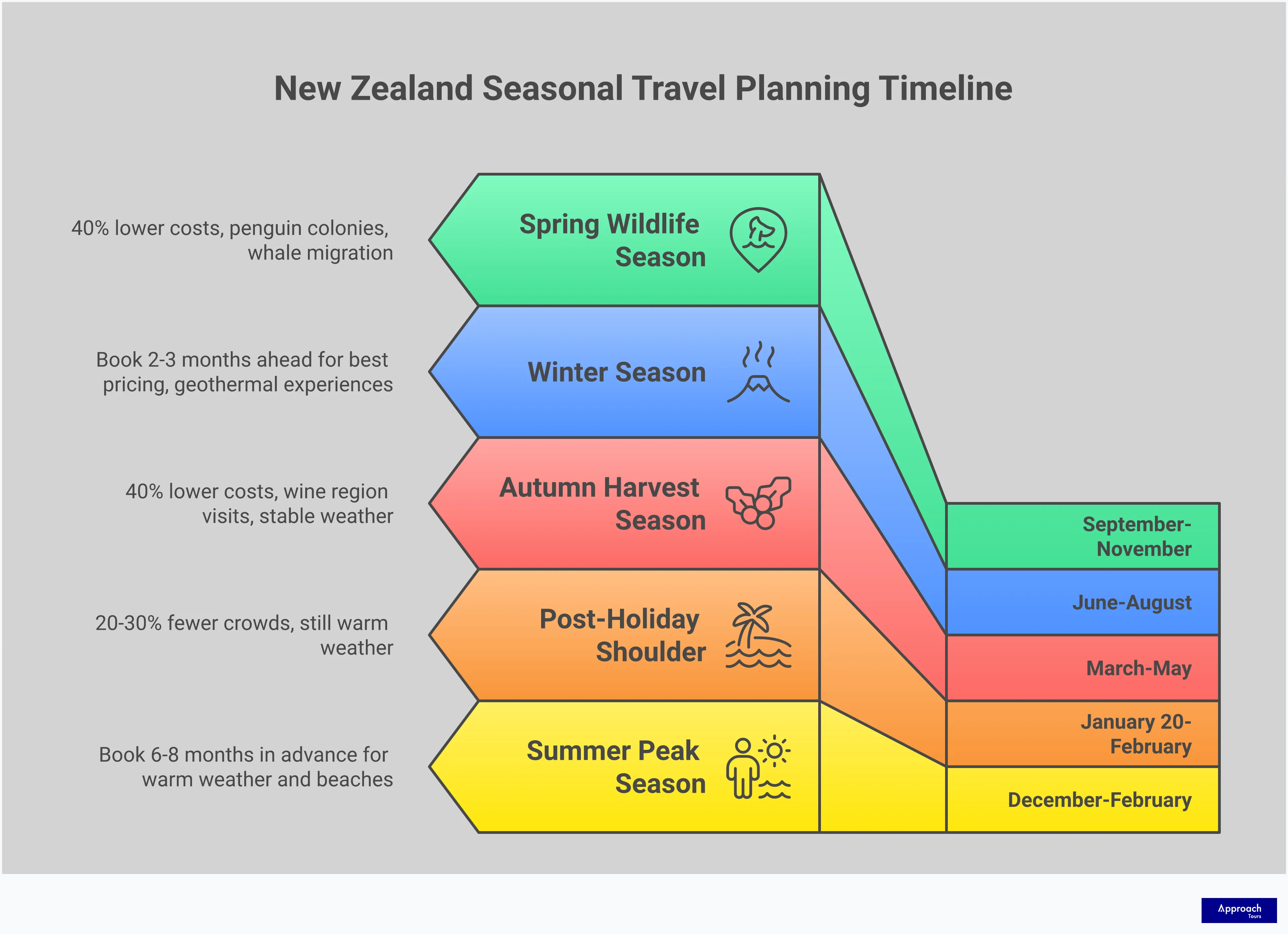
- Summer (December–February): This is peak season with warm temperatures long sunny days and a vibrant atmosphere. It’s the perfect time for beach-hopping and outdoor festivals.
- Autumn (March–May): The weather becomes calm and mild. The landscape transforms with stunning golden hues making it a photographer’s dream.
- Winter (June–August): Crisp and cool winter brings snow to the mountains especially in the South Island. It’s ideal for snow sports or getting cozy by a fire.
- Spring (September–November): A refreshing season of new life. Flowers bloom across the country and warming temperatures make it a delightful time for outdoor activities.
Experience Summer: New Zealand’s Peak Season
Summer in New Zealand from December to February is a vibrant and sun-drenched affair. It’s the country’s peak season for a reason. Long sunlit days melt into warm evenings creating the perfect backdrop for exploration and relaxation. The entire country seems to be in a festive mood celebrating the glorious weather. This is the time when New Zealand truly comes alive with lush green landscapes and brilliant blue waters. For many travellers this is the ideal time to experience everything the islands have to offer from stunning coastlines to world-class vineyards.
The air is filled with the scent of blooming pohutukawa trees often called New Zealand’s Christmas tree for their brilliant crimson flowers. Locals and visitors alike head outdoors to enjoy the sunshine creating a lively and welcoming atmosphere. Whether you’re strolling through a bustling city market or finding a quiet spot on a remote beach the energy of a Kiwi summer is infectious. It’s a season of pure enjoyment where the days are long and the memories last a lifetime. This is the New Zealand you’ve likely pictured in your dreams and it absolutely lives up to the expectation.
What to Expect from a Kiwi Summer
Imagine pleasant daily temperatures hovering between 20 and 25°C. The sun feels warm on your skin and a gentle breeze often follows. This is the classic Kiwi summer. The days are long and bright giving you ample time to soak in the scenery without feeling rushed. The ocean is also wonderfully inviting with sea temperatures warm enough for a comfortable swim. It’s no surprise that this is the most popular time to visit as the climate is perfect for sightseeing and being outdoors without the intense heat you might find elsewhere. It’s a season of comfortable adventure and deep relaxation.
Top Things to Do in the Sun
Summer’s warm weather opens up a world of possibilities for every type of traveller. It’s the perfect season for all kinds of outdoor fun from relaxing on golden beaches to hiking through breathtaking national parks. The festive spirit is contagious with Christmas celebrations and lively food and wine festivals dotting the calendar. For wildlife enthusiasts it’s a fantastic time to be on the water. You might even spot magnificent marine life like orcas. On an organized tour you can enjoy these experiences fully while we handle all the details letting you simply savour each sunny moment.
How to Handle Summer Crowds and Costs
As the most sought-after season summer naturally draws more visitors. This is especially true from late December to mid-January when New Zealanders take their own vacations. Planning a trip during these busiest times requires booking well in advance to secure the best accommodations and experiences. This is where travelling with a tour operator makes all the difference. We take care of every reservation long before you pack your bags ensuring your tour is seamless and stress-free. Your Group Guru is also an expert at making sure you have a wonderful experience even at popular sites.
Discover Autumn: New Zealand’s Golden Season
If you dream of golden landscapes, crisp air and uncrowded paths, autumn in New Zealand might just be your perfect match. From March through May, the country sheds the buzz of summer for a more relaxed and radiant pace. The days are mild and sunny creating the ideal conditions for exploring everything from vibrant towns to world-class vineyards. It’s a season that invites you to slow down, breathe deeply and truly connect with the stunning scenery and rich culture of Aotearoa. For many Travellers, this is the sweet spot where beautiful weather and peaceful exploration meet.
Enjoy Mild Weather and Fiery Colours
Imagine strolling under a canopy of gold, red and orange leaves with a gentle breeze at your back. That’s the magic of a New Zealand autumn. The weather is wonderfully stable and mild, free from the intense heat of summer. This makes it the perfect time for comfortable walks and sightseeing. The South Island in particular puts on a spectacular show. Historic gold rush towns like Arrowtown become a photographer’s dream, with brilliant foliage framing charming streets and hillsides. The crisp air makes every view feel sharper and every colour more vibrant. It’s an ideal season for hiking when the trails are quieter and the conditions are just right.
Sip and Savour: Wine and Culture in Autumn
Autumn is harvest time in New Zealand’s celebrated wine regions which means it’s an exciting time for anyone who enjoys good food and wine. The vineyards are buzzing with activity and the air is filled with the rich scent of grapes. This season offers a fantastic opportunity to tour wineries, sample new releases and learn about the winemaking process firsthand. You can enjoy relaxed drives through regions like Marlborough or Hawke’s Bay as the grapevines turn stunning shades of gold and crimson. Many areas also host harvest festivals, giving you a chance to celebrate local culture with delicious food, lively music and of course world-class wine.
Why Autumn is a Great Value
One of the biggest perks of travelling in autumn is the sense of peace and space. With the summer crowds gone home, you can enjoy a more personal encounter with New Zealand. Popular attractions are less busy, allowing you to explore at an unhurried pace and soak in the atmosphere without feeling rushed. This quieter period often means better availability for accommodations and activities. Your Group Guru can secure reservations at sought-after restaurants and experiences with greater ease. For the savvy Traveller, autumn represents the perfect blend of fantastic weather, stunning beauty and a more relaxed, intimate journey through one of the world’s most incredible destinations.
Embrace Winter: A Snowy Wonderland
From June to August New Zealand’s winter season offers a unique and peaceful magic. While the North Island settles in for a period of rain and green renewal the South Island transforms into a breathtaking snowy wonderland. Imagine snow-dusted peaks of the Southern Alps piercing a crisp blue sky and charming towns like Queenstown glowing with warmth. It’s a season for brisk walks cozy fires and soaking in the dramatic landscapes without the summer crowds. This quieter pace allows for a more intimate connection with the country’s stunning natural beauty making it a truly special time to explore New Zealand.
How Cold Does it Really Get?
While it’s called winter you may find the temperatures quite manageable. The North Island experiences a milder wetter winter with temperatures often staying above freezing. The real spectacle is in the South Island where it is colder and drier. Here you can expect clear cool days with daytime temperatures hovering around 8 to 12 degrees Celsius. Nights will certainly dip below freezing creating perfect conditions for snow in the mountains. The air is crisp and the light is beautiful. With the right layers like a warm fleece and a waterproof jacket you’ll be perfectly comfortable exploring the frosty landscapes.
Your Guide to Skiing and Alpine Fun
The South Island is a premier destination for snow sports and the region around Queenstown becomes a vibrant hub of alpine activity. While you can certainly hit the slopes this season offers so much more than just skiing. For an unforgettable view you can take a scenic gondola ride high above Queenstown to gaze out at the snow-covered Remarkables mountain range. The alpine villages are buzzing with energy. You can enjoy the atmosphere from a cozy lodge with a hot drink in hand watching the skiers carve their way down the mountains. It’s all the beauty and excitement of a ski vacation without having to be an expert skier.
Warm Up with Hot Pools and Cozy Cafes
There is no better way to embrace the winter chill than by sinking into a steaming hot pool. New Zealand is famous for its geothermal activity and winter is the perfect time to indulge. Picture yourself soaking in naturally heated mineral waters while looking out at a snowy mountain or a starry night sky. It’s a deeply relaxing experience. Beyond the hot springs winter is a time for cozy indoor pursuits. You can duck into a warm café to enjoy a flat white and a sweet treat or spend an afternoon at a Central Otago winery. There you can sample robust red wines next to a roaring fire.
Welcome Spring: A Season of New Beginnings
Spring in New Zealand from September to November is a season of pure magic. As the country shakes off the quiet of winter the landscape bursts into life with vibrant colour and energy. The air feels fresh and clean and the days grow longer and warmer inviting you to spend more time outdoors. This is a fantastic time to travel because you get to experience the beauty of the shoulder season. You’ll find fewer travellers at popular spots which allows for a more personal and relaxed experience.
The weather is comfortably mild perfect for exploring without the intense heat of summer. While the North Island might see a few spring showers these moments often pass quickly leaving behind an even more lush and glistening landscape. It’s a time of renewal everywhere you look. From the brilliant green hills to the snow-capped mountains just beginning to thaw spring offers a stunning backdrop for your adventures. It’s the ideal season to witness New Zealand’s natural beauty at its most dynamic and refreshing.
See the Country in Full Bloom
Spring is when New Zealand’s gardens and countryside truly put on a show. The land awakens with a spectacular display of flowers creating carpets of colour against the famously green hills. You’ll find that city parks and formal gardens are meticulously cared for and absolutely radiant during these months. Visiting the Christchurch Botanic Gardens for example feels like stepping into a painting with cherry blossoms and daffodils leading the charge. Even drives through the countryside become a scenic event as wildflowers pop up along the roadsides. The fresh green growth on the native ferns and trees adds to the feeling of a world made new.
Spot Lambs Penguins and More
One of the most charming sights of a New Zealand spring is the countryside dotted with newborn lambs. Their playful antics are a heartwarming symbol of the season. This is a fantastic time for wildlife encounters as many species are active. Along the coast you might spot yellow-eyed penguins and other seabirds during their breeding season. The mild weather makes it a wonderful time for a boat tour to look for dolphins and seals who are often just as curious about you as you are about them. It’s a season filled with delightful moments that connect you directly with the country’s incredible animal life.
Explore Gardens and Coastal Walks
The mild temperatures of spring are simply perfect for gentle outdoor activities. This is the time to enjoy New Zealand’s beautiful scenery at a leisurely pace. Stroll through one of the many acclaimed gardens where every path reveals a new floral masterpiece. The air is sweet with the scent of blossoms and the atmosphere is peaceful. Coastal walks are especially rewarding in spring. The paths are uncrowded and the views of the turquoise water are crisp and clear. A walk along the Abel Tasman coastline for instance offers breathtaking vistas without the summer crowds. It’s an opportunity to breathe in the fresh sea air and truly appreciate the serene beauty of the coast.
How Do Peak Seasons Affect Your Trip?
Timing is everything when you travel and New Zealand is no exception. The season you choose to visit influences everything from the crowds you’ll encounter to the price of your tour. While every season has its magic the popular peak periods come with a few extra considerations. Understanding these dynamics helps you plan a smoother and more enjoyable trip. With a little foresight you can find the perfect balance of beautiful weather vibrant atmosphere and good value ensuring your New Zealand adventure is everything you dreamed it would be.
How Seasons Influence Tour Prices
The rhythm of the seasons directly affects the cost of travelling in New Zealand. Summer from December to February is the most popular time to visit which means higher demand for flights accommodations and activities. This is the peak season and prices reflect that popularity. Conversely if you are looking for savings you might consider the winter months of June through August. During this off-season you will often find lower prices and fewer crowds. For a happy medium consider the shoulder seasons. The period from late January to early March offers warm dry weather after the main local summer holidays have ended providing a wonderful experience without the peak season price tag.
Tips for Booking Your Accommodations
If your heart is set on a summer adventure in New Zealand planning ahead is essential. The peak season from December to February is the busiest time of year largely because it coincides with the summer holidays for Kiwis. Accommodations can be booked solid months in advance especially in popular destinations. If you plan to travel between late December and mid-January it is crucial to book your places to stay well in advance to avoid disappointment. This is one of the great comforts of travelling with a tour operator like Approach Tours. We handle all the logistics and secure your accommodations long before you pack your bags so you can simply relax and look forward to your trip.
Plan Around Local Holidays
To truly experience New Zealand like a local it helps to know when the locals are travelling. It is best to avoid the Christmas period and the month of January if you prefer a quieter trip. This is when many New Zealanders are on their annual vacation so roads can be busier and popular spots might be fully booked. It is also wise to check when Easter falls as this is another popular travel time for families across the country. Planning around these major holidays can lead to a more serene experience allowing you to soak in the landscapes and culture without navigating the largest crowds.
Find the Right Season for Your Travel Style
New Zealand’s charm shifts with the calendar and the “best” time to visit truly depends on what you hope to see and do. Whether you dream of sun-drenched hikes, leisurely winery tours or simply a quiet escape, there’s a perfect season waiting for you. Let’s match your travel style to the Kiwi calendar.
For the Adventurous Traveller
If your ideal tour involves lacing up your hiking boots and exploring breathtaking landscapes, plan your visit between November and April. This window offers the best weather conditions for getting outdoors. The summer months from December to February are particularly glorious with long sunny days and warm temperatures perfect for walking coastal tracks or enjoying the beaches. While January can be busy, February often brings more stable weather with slightly fewer crowds. It’s the prime time to experience the full grandeur of New Zealand’s famous trails and pristine natural beauty under a brilliant blue sky.
For the Culture and Wine Lover
For those who prefer to sip and savour their way through a new place, autumn is your season. From March to May the weather is mild the roads are quieter and the countryside is painted in spectacular shades of gold and red. This creates a stunning backdrop for relaxed drives and indulgent food and wine tours. The harvest season is in full swing making it an excellent time to visit the country’s renowned wineries. Spring from September to November is another wonderful option. The landscape comes alive with blooming flowers and newborn lambs dot the hillsides offering a unique and picturesque setting for cultural exploration.
For the Savvy Traveller
If you’re looking for great value and a more peaceful experience, consider travelling during the shoulder or winter seasons. The months of November and March in particular offer a sweet spot with pleasant weather and fewer people at popular sites. For the absolute best value, New Zealand’s winter from June to August provides lower prices and the smallest crowds. While you’ll need to pack warmer layers it’s a wonderful time to enjoy cozy cafes geothermal hot pools and the dramatic beauty of snow-dusted mountains without the peak-season rush. It’s the perfect strategy for a more intimate and budget-friendly tour.
What Are the Pros and Cons of Each Season?
Choosing the right season for your New Zealand tour is all about matching the weather and atmosphere to your personal travel style. Each season paints the country in a different light from the sun-drenched beaches of summer to the crisp golden landscapes of autumn. While there is truly no bad time to visit this stunning corner of the world some seasons might align better with your vision for the perfect trip. Understanding the unique rhythm of each one helps you decide whether you prefer vibrant festivals with lots of fellow travellers or quiet trails and cozy cafes. Let’s look at what each season has to offer so you can find your perfect fit.
The Highs and Lows of Summer
From December to February New Zealand is buzzing with energy. Summer brings long sunny days with sunsets that can linger until 10 p.m. making it ideal for outdoor adventures. Temperatures hover between a comfortable 20 and 25°C perfect for hiking coastal walks and enjoying the country’s famous food and wine festivals. It’s a wonderfully festive time to be there. The main drawback is that everyone else knows it too. This is peak season so you can expect more crowds and higher prices especially when New Zealanders take their own vacations from late December to mid-January.
The Best and Worst of Autumn
As summer crowds fade autumn arrives from March to May offering a spectacular and serene travel experience. The weather remains mild and pleasant and the roads become noticeably quieter. This season is a photographer’s dream as the landscape transforms with brilliant fall colours especially in places like Arrowtown on the South Island. The ocean is often still warm enough for a swim and the trails are perfect for hiking without the intense summer sun. While the weather can turn cooler in May this is often the most affordable month to travel making it a fantastic option for savvy travellers seeking beauty and value.
Weighing the Perks of Winter and Spring
Winter and spring present a study in contrasts. Winter from June to August is a paradise for snow lovers. The South Island becomes a snowy wonderland with world-class skiing near Queenstown. However it can bring heavy rain to the North Island and snow can make travel difficult in remote areas. Spring from September to November is a time of renewal. The weather warms up wildflowers carpet the countryside and you’ll see adorable lambs and calves dotting the fields. With fewer tourists it feels like you have the country to yourself. While the North Island can still be wet the clear skies and vibrant landscapes make it a magical time to explore.
How to Plan for New Zealand’s Climate
New Zealand’s charm lies in its dramatic landscapes and equally dramatic weather. The local saying “four seasons in one day” is no exaggeration. One moment you could be basking in sunshine and the next you might be reaching for a jacket as a cool breeze rolls in. But don’t let this unpredictability deter you. With a bit of thoughtful planning you can be comfortable and ready for whatever the day brings. Preparing for the climate is the key to fully enjoying the stunning mountains fjords and coastlines without a worry.
What to Pack for Unpredictable Weather
The secret to comfortable travel in New Zealand is layering. Think of your outfits like an onion with multiple thin layers you can add or remove as the temperature changes. Start with a base layer like a t-shirt or long-sleeved top. Add a mid-layer for warmth such as a fleece or a merino wool sweater. Top it all off with a waterproof and windproof jacket. This combination will prepare you for sun rain and wind. Don’t forget comfortable walking shoes for exploring. A sun hat sunglasses and sunscreen are essential year-round as the New Zealand sun can be surprisingly strong. A comprehensive packing list can help ensure you don’t forget any essentials.
When Should You Book Your New Zealand Tour?
To ensure you get your preferred dates and the best experience it’s wise to book your New Zealand tour well in advance. This is especially true if you plan to travel during the peak summer months from December to February when demand is highest. Booking early not only secures your spot on the coach but also helps avoid the stress of last-minute planning. Even for travel during the beautiful shoulder seasons of autumn and spring early booking is recommended. By planning ahead you can relax knowing all the details of your New Zealand adventure are taken care of long before you pack your bags.
How to Prepare for Four Seasons in One Day
Embracing the “four seasons in one day” mindset is part of the Kiwi experience. Beyond your packing list it’s about your daily approach. Even if the morning sky is a brilliant blue it’s always a good idea to bring a warm layer and a light rain jacket with you on daily excursions. The weather can shift quickly particularly in alpine or coastal areas. You might start a walk in the warm sun and end it with a cool mountain breeze. Having your layers handy means you can adapt on the fly without missing a beat. This simple habit will keep you comfortable so you can focus on the breathtaking scenery around you.
Related Articles
- Best New Zealand Tours for a Luxurious Escape
- Auckland Weather by Month: Your Complete Guide
- Best Time to Visit Auckland: A Season-by-Season Look
- Best Time to Visit Queenstown: Your Seasonal Guide
- The Complete Guide to Queenstown Weather by Month
Frequently Asked Questions
I want warm weather but I’m worried about crowds. What do you suggest? This is a very common question and you have some fantastic options. For that perfect blend of beautiful weather and a more relaxed pace I always recommend the shoulder season. Consider travelling between late January and March. You’ll still enjoy the long sunny days and warm temperatures of summer but the main holiday rush from Christmas and New Year’s will have passed. This period offers a wonderful sweet spot where the country is vibrant and alive but you have a bit more space to breathe at popular sites.
Do I really need to pack for “four seasons in one day?” Yes you really do. This isn’t just a saying; it’s practical advice for staying comfortable while you explore. The key is to think in layers. A simple system of a base layer like a t-shirt a warm mid-layer like a fleece sweater and a waterproof outer jacket will prepare you for almost anything. You can easily add or remove pieces as the weather shifts from sunny to breezy to showery. This approach ensures you can focus on the incredible scenery without ever feeling too hot or too cold.
How different is the weather between the North and South Islands? The difference is quite distinct and it is one of the things that makes New Zealand so fascinating. The North Island generally has a milder subtropical climate with gentle winters that tend to be quite rainy. In contrast the South Island experiences more dramatic seasons. Its winters are colder and often bring snow to the Southern Alps creating stunning alpine landscapes. Even in the cooler months the South Island often has crisp clear days that are perfect for sightseeing.
Is there a bad time to visit New Zealand? Honestly there is no bad time to visit; it just depends on the kind of experience you are looking for. Every season offers its own unique magic. Summer is full of vibrant energy and outdoor festivals. Autumn provides golden landscapes and a peaceful atmosphere perfect for wine tasting. Winter transforms the South Island into a snowy wonderland ideal for cozy pursuits. Spring is a refreshing season of new life with blooming flowers and adorable lambs. The best time is simply the one that aligns with your personal travel dreams.
If I’m interested in wine and scenery which season is best? For anyone who loves food wine and spectacular scenery I wholeheartedly recommend autumn. From March through May the weather is typically calm and mild and the summer crowds have thinned out. The countryside is absolutely breathtaking as the leaves turn brilliant shades of gold and crimson. It is also harvest time in the wine regions so there is a wonderful buzz of activity at the vineyards. It is the perfect season for leisurely drives and unhurried tastings set against a truly stunning natural backdrop.