At Approach Tours we take care of all the major logistics from your flights and first-class hotels to the daily itinerary so you can simply relax and enjoy the experience. The one area where you take the lead is your personal packing. A thoughtfully prepared suitcase is the final piece of the puzzle for a truly comfortable and carefree tour. Having the right items on hand means you can say yes to every opportunity without a second thought. We’ve created this ultimate New Zealand packing list as an extension of our care to help you prepare with confidence ensuring you feel comfortable and ready for the adventure ahead.
Key Takeaways
- Embrace layers for all-day comfort: Prepare for New Zealand’s famously unpredictable weather by dressing in a three-part system. A simple base layer, a warm fleece, and a waterproof outer jacket will keep you comfortable through sun, wind, and surprise showers.
- Focus on footwear and sun protection: Your two most important items are sturdy, broken-in walking shoes for exploring and strong sun protection. The Kiwi sun is intense, so a wide-brimmed hat, sunglasses, and high-SPF sunscreen are essential for every traveller.
- Pack lighter by planning for laundry: You can leave formal wear at home thanks to New Zealand’s relaxed culture. Pack about a week’s worth of versatile clothing and plan to use hotel laundry services to refresh your wardrobe, leaving more room in your suitcase.
What’s the Weather Like in New Zealand?
New Zealand’s weather is famous for its ability to change in the blink of an eye. You might hear locals joke about experiencing “four seasons in one day” and they aren’t exaggerating. The country’s incredible landscapes from sun-drenched northern beaches to the snow-capped Southern Alps create a range of microclimates. This means the weather can be completely different on the North Island versus the South Island or even from one valley to the next. This variability is part of New Zealand’s charm and a key reason for its lush green scenery.
Because New Zealand is in the Southern Hemisphere its seasons are the opposite of what we experience in Canada. Our summer is their winter. This is an important detail to remember when you start planning your wardrobe. While you can check the local forecast before you leave home the best strategy is to prepare for a little bit of everything. A flexible packing list ensures you’ll be comfortable and ready for whatever beautiful weather the day brings whether it’s brilliant sunshine or a refreshing coastal shower.
A Look at New Zealand’s Seasons
New Zealand’s seasons offer distinct experiences. Summer from December to February is the warmest time of year with long sunny days perfect for exploring coastlines and enjoying outdoor cafés. Autumn which runs from March to May brings settled weather and cooler crisp air often painting the landscape in stunning gold and red hues. Winter from June to August transforms the South Island’s mountains into a snowy wonderland while the North Island sees cooler temperatures and more rain. Spring arrives in September and lasts through November bringing blooming flowers warming temperatures and the occasional “spring shower” that keeps the countryside vibrant and green.
North Island vs South Island: A Tale of Two Climates
The two main islands have noticeably different climates. The North Island is generally warmer with a subtropical climate in its northernmost regions. You can expect more humidity and rainfall here throughout the year. The South Island’s weather is more dramatic and diverse largely due to the mighty Southern Alps. This mountain range creates a rain shadow effect making the west coast incredibly lush and wet while the eastern plains are much drier and sunnier. Winters are colder in the south with significant snowfall in the mountains and frost in the valleys making it a true alpine environment.
How to Prepare for Sun, Wind and Rain
No matter when or where you travel in New Zealand three elements are constant: sun wind and rain. The sun’s rays are particularly strong here due to lower ozone levels. Even on overcast days the UV radiation can be intense so sunscreen a wide-brimmed hat and sunglasses are essential year-round. Sudden showers can appear without warning making a lightweight waterproof and windproof jacket the single most important item in your suitcase. This one piece of gear will keep you warm and dry when the weather turns allowing you to comfortably continue your explorations.
How to Dress for New Zealand’s Ever-Changing Weather
New Zealand’s weather is famously fickle. It’s not uncommon to experience four seasons in a single day where brilliant sunshine gives way to a sudden shower and then a brisk wind picks up all before lunchtime. This playful unpredictability is part of the country’s charm. But it does mean that packing requires a bit of strategy. The key isn’t to bring a massive suitcase for every possibility but to pack smart versatile pieces that work together. With the right approach you’ll be comfortable and ready for every beautiful moment whether you’re exploring a city laneway or gazing at a majestic fjord.
Master the Art of Layering
The secret to comfort in New Zealand is layering. This simple technique allows you to adapt to changing temperatures throughout the day by adding or removing clothing as needed. Think of your outfit as a three-part system. Start with a base layer of a light t-shirt or long-sleeved top. Materials like merino wool are fantastic because they regulate body temperature and wick moisture away. Next add a cozy mid-layer like a fleece jacket or a warm sweater for insulation. Finally top it all off with a waterproof and windproof outer shell. This system ensures you’re prepared for a cool morning a warm afternoon and a breezy evening with minimal fuss.
Stay Dry with Waterproof and Windproof Gear
If there is one non-negotiable item for your New Zealand packing list it’s a good rain jacket. Rain can appear unexpectedly even on a day that starts with clear blue skies so being prepared is essential. Look for a jacket that is not only waterproof but also windproof and breathable. This will protect you from a sudden downpour or a gusty wind along the coast without making you feel clammy. A lightweight packable jacket is ideal as you can easily tuck it into your daypack when the sun is out. This single piece of gear is your best friend for staying warm dry and comfortable through all of New Zealand’s weather moods.
Choose the Right Shoes for Every Adventure
You’ll be doing a wonderful amount of walking on your tour from city streets to scenic nature trails so comfortable footwear is absolutely essential. We recommend bringing at least two pairs of shoes. The first should be a pair of sturdy broken-in walking shoes or light hikers with good grip and support. These will be perfect for our nature walks and days with more activity. Your second pair can be comfortable sneakers or stylish flats for exploring towns and enjoying evening meals. The most important rule is to never bring brand-new shoes. Be sure to wear them in for several weeks before you travel to ensure they are a perfect fit for your feet.
What Outdoor Gear Do You Need for New Zealand?
New Zealand’s landscapes are the main event and you’ll want the right gear to enjoy them comfortably. From gentle coastal walks to exploring geothermal parks your comfort is key. You don’t need to be a seasoned trekker to be prepared. A few smart choices will ensure you’re ready for anything the trail or the shoreline has to offer. Think of it as your toolkit for adventure ensuring you can focus on the stunning views instead of your feet. This preparation is part of the thoughtful travel approach allowing you to relax knowing you’re ready for sun a sudden shower or a spontaneous dip in a thermal pool.
Must-Haves for Hiking and Walking
The secret to comfortable walking in New Zealand is layering. The weather can change in a heartbeat so being able to add or remove clothing is essential. Start with a base layer made of Merino wool or a synthetic fabric that wicks moisture away. Add a cozy fleece for warmth and top it all off with a waterproof and windproof rain jacket. For your lower half quick-dry hiking pants are perfect. A warmer puffer jacket is also a great idea for crisp mornings or cooler evenings on the South Island. Most importantly wear a pair of sturdy broken-in walking shoes. Your feet will thank you. For extra stability on steeper paths you might also consider packing a pair of walking poles.
Essentials for Water and Beach Activities
New Zealand is famous for its dramatic coastlines and geothermal wonders so you’ll definitely want to be ready for the water. Pack your swimwear for a dip in the ocean at a golden-sand beach or a relaxing soak in a natural hot spring. A lightweight quick-dry towel is incredibly useful for these moments and takes up very little space in your bag. You’ll also want a pair of sandals or as the locals call them “jandals” (the Kiwi term for flip-flops). They’re perfect for beach days or just strolling around town. Having these simple items on hand means you can say yes to a spontaneous swim or a peaceful moment by the water whenever the opportunity arises.
Your Basic Safety and First-Aid Kit
While your Group Guru and local guides are always prepared it’s wise to carry a small personal first-aid kit for minor issues. Keep it in your daypack for easy access. Your kit should include essentials like plasters (Band-Aids) disinfectant wipes gauze with tape tweezers hand sanitizer and a pain reliever like paracetamol or ibuprofen. If you take any personal medication be sure to pack it in its original packaging with your prescription. Having a simple first-aid kit gives you peace of mind so a small scrape or headache won’t interrupt your day of discovery. It’s all about being self-sufficient and comfortable while you explore.
What Personal Items and Toiletries Should You Pack?
Beyond your clothes and outdoor gear a few personal items will make your tour much more comfortable. From sun protection to essential medications thinking through your toiletries and accessories ahead of time means you can relax and enjoy every moment of your New Zealand adventure. These small additions to your suitcase will ensure you are prepared for the unique environment and ready for anything.
Protect Your Skin from the Strong Kiwi Sun
New Zealand’s beautiful clear skies come with a catch: the sun’s rays are incredibly strong here. This is due to the country’s position on the globe and lower ozone levels. Because of this packing high-quality sun protection is non-negotiable no matter the season. A broad-spectrum sunscreen with at least SPF 30 is a must for your face and any exposed skin even on overcast days. We also highly recommend a wide-brimmed hat and a reliable pair of sunglasses to protect your face and eyes. You can learn more about the country’s daily UV levels from SunSmart NZ a great local resource for staying safe in the sun.
Pack for Health, Wellness and Comfort
To ensure your health and comfort while travelling it’s wise to pack a small kit with your personal wellness essentials. Be sure to bring enough of any prescription medications to last your entire tour plus a little extra just in case. It’s also a good idea to carry them in their original packaging. Consider including over-the-counter remedies for minor issues like headaches motion sickness or an upset stomach. During the warmer months insect repellent is very useful especially near lakes and forests. A soothing moisturizer or after-sun lotion can also be a welcome comfort after a day of exploring. For official health advice you can always check the Government of Canada’s travel recommendations for New Zealand.
Don’t Forget These Practical Accessories
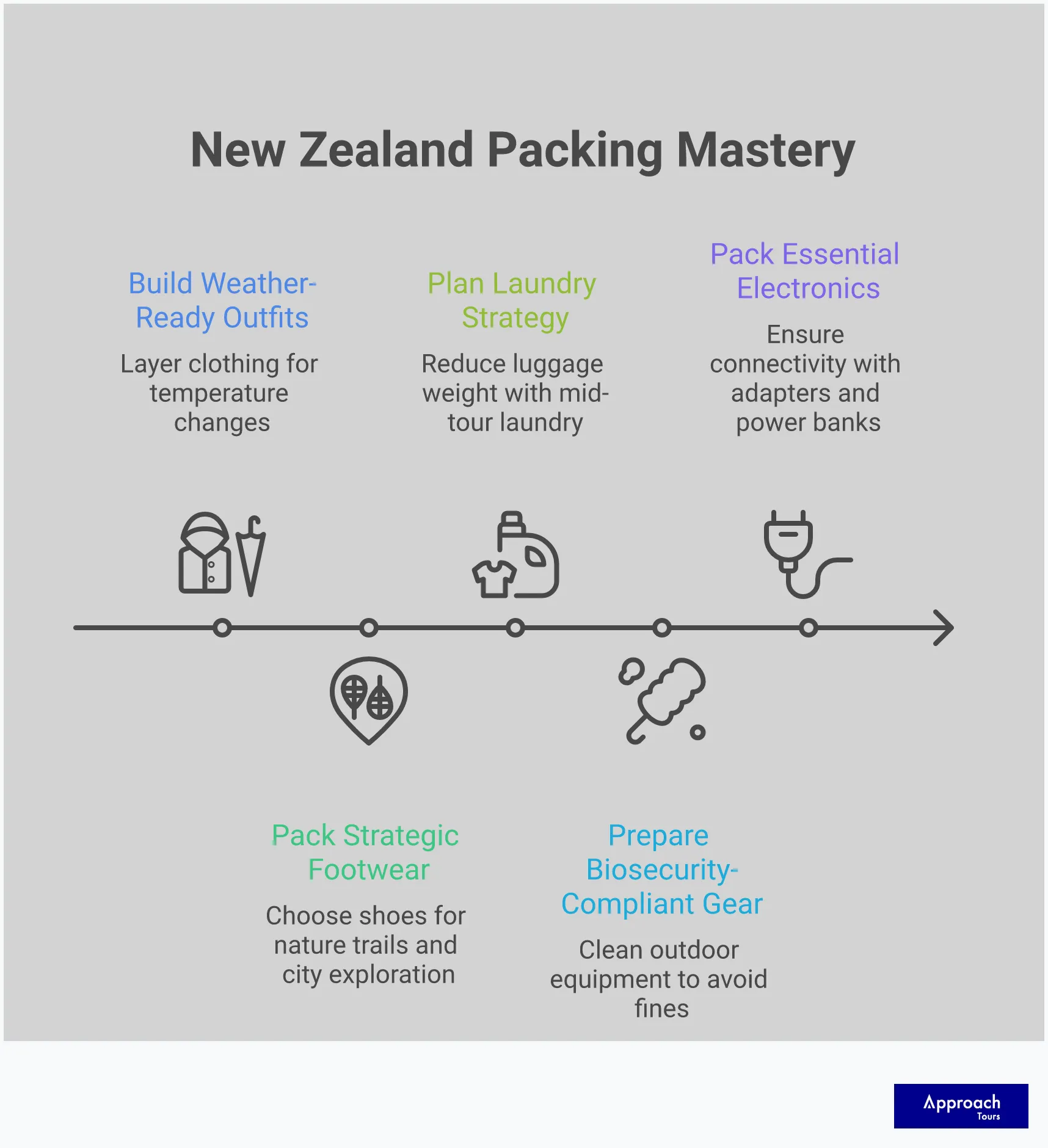
A few practical accessories can make a world of difference on your tour. A reusable water bottle is a fantastic item to have. It’s an easy way to stay hydrated throughout the day and you can refill it at our hotels and many public places. You will also need a power adapter to charge your electronics. New Zealand uses the Type I outlet which is the same as Australia but different from Canada. We suggest bringing a universal adapter preferably one with built-in USB ports so you can charge multiple devices like your phone and camera at once. This simple tool ensures you’re always ready to capture the next memory.
Which Documents and Electronics Are Essential?
With your bags nearly packed it’s time to gather the items that keep you safe connected and ready to capture every moment. While packing cubes and merino wool are important these documents and devices are the true non-negotiables for modern travel. Ensuring you have the right papers and power sources means you can relax completely knowing all the important details are handled. From your passport to your phone charger this list covers the essentials that will make your tour through New Zealand seamless and worry-free.
Your Passport, Visa and Travel Insurance
Before you pack anything else locate your essential travel documents. Your passport visa and travel insurance information are the most important items you will carry. We recommend making both physical and digital copies. Keep one copy in your carry-on and another in your checked luggage separate from the originals. A photo saved on your phone or in a secure cloud drive is also a smart backup. While your Group Guru is there to help with any on-tour questions you are responsible for ensuring your travel documents are valid and up-to-date before you leave Canada.
How to Keep Your Devices Charged
You’ll want to capture the stunning landscapes of New Zealand from the coach window and during our daily explorations. Make sure your camera and phone are always ready by packing a portable power bank. It’s perfect for recharging on the go when you’re away from the hotel for the day. Remember to pack all the necessary chargers and perhaps an extra battery for your camera. New Zealand uses a different power outlet than Canada so a universal travel adapter is crucial. The local standard is a 240-watt current with an angled two or three-prong plug.
Staying Connected While You’re Away
Sharing your adventures with family and friends back home is part of the fun. Most of our hotels offer reliable Wi-Fi for you to use in the evenings. However service can be intermittent in some of the more remote and beautiful parts of the country. For navigating during your free time it’s a great idea to download offline maps to your phone before you leave. This ensures you can find your way around even without a cellular signal. Your Canadian cell phone provider can also set you up with an international plan for your trip.
How Do You Pack Smart for New Zealand?
Packing efficiently is an art form and mastering it means more freedom when you’re travelling. The goal is to bring everything you need without feeling weighed down by a heavy suitcase. For a destination like New Zealand where the weather can offer four seasons in one day, smart packing is your secret to a comfortable and stress-free tour. It’s not about bringing more but about bringing the right things. This means choosing versatile pieces that work hard for you, planning ahead for practical needs like laundry and being strategic about what goes in your carry-on versus your checked bag. A well-packed bag gives you peace of mind so you can focus on the experience itself instead of worrying about what you forgot or why your bag is so heavy. By thinking through these key areas, you can create a perfectly balanced travel wardrobe that prepares you for every adventure on your itinerary from a city walk in Auckland to a scenic cruise in Milford Sound.
Maximize Space with Versatile Clothing
The golden rule for dressing in New Zealand is to master the art of layering. The weather can shift in an instant from sunny skies to a cool breeze and a sudden shower. Packing clothes you can easily add or remove allows you to adapt comfortably throughout the day. Think of your outfits in three parts: a base layer like a t-shirt or long-sleeved top, a mid-layer for warmth such as a fleece or merino wool sweater and a waterproof and windproof outer jacket. This layering system not only keeps you prepared for any forecast but also saves a remarkable amount of luggage space since each piece can be mixed and matched for different looks and conditions.
Plan Your Wardrobe and Laundry Stops
You don’t need to pack an outfit for every single day of your tour. A good strategy is to pack about a week’s worth of clothing and plan for a laundry day. Most quality hotels offer laundry services making it easy to refresh your wardrobe midway through your travels. This simple plan can cut your packing list in half leaving more room for souvenirs. Consider packing a few travel-sized laundry detergent sheets for convenience. By planning your wardrobe around a few key pieces and taking advantage of laundry facilities you’ll enjoy the benefits of travelling light without sacrificing comfort or style.
Decide What Goes in Your Carry-On vs Checked Bag
Your carry-on bag is your travel lifeline so pack it with care. It should contain all your absolute essentials in case your checked luggage gets delayed. This includes your passport travel documents medications and any valuable items like jewelry or electronics. It’s also wise to pack a complete change of clothes and basic toiletries to keep you comfortable upon arrival. A medium-sized daypack works perfectly as a carry-on. You can use it during your flight and then for daily excursions to carry your water bottle camera rain jacket and other necessities. Before you fly always check the latest carry-on restrictions to ensure a smooth security screening.
What Packing Mistakes Should You Avoid?
Packing for a big trip can feel like a puzzle but knowing what not to bring is just as important as knowing what to bring. A lighter bag means more freedom to explore. Here are a few common packing missteps to avoid for your New Zealand tour so you can travel with confidence and ease.
The Truth About Formal Wear and Overpacking
One of the biggest packing myths is the need for a separate formal wardrobe. Let me put your mind at ease: New Zealand has a wonderfully relaxed and casual culture. People dress comfortably even when dining in nice city restaurants so you can leave the fancy clothes and dress shoes at home. This philosophy extends to toiletries too. While you’ll want your essentials for the first few days you can find most things you need in local supermarkets. Packing light gives you space for the perfect souvenir and makes moving between our beautiful accommodations that much easier.
A Quick Guide to New Zealand’s Biosecurity Rules
New Zealand is an island nation with a unique and fragile ecosystem. To protect it the country has very strict biosecurity laws. This is especially important for any outdoor gear you plan to bring. Before you pack make sure any hiking boots walking poles or other equipment are scrubbed clean of all soil and organic material. Arriving with dirty gear can result in a significant fine and delays at the airport. A few minutes of cleaning at home ensures a smooth entry and helps preserve the stunning landscapes we’re all going to see.
What to Buy There vs What to Bring from Home
A great strategy for keeping your luggage light is to plan on buying some items after you arrive. Things like insect repellent are effective and readily available in New Zealand. Plus many of our accommodations offer laundry facilities so you don’t need to pack an outfit for every single day. A good rule of thumb is to pack enough clothing for the first week and plan a laundry stop. This simple approach frees you from a heavy suitcase and lets you focus on the incredible experiences ahead instead of worrying about your luggage.
Your Ultimate New Zealand Packing Checklist
With your bags laid out and your tour dates circled on the calendar, it’s time to put together the perfect wardrobe for your New Zealand adventure. Packing for the Land of the Long White Cloud is all about being clever and prepared. This checklist is designed to help you pack everything you need without weighing yourself down, ensuring you’re comfortable and ready for every incredible moment. From misty mornings in Fiordland to sunny afternoons in the Bay of Islands, we’ve got you covered.
Your All-Season Clothing Checklist
New Zealand’s weather is famous for its ability to show you four seasons in a single day. The secret to staying comfortable is layering. Think of your outfits as a flexible system you can adjust on the go. Start with a base layer like a t-shirt or long-sleeved top, add a cozy mid-layer like a fleece or merino wool sweater and top it off with a waterproof and windproof jacket. Pack about a week’s worth of clothing; you’ll find most accommodations offer laundry services so you can easily refresh your items partway through the tour. This approach keeps your luggage light and your clothing options plentiful.
Your Adventure Gear Checklist
Your New Zealand tour will have you on your feet exploring stunning landscapes so comfortable shoes are non-negotiable. A sturdy pair of walking shoes or light hikers with good grip will be your best friend. You’ll also want to pack a reliable insect repellent. While mosquitoes are present, the west coast of the South Island is known for its pesky sandflies. A good repellent will make your time near the water much more pleasant. Finally, it’s always wise to carry a small personal first-aid kit with essentials like plasters, pain relievers and any personal medications for your day pack. This ensures you’re prepared for minor scrapes or headaches while out exploring.
Final Tips for a Perfectly Packed Bag
As you do your final checks, remember two golden rules for New Zealand: always be prepared for rain and always pack layers. A good rain jacket is the single most important item you can bring, no matter the season. The weather can shift in an instant and staying dry is key to enjoying your day. Don’t worry about packing for every possible scenario. If you forget something, you can find high-quality outdoor gear and everyday essentials in any major town. Using packing cubes can also be a fantastic way to keep your suitcase organized and your layered outfits easy to find.
Related Articles
- Auckland Weather by Month: Your Complete Guide
- Best New Zealand Tours for a Luxurious Escape
- Your New Zealand Itinerary: 3 Perfect Options
Frequently Asked Questions
Do I really need a rain jacket, even if I’m travelling in summer? Yes, absolutely. A waterproof and windproof jacket is the most essential piece of clothing you can pack for New Zealand, regardless of the season. The weather is famously unpredictable, and a sunny summer afternoon can quickly turn into a breezy, showery one. A good jacket will keep you warm, dry and comfortable, ensuring that a sudden change in the weather never interrupts a beautiful moment.
What are the best types of shoes to bring? Comfort is your top priority, as you will be doing a fair amount of walking on city streets and nature trails. We strongly recommend bringing two pairs of well-worn shoes. Your primary pair should be sturdy walking shoes or light hikers that offer good support and grip. For your second pair, consider comfortable sneakers or supportive flats that are perfect for exploring towns or for a relaxed evening meal.
Will I need to pack any formal clothes for dinners? You can happily leave your formal wear at home. New Zealand has a very relaxed and casual culture, and people dress for comfort even in nice restaurants. A smart pair of pants with a nice top or sweater is perfectly appropriate for our group dinners. Packing versatile, comfortable pieces will serve you much better than bringing a separate outfit you may only wear once.
I like to use walking poles. Can I bring them to New Zealand? You certainly can bring your walking poles if they help you feel more stable and comfortable on trails. However, you must be very careful about New Zealand’s strict biosecurity laws. Before you pack them, you need to scrub the poles thoroughly, paying special attention to the tips and handles to ensure they are completely free of any dirt, soil or plant matter.
Is it a good idea to pack jeans? While you can certainly pack a pair of jeans for city exploration or evenings, they are not ideal for days with outdoor activities. Denim is heavy and takes a very long time to dry if it gets wet from a sudden shower. We find that pants made from quick-drying fabrics are a much more practical and comfortable choice for most of our daily excursions.