For many travellers the question of Spain vs Italy is best answered with a fork. Both countries offer a culinary journey that is central to their identity but they serve up very different experiences. In Spain meals are a vibrant social affair built around sharing small plates or tapas in a bustling bar filled with conversation. Italy cherishes the tradition of the leisurely multi-course meal where regional pride shines in every handmade pasta and locally sourced ingredient. From the famous wine regions of La Rioja and Tuscany to the lively food markets of Barcelona and Rome let’s explore the delicious differences that define these two foodie havens.
Key Takeaways
- Pick Your Artistic Passion: Choose Italy for the masterpieces of the Roman Empire and the Renaissance from the Colosseum to Michelangelo’s David. Select Spain for a vibrant mix of Moorish palaces like the Alhambra and the fantastical modern architecture of Gaudí.
- Find Your Perfect Coastal Pace: Italy’s dramatic Amalfi Coast is ideal for savouring long meals and breathtaking views. Spain’s broad sandy beaches are perfect for relaxing days and a social dining scene built around sharing tapas.
- Embrace Effortless Travel: Visit in the spring or fall for the best weather and smaller crowds. For a truly stress-free experience a group tour handles all the planning so you can focus on enjoying every moment.
Spain or Italy? A Traveller’s Delightful Dilemma
Choosing between the sun-drenched landscapes of Spain and the romantic allure of Italy is a wonderful problem to have. Both countries offer a feast for the senses with incredible food, rich history and breathtaking scenery. The decision often comes down to the specific experience you’re dreaming of. Are you picturing yourself wandering through ancient Roman ruins or marvelling at whimsical modern architecture? Let’s explore what makes each destination uniquely captivating so you can find the perfect fit for your next adventure.
Where Culture Meets Modern Life
Italy is the heart of the Renaissance a place where you can feel the powerful influence of Western culture in every piazza and gallery. Imagine standing before Michelangelo’s David in Florence or hearing the echoes of gladiators in the Colosseum. The country is a living museum filled with famous art, architecture and opera. Spain on the other hand offers a vibrant tapestry of diverse histories. In Barcelona you can explore the fantastical buildings of Gaudí or see the profound works of Picasso. From the passion of flamenco to the serene beauty of Moorish palaces Spain’s culture is a dynamic blend of tradition and bold artistic expression.
Discover Mediterranean Charm
Both countries share the beautiful Mediterranean coast but with their own distinct character. Italy’s southern regions like the stunning Amalfi Coast and the islands of Sicily and Sardinia are bathed in sunshine from May to September. Picture yourself on a boat gazing at colourful villages clinging to cliffs. In Spain the southern coast and Balearic Islands like Mallorca offer hot dry summers and wonderfully warm spring and fall seasons. Visiting in September or October is a brilliant way to enjoy the pleasant weather and beautiful beaches without the peak season crowds for a more relaxed experience.
Find Your Unique Travel Experience
Getting around both countries is a breeze which is wonderful news for any traveller. Spain is particularly known for its excellent transportation network. Its high-speed trains connect major cities quickly and comfortably making it simple to journey from Madrid’s art museums to Seville’s charming streets. In Italy the train system is just as beloved offering a romantic way to see the countryside unfold between cities like Rome and Venice. The ease of travel means you can spend less time on logistics and more time soaking in the culture. This seamless connectivity makes it easy to plan a multi-city tour and experience the heart of each nation.
The Best Time to Visit Spain and Italy
Timing your trip to Spain and Italy can transform a great vacation into an unforgettable one. Both countries are beautiful year-round but the seasons dramatically change the experience. The key is finding that perfect balance of sunny skies comfortable temperatures and fewer crowds. Whether you dream of wandering through Roman ruins without the sweltering summer heat or sipping sangria on a sun-drenched Spanish plaza you’ll want to choose your dates wisely. Let’s look at the best times to explore these Mediterranean gems.
A Guide to the Seasons
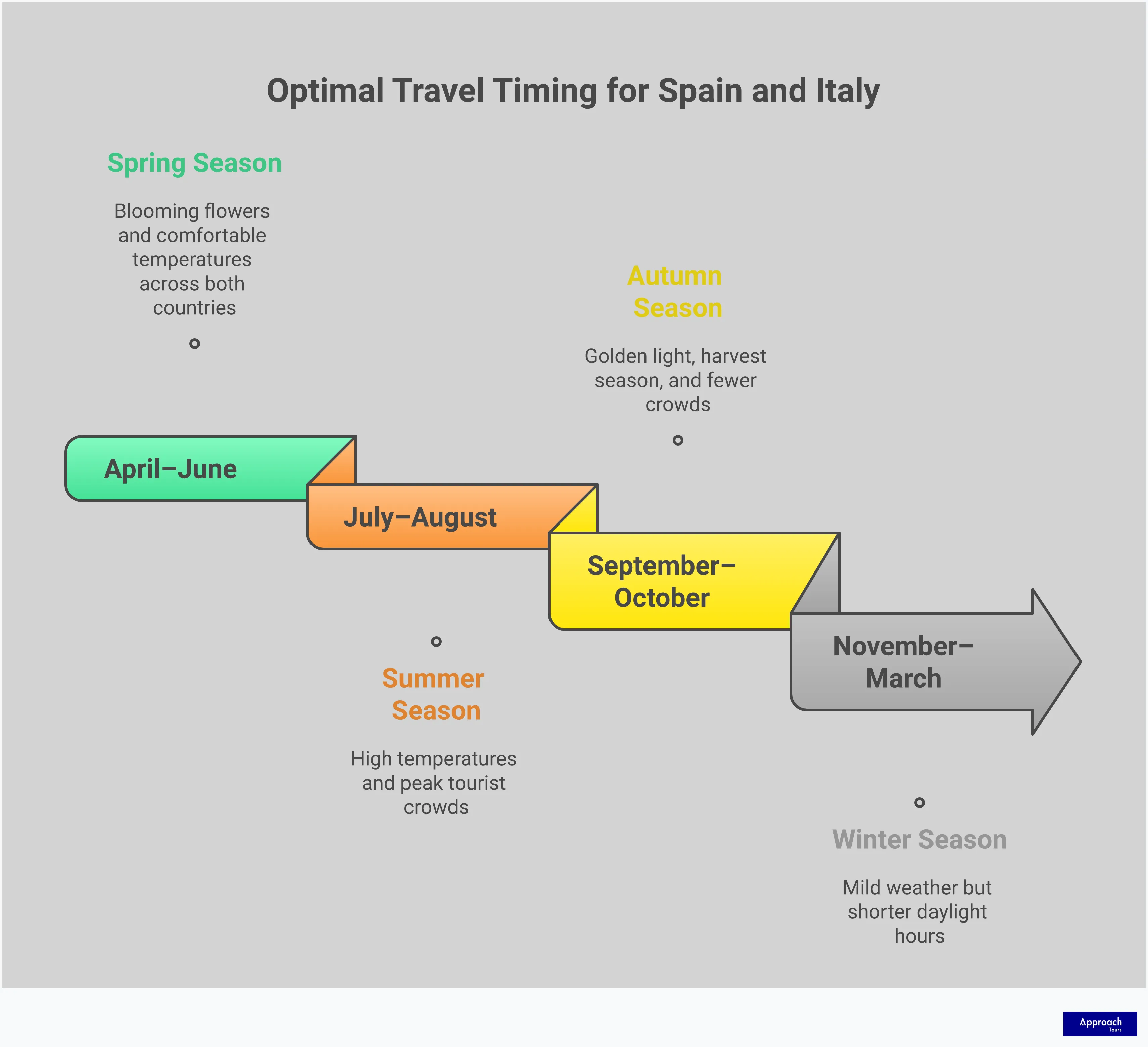
For a truly comfortable and immersive experience the shoulder seasons are your best bet. We recommend travelling from April to June or from September to October. During these months the intense summer heat has yet to arrive or has already subsided leaving behind blissfully warm days and pleasant evenings. You’ll find iconic sites are less crowded allowing you to linger longer at the Prado Museum or the Uffizi Gallery. This is the time when both countries are in full bloom—spring flowers carpet the hillsides of Tuscany and autumn harvests bring a special energy to Spain’s wine regions.
What to Expect from the Weather
The weather in Spain and Italy is a tale of two regions. In the spring months of April and May you can expect warm sunny days perfect for exploring cities like Rome Venice and Madrid before the peak summer temperatures set in. The south including the Amalfi Coast and Andalusia is glorious from May through September offering ideal conditions for coastal walks and seaside lunches. Autumn brings a golden light and comfortable weather across both countries making it a wonderful time for sightseeing. The days are still long and warm enough to enjoy the outdoors while the evenings are cool and refreshing.
Can’t-Miss Festivals and Events
One of the best ways to connect with local culture is by experiencing a festival. Spain is famous for its vibrant celebrations from the colourful Feria de Abril in Seville to the massive La Tomatina in August. While some of these are huge summer events smaller local festivals happen year-round celebrating everything from saints to harvests. Italy offers its own spectacular events like the historic Palio di Siena horse race and the magical Carnival of Venice. Attending one of these events offers a unique window into the heart and soul of the region providing memories that will last a lifetime.
What Does a Trip to Spain and Italy Cost?
Planning your budget is one of the most important steps in designing your perfect trip. While Spain and Italy both offer incredible value they have different price points for accommodations food and activities. Generally you will find that Spain is a bit more affordable than its Mediterranean neighbour but both countries provide a rich experience no matter your budget. The key is knowing where your money goes. From your morning espresso to your evening glass of wine understanding the local costs helps you travel with confidence and ease. Let’s look at what you can expect to spend on the essentials so you can focus less on logistics and more on soaking in the beauty around you.
Where to Stay and What to Expect
In both Spain and Italy you will find a wonderful array of places to rest your head from grand historic hotels in city centres to charming family-run inns in the countryside. While Italy’s classic destinations like Rome and the Amalfi Coast can command higher prices Spain often provides more budget-friendly options even in popular cities like Madrid and Barcelona. Imagine waking up in a beautifully restored Andalusian cortijo or a chic urban hotel. Italy counters with its own allure perhaps a rustic Tuscan farmhouse surrounded by vineyards or an elegant Venetian palazzo. Regardless of where you stay comfort and warm hospitality are staples in both cultures ensuring a welcoming retreat after a day of exploration.
Budgeting for Food and Entertainment
Dining in Spain and Italy is an experience to be savoured and it doesn’t have to be expensive. In Spain the culture of tapas allows you to sample a variety of small delicious plates like patatas bravas and cured Iberian ham often for just a few euros each. Italy is a paradise for lovers of pasta pizza and gelato where a memorable meal can be found in a bustling trattoria. When it comes to entertainment museum entrance fees and guided tours are a factor to consider. Planning ahead for tickets to iconic sites like the Prado in Madrid or the Uffizi in Florence can help manage your spending while ensuring you don’t miss out on these cultural treasures.
Planning Your Transportation Costs
Getting around Spain and Italy is part of the adventure and both countries boast excellent public transport. High-speed trains are a fantastic way to travel between major cities offering a comfortable and scenic alternative to flying. Italy’s Frecciarossa and Spain’s AVE trains connect hubs like Rome to Florence and Madrid to Seville in just a few hours. For shorter distances regional trains and coaches offer reliable service. Within cities metros and local buses are efficient and affordable. While you can rent a car for more freedom in rural areas the convenience of the rail systems often makes it the preferred choice for a stress-free trip.
How Prices Vary by Region
Just as the culture and landscape change from region to region so do the prices. In Italy the industrial and fashion-forward north including Milan and Venice tends to be more expensive than the rustic sun-drenched south. Similarly in Spain the vibrant coastal cities and Balearic Islands see higher prices than the quiet inland villages of Extremadura or Castile-La Mancha. The time of year also plays a significant role. Travelling during the shoulder seasons of spring and autumn not only offers pleasant weather perfect for sightseeing but also lower costs and fewer crowds than the peak summer months. This allows for a more relaxed and intimate experience of each country’s unique charm.
Savouring Spain and Italy: Food, Wine and Markets
One of the most wonderful ways to connect with a new place is through its food. In both Spain and Italy meals are more than just sustenance they are a celebration of history family and fresh local ingredients. The culinary scenes in these two Mediterranean gems are a feast for the senses. Imagine strolling through a bustling market where vendors proudly display colourful produce fragrant cheeses and cured meats. Picture yourself sitting at a sun-drenched café sipping a glass of regional wine or learning the secrets of a generations-old recipe in a local cooking class.
From the lively tapas bars of Andalusia to the cozy trattorias of Tuscany every meal tells a story. In Spain the culture of sharing small plates or tapas creates a wonderfully social atmosphere perfect for connecting with fellow travellers. In Italy the fierce pride in regional cuisine means you can travel just a few kilometres and discover an entirely new dish. Whether you are a seasoned foodie or simply someone who enjoys a good meal exploring the food wine and markets of Spain and Italy is an unforgettable part of the experience. It is a chance to taste the authentic heart of each country one delicious bite at a time.
Taste the Traditions of Spain
Spanish cuisine is a vibrant tapestry of bold flavours and regional specialties. The country is famous for its social dining culture best embodied by tapas. These small plates are perfect for sharing and allow you to sample a variety of dishes from savoury patatas bravas to delicate cured Iberian ham. Beyond tapas you will find iconic dishes like paella a fragrant rice dish from Valencia often brimming with fresh seafood. On a warm day nothing is more refreshing than a bowl of gazpacho a chilled tomato soup from the south. And you cannot miss the classic tortilla Española a simple yet satisfying potato and onion omelette. Spanish cooking relies heavily on fresh seafood rice beans and high-quality meats creating a culinary identity that is both rustic and refined.
Explore the Flavours of Italy
Italian food is a global obsession and for good reason. It is a cuisine built on passion simplicity and the highest quality ingredients. While pasta and pizza are famous worldwide experiencing them in their birthplace is a revelation. Each of Italy’s 20 regions has its own distinct culinary traditions. In the south you will find dishes alive with sun-ripened tomatoes fresh seafood and fragrant olive oil. As you travel north the cuisine becomes richer featuring creamy sauces hearty meat dishes like osso buco and risotto made with prized Arborio rice. From handmade pasta in Bologna to fresh pesto in Liguria and creamy gelato on a Roman piazza every bite offers a delicious lesson in Italian culture.
A Look at Famous Wine Regions
For wine lovers Spain and Italy are pure paradise. Both countries have ancient winemaking traditions and boast some of the world’s most celebrated wine regions. Italy’s diverse landscape produces an incredible variety of wines. You can sip on the bold Chianti Classico in the rolling hills of Tuscany enjoy a glass of prestigious Barolo in Piedmont or toast with a sparkling Prosecco from Veneto. Spain is equally impressive with its own renowned regions. La Rioja is famous for its elegant and complex red wines made primarily from the Tempranillo grape. Nearby Ribera del Duero also produces powerful world-class reds. A visit to a local vineyard to learn about the winemaking process and taste the results is a highlight of any tour.
Experience Local Markets and Cooking Classes
To truly immerse yourself in the local food culture a visit to a market is a must. In Spain the Mercat de la Boqueria in Barcelona is a whirlwind of colour sound and flavour. In Italy Rome’s Campo de’ Fiori buzzes with energy as locals shop for fresh produce meats and cheeses. These markets are the beating heart of their cities. For a hands-on experience a cooking class offers a wonderful opportunity to connect with local traditions. You can learn to craft the perfect pasta from a nonna in Tuscany or master the art of paella in Valencia. It is a fun and delicious way to create lasting memories and bring a piece of your travels home with you.
Iconic Sights and Hidden Charms
Both Spain and Italy are absolute treasure troves of unforgettable sights from world-famous landmarks to quiet corners brimming with local life. Deciding between them often comes down to the kind of beauty and history you want to surround yourself with. Whether you dream of ancient Roman ruins or whimsical modern architecture the right choice is waiting for you. Let’s explore what makes each country’s landscape so uniquely captivating.
Must-See Cities and Landmarks
In Italy you can walk through history in cities that feel like living museums. Imagine standing before the mighty Colosseum in Rome or tossing a coin into the Trevi Fountain ensuring your return. Then picture yourself gliding through the canals of Venice surrounded by stunning Gothic palaces. Spain offers a different but equally dazzling urban experience. Madrid pulses with artistic energy home to some of the world’s most famous art museums. In Barcelona you can wander through a fantasy world created by the unique architectural masterpieces of Gaudí while Valencia presents a bold vision of the future with its sleek modern buildings.
Explore Beautiful Coastal Towns
When you dream of the Mediterranean coast what do you see? If it’s dramatic cliffs tumbling into a turquoise sea with fragrant lemon groves scenting the air then Italy’s Amalfi Coast is calling your name. Its charming towns are perfect for exploring on foot. If your vision includes wide stretches of soft golden sand then Spain is your destination. Spanish beaches are generally broader and ideal for a relaxing swim or a sun-drenched afternoon. Many of Spain’s beaches have earned Blue Flag status a special recognition for their exceptional cleanliness and excellent facilities ensuring a pristine coastal experience for all travellers.
Step Back in Time at Historical Sites
Italy’s history is dominated by the grandeur of the Roman Empire. You can feel its immense legacy when you explore the remarkably preserved streets of Pompeii frozen in time by a volcanic eruption. Spain’s past tells a different story a captivating blend of cultures. For centuries the Moors ruled parts of the country and their influence is beautifully immortalized in structures like Granada’s Alhambra palace. This breathtaking fortress with its intricate tilework and serene courtyards showcases a fascinating history shaped by both Muslim and Christian hands. Each country offers a profound connection to the past just waiting to be discovered.
Discover Our Favourite Hidden Gems
Beyond the famous monuments lie the places that capture the true soul of a country. In Italy you can find this magic along the Amalfi Coast where tiny villages cling to cliffs above the sea. For a different kind of island escape the rugged mountains and stunning beaches of Sardinia offer a wilder beauty. Spain also holds its share of secrets. The island of Mallorca is beloved for its golden sands and secluded coves perfect for a quiet escape. For a complete change of scenery head to the country’s northern regions. Known as Green Spain this area surprises travellers with its lush rolling hills and ancient forests.
Experience the Art, Architecture and Culture
Both Spain and Italy feel like magnificent open-air museums but their galleries and buildings tell distinctly different stories. Choosing between them depends on what kind of beauty and history you want to surround yourself with. Italy is the undisputed heartland of the Renaissance a place where you can trace the powerful arc of Western art. Spain counters with a fiery blend of Moorish elegance and modernist whimsy. Each country offers a cultural immersion that goes far beyond simple sightseeing connecting you to centuries of human creativity and tradition.
A Guide to Museums and Galleries
Italy is a dream for lovers of classical art. In Florence the Uffizi Gallery houses masterpieces by Michelangelo Leonardo da Vinci and Botticelli while Rome’s Vatican Museums showcase an overwhelming collection of treasures culminating in the Sistine Chapel. The sheer volume of iconic art is astounding a testament to the country’s pivotal role in the Renaissance.
Spain offers a thrilling journey from the classic to the avant-garde. Madrid’s Prado Museum is home to European masters like Goya and Velázquez. But the country also celebrates the surreal and the modern. You can trace the evolution of Pablo Picasso in Barcelona or stand in awe of Salvador Dalí’s mind-bending works in Catalonia. Spain’s galleries capture a passionate and revolutionary spirit.
Admire Architectural Marvels
The landscapes of Spain and Italy are defined by their unforgettable architecture. Italy’s timeline is etched in stone from the enduring grandeur of Rome’s Colosseum to the ethereal beauty of Venice where St. Mark’s Basilica glitters with Byzantine mosaics. Further south the Amalfi Coast presents a stunning picture with colourful towns built directly into seaside cliffs. Every corner reveals another layer of history from Roman ruins to Renaissance domes.
Spain’s buildings tell a story of diverse cultural influences. In Andalusia the intricate tilework and serene courtyards of Moorish fortresses like the Alhambra will transport you to another time. Barcelona offers a whimsical contrast with Antoni Gaudí’s modernist creations that seem to defy nature itself. His Sagrada Família reaches for the heavens a testament to a unique architectural vision.
Immerse Yourself in Local Traditions
To truly know a country is to experience its living traditions. Italy’s culture is deeply rooted in the legacy of the Roman Empire and the creative explosion of the Renaissance. This history comes alive in the passion of an opera performance in Verona or the simple daily ritual of the passeggiata an evening stroll to see and be seen. It’s a culture that values beauty family and the art of living well.
Spain’s traditions are a vibrant tapestry woven from centuries of history. In the south the soul-stirring sounds of a guitar accompany the passionate dance of flamenco a powerful expression of Andalusian culture. The social ritual of sharing tapas with friends is central to daily life while colourful festivals fill the streets with music and joy. Spain’s culture is one of celebration connection and infectious energy.
Our Top Cultural Activities
In Italy you can connect with history on a human scale. Imagine learning to make fresh pasta in a Tuscan farmhouse or exploring the preserved streets of Pompeii where life in 79 AD was frozen in time. A visit to Vatican City offers a chance to stand inside the magnificent St. Peter’s Basilica a profound experience for many travellers. These moments allow you to step beyond sightseeing and truly engage with Italian culture.
Spain offers cultural activities that are just as hands-on and memorable. You can spend a day wandering through the fantastical Park Güell in Barcelona admiring Gaudí’s playful designs. In Seville you can tour the Alcázar a stunning Moorish palace that is still used by the royal family. End your day with an authentic flamenco show where you can feel the raw emotion of the music and dance up close.
Getting Around Spain and Italy with Ease
One of the great joys of travelling through Spain and Italy is how wonderfully connected they are. Moving from a sun-drenched Spanish plaza to a historic Roman ruin is simpler than you might imagine. Both countries boast modern and efficient transportation networks that make seeing their diverse landscapes a true pleasure. Whether you’re gliding through the countryside on a high-speed train zipping between cities or using local transit to discover a neighbourhood’s hidden corners you have plenty of excellent options.
For many travellers the thought of coordinating train schedules rental cars and city metro passes can feel a bit daunting. The beauty of a well-planned tour is that every transfer and connection is handled for you. You can simply settle into your comfortable seat on a private coach and watch the stunning scenery of olive groves and vineyards unfold outside your window knowing you’ll arrive at your next destination refreshed and ready to explore. It’s the perfect way to experience the journey with complete peace of mind.
Travel by Train
There’s something undeniably romantic about train travel in Europe. It’s a chance to slow down and truly see the country. Spain’s Renfe and Italy’s Trenitalia offer extensive high-speed networks that connect major cities quickly and comfortably. Imagine sipping a coffee as you depart from Madrid’s Atocha station and arriving in Barcelona in just a few hours ready for tapas. The trains are clean modern and offer spectacular views you’d miss from a plane. For a truly seamless experience you can plan your rail travel in advance to secure the best routes and fares letting you focus on the adventure ahead. It’s an efficient and civilized way to travel between destinations.
Explore Cities Like a Local
Once you arrive in a bustling city like Rome or Madrid the best way to get your bearings is by using their fantastic public transport. Major Spanish and Italian cities have clean and efficient systems that are easy to use. In Madrid and Barcelona the metro can whisk you from a world-class museum to a vibrant neighbourhood market in minutes. In Italian cities like Rome and Florence an extensive network of buses and trams makes it simple to reach iconic sights. Using public transportation is not only practical it’s part of the cultural experience. You get a real sense of the city’s rhythm as you travel alongside locals on their daily commutes.
Tips for Driving Abroad
Renting a car offers the freedom to explore the rustic countryside of Tuscany or the white villages of Andalusia at your own pace. However driving in Spain and Italy comes with its own set of challenges. City centres are often a maze of narrow one-way streets and finding parking can be difficult. In Italy many historic centres have a Zona a Traffico Limitato (ZTL) or limited traffic zone where unauthorized cars face heavy fines. If you choose to drive be sure to familiarize yourself with local driving regulations and always opt for a smaller vehicle. It makes navigating those charmingly tight laneways much easier.
Plan Your Multi-City Route
Crafting an itinerary that flows smoothly from one city to the next is key to a relaxing trip. When travelling long distances between cities like Seville and Barcelona or Florence and Venice booking your high-speed train tickets in advance is a wise move. This not only saves you money but also guarantees you a seat especially during peak travel seasons. Planning your route ahead of time allows you to maximize your days and minimize travel stress. For those who prefer to leave the logistics to an expert a group tour offers a perfectly paced itinerary where all your transportation is thoughtfully arranged for you from start to finish.
Essential Tips for a Seamless Trip
A little local knowledge goes a long way toward making a wonderful trip feel truly effortless. When you travel through Spain and Italy you’ll find that understanding a few cultural touchstones helps you connect more deeply with the places you visit and the people you meet. From ordering a coffee to greeting a shopkeeper these simple tips will help you feel less like a tourist and more like a welcome guest. It’s all about embracing the local rhythm and savouring every moment of your experience.
Key Phrases to Know
You don’t need to be fluent to make a great impression. Locals in both Spain and Italy appreciate when travellers make an effort to speak their language even if it’s just a few words. Learning some basic greetings is a wonderful way to show respect and open the door to friendly interactions. Before you go try practicing a few essentials. In Spain you’ll get far with hola (hello) por favor (please) and gracias (thank you). In Italy try buongiorno (good morning) per favore (please) and grazie (thank you). A friendly greeting is the perfect start to any conversation whether you’re learning a new language or just buying a gelato.
Understanding Local Dining Customs
Dining in the Mediterranean is an experience to be savoured not rushed. In Spain the culinary scene comes alive late in the evening. Dinner often doesn’t start until 9 p.m. or later and is a vibrant social affair. Embrace the culture of tapas where you can enjoy small shareable plates at bustling local bars. Italy on the other hand cherishes the tradition of the leisurely multi-course meal. From the antipasto to the dolce each course is served with care allowing you to fully appreciate the quality of the food and the company. In both countries meals are a cornerstone of daily life and a beautiful expression of local culture.
A Guide to Cultural Etiquette
Greetings are an important part of daily life in both Spain and Italy. While a handshake is a common and polite way to introduce yourself don’t be surprised by more familiar gestures. In Spain it’s customary for friends and acquaintances to greet each other with a light kiss on each cheek known as dos besos. In Italy politeness is paramount. When addressing someone you don’t know well especially someone older it’s respectful to use formal titles like Signor (Mr.) or Signora (Mrs.). These small gestures of etiquette show you’re an engaged and considerate traveller.
Group Tours or Independent Travel?
Deciding how to explore these incredible countries depends on your personal travel style. Independent travel offers flexibility for those who enjoy planning every detail of their trip. However for a truly seamless and enriching experience a group tour provides unmatched peace of mind. Imagine arriving in a new city with all your accommodations transportation and activities perfectly arranged. With a dedicated Group Guru to handle the logistics and a local guide to share insider knowledge you are free to simply immerse yourself in the moment. It’s the ideal way to discover the world without any of the stress.
More Practical Travel Tips
Spain and Italy both boast excellent and efficient train networks that make travelling between major cities a breeze. High-speed trains can whisk you from Madrid to Barcelona or Rome to Florence in just a few hours offering scenic views along the way. For reaching smaller towns and more remote areas public coaches are an option though they can be slower. Of course nothing compares to the comfort and convenience of a private air-conditioned coach. On a tour you can relax and enjoy the journey knowing your transportation is handled from door to door a key part of a stress-free vacation.
Design Your Perfect Spanish and Italian Itinerary
Why choose between sun-drenched Spanish plazas and rolling Italian vineyards when you can experience both? Spain and Italy are wonderful neighbours sharing a Mediterranean flair for life making them perfect partners for a grand European tour. Combining them into a single trip is not only possible but also a fantastic way to immerse yourself in the heart of Southern European culture. Planning a multi-country trip can feel like a puzzle but with a little guidance you can craft an itinerary that flows beautifully from one experience to the next. Imagine sipping sangria in Seville one week and enjoying gelato by a Roman fountain the next. This is your chance to design a seamless adventure that captures the best of both worlds letting you compare Moorish architecture with Roman ruins and paella with pasta all in one unforgettable trip.
How to Combine Both Countries
Thanks to their proximity you can easily weave Spain and Italy into one seamless travel story. The simplest way to see both is by booking two tours back-to-back creating a comprehensive journey through the Mediterranean’s most beloved landscapes. This approach lets you relax knowing all the details are handled from the flight between countries to the hotels and daily activities. You can start by exploring the vibrant cities of Spain before hopping over to Italy to soak in its classical beauty. For travellers who enjoy a bit of independent discovery you can even add a few days on your own between tours to explore a city that catches your eye at your own pace before rejoining a group for the next leg of your adventure.
Our Favourite Routes
Getting between iconic cities in Spain and Italy is a breeze thanks to an impressive network of high-speed trains. Picture yourself gliding comfortably through the countryside watching olive groves and historic towns pass by your window. In Spain you can travel from the artistic streets of Barcelona to the royal heart of Madrid in just a few hours. Similarly Italy’s fast and efficient trains connect Rome’s ancient wonders with Florence’s Renaissance art and Milan’s modern style. A thoughtfully planned itinerary uses these rail systems to make your travel days as enjoyable and relaxing as the rest of your trip. It’s the perfect way to cover significant ground without feeling rushed letting you arrive in each new city feeling refreshed and ready to explore.
Manage Your Time Wisely
To truly savour your time in Spain and Italy timing is everything. The most delightful seasons to visit are during the spring (April to June) and autumn (September to October). During these “shoulder seasons” the weather is simply perfect—warm sunny days ideal for sightseeing and comfortably cool evenings for dinner outdoors. More importantly the summer crowds have thinned out allowing you to experience famous sites with more breathing room. You’ll find that flights and hotels can also be more accessible. Strolling through a blooming garden in Granada in May or admiring the golden Tuscan light in October are the kinds of magical moments that make travelling during these months so special.
Don’t-Miss Experiences
A journey through Spain and Italy is a journey through history art and culture. In Italy stand in awe inside Rome’s Colosseum where gladiators once battled drift along the magical canals of Venice and gaze upon Michelangelo’s David in Florence. Each city offers a profound connection to the past. Then in Spain let your imagination run wild as you explore Gaudí’s whimsical architecture in Barcelona from the Sagrada Família to Park Güell. Wander through the breathtaking courtyards of the Alhambra in Granada a stunning testament to Moorish artistry. Finally feel the pulse of Spanish life in the vibrant capital of Madrid where world-class art museums meet lively tapas bars. These are the unforgettable landmarks that will define your trip.
Related Articles
- Splendours of Spain
- Plan Your Best Italian Trip: A Complete Guide
- Best Italy Tour Packages: Your Perfect Trip in 2025
- Italy Tours: A Comprehensive Guide for Travelers
Frequently Asked Questions
I’ve never been to Europe. Which country is a better introduction Spain or Italy? This is a wonderful question and honestly you can’t go wrong with either choice. If your heart is set on seeing the iconic touchstones of Western history like the Colosseum and the art of the Renaissance then Italy is a perfect starting point. It delivers that classic European experience you have likely dreamed of. If you are drawn to a more diverse cultural tapestry with vibrant music Moorish architecture and a slightly more relaxed pace then Spain might be the ideal fit. It offers a wonderfully warm and inviting atmosphere for a first-time visitor.
How much walking should I expect on a tour of Spain or Italy? You can expect a healthy amount of walking as it is truly the best way to discover the charming cobblestone streets and historic city centres. We always explore at a comfortable and manageable pace allowing plenty of time to soak in the sights. Many of the most beautiful areas are pedestrian-only so comfortable shoes are a must. The great news is that you will have a private air-conditioned coach to rest and relax in as you travel between cities and major landmarks ensuring you arrive refreshed and ready for the next discovery.
I’m thinking of travelling by myself. Are these destinations a good choice for a solo traveller? Absolutely. Both Spain and Italy are fantastic destinations for solo travellers especially on a group tour. Travelling with a group provides a wonderful sense of security and instant camaraderie. You have the freedom to explore on your own during free time but you also get to share meals laughter and incredible experiences with like-minded people. A dedicated Group Guru is always there to handle all the logistics so you can simply relax and enjoy the adventure without any of the stress that can sometimes come with travelling alone.
If I want to visit both countries on one trip how much time should I set aside? To truly savour the unique character of both Spain and Italy without feeling rushed you should plan for at least three weeks. This gives you enough time to immerse yourself in the highlights of each country from the art of Florence to the energy of Madrid. A great way to do this is by combining two tours back-to-back. This approach allows you to see a great deal while all the complex logistics like flights between countries and hotel check-ins are seamlessly managed for you.
I don’t speak Spanish or Italian. Will the language barrier be a problem? You can travel with complete confidence even without knowing the local languages. In hotels restaurants and shops in the main tourist areas you will find that many people speak English. More importantly your tour will always include a local guide who is fluent in the language and culture as well as a Group Guru to assist with any needs. They can help with everything from ordering at a café to understanding the history of a site making for a smooth and enriching experience.