Portugal’s climate is a beautiful balance of two distinct personalities. It has the warm sun-drenched soul of the Mediterranean paired with a refreshing spirit from the Atlantic Ocean. This combination creates a climate that feels comfortable and inviting for most of the year. But this is just the beginning of the story. From the lush Douro Valley to the sparkling Algarve coast the weather shapes the landscape the food and the way of life. Exploring the weather in Portugal is about more than just temperatures and rainfall. It’s about discovering the heart of the country so you can fully appreciate its unique charm in every season.
Key Takeaways
- Aim for Spring or Autumn: These seasons provide the sweet spot for travel with comfortable sunny weather fewer crowds and the landscapes at their most beautiful.
- Pack for Warm Days and Cool Evenings: Even after a sunny day coastal breezes can make for chilly evenings so a light jacket or scarf is essential for staying comfortable.
- Choose Your Region Wisely: Portugal’s weather isn’t one-size-fits-all; the sun-soaked Algarve is perfect for a winter escape while the lush north is best explored during the milder spring and autumn months.
What is Portugal’s Climate Like?
Portugal’s weather is one of its most famous attractions. Blessed with a prime location on the Iberian Peninsula it offers a climate that feels like the best of both worlds. You get the long sun-drenched days of the Mediterranean paired with a refreshing Atlantic breeze that keeps things from ever feeling too stuffy. This beautiful balance makes it a comfortable destination for most of the year.
But Portugal is a country of delightful variety and its weather is no exception. The experience can change quite a bit depending on where you are. From the lush green hills of the north to the golden beaches of the Algarve in the south the climate shifts to offer a little something for every preference. Understanding these regional personalities is the key to planning a perfect trip.
Where the Mediterranean Meets the Atlantic
At its heart Portugal enjoys a classic Mediterranean climate. This means you can generally expect hot dry summers and mild winters with some rain. Summer days are perfect for exploring ancient city streets or relaxing by the sea while winters are gentle enough for comfortable sightseeing without the crowds. The Atlantic Ocean is Portugal’s secret weapon against overwhelming heat. It sends cool breezes across the coast moderating the summer temperatures and making even the warmest days feel pleasant and airy. It’s a climate that invites you to slow down and savour every moment.
A Country of Microclimates
Don’t be fooled by Portugal’s compact size; it’s home to several distinct weather patterns. The country is a wonderful tapestry of diverse microclimates which means your experience in one region can feel completely different from another. The north near Porto is known for being cooler and greener with more rainfall that keeps the landscape lush. The central region including Lisbon strikes a happy medium. Head south to the Algarve and you’ll find the warmest and driest weather with sunshine practically guaranteed year-round. This variety allows you to choose a region that perfectly matches your ideal travel weather.
The Coast vs The Countryside
The difference between Portugal’s sparkling coastline and its rustic interior is night and day and the weather is no exception. Coastal cities like Lisbon and Porto along with the entire Algarve region benefit from the Atlantic’s influence. This means summers are warm but not scorching and winters are incredibly mild. Venture inland to the vast plains of the Alentejo and you’ll find a more continental climate. Summers here are hotter and drier while winters can be crisper and cooler. This contrast offers travellers two unique Portuguese experiences: breezy coastal living or the sun-baked tranquility of the countryside.
A Look at Portugal’s Regional Weather
Portugal’s charm lies in its incredible diversity and that extends to its weather. The country is a patchwork of microclimates where the weather can change dramatically from one region to the next. A sunny day on an Algarve beach can feel worlds away from the misty green hills of the north. Understanding these regional differences is the key to planning your perfect trip. Whether you dream of sun-soaked coasts historic cities or tranquil countrysides there’s a corner of Portugal with weather that’s just right for you.
Sun and Sand in the Algarve
Portugal’s southernmost region the Algarve is what postcard dreams are made of. It boasts a classic Mediterranean climate which means long hot summers and wonderfully mild winters. If you’re seeking sunshine this is your place. From June to September the sun is a constant companion warming the golden sands and turquoise waters. Even in the off-season the Algarve remains a bright and welcoming destination perfect for escaping colder climates. It’s an ideal spot for travellers who want to relax by the sea and soak up some serious vitamin D. The region is a year-round destination for those who love the sun.
Lisbon and the Silver Coast
Lisbon enjoys one of the most pleasant climates of any European capital. Its weather is moderated by the nearby Atlantic making for warm summers without overwhelming heat and mild winters with plenty of sunshine. This makes it a fantastic city to explore on foot any time of year. Just north of the capital the Silver Coast offers a similar temperate climate with an invigorating sea breeze. While famous for its surf conditions the real draw is the refreshing coastal air and beautiful scenery. It’s a region where you can comfortably explore historic towns and dramatic coastlines without the intense heat found further south.
Porto and the Green North
As you travel north the landscape becomes greener and the climate more temperate. Porto and the surrounding region experience cooler temperatures and more rainfall than the south especially outside of the summer months. This is what gives the area its lush verdant beauty. The best times to visit are spring and autumn when the weather is comfortably mild and the summer crowds have thinned. You can explore Porto’s riverside cellars and the stunning Douro Valley in pleasant conditions. It’s a region that rewards travellers with rich culture and breathtaking scenery making it a perfect spring or fall escape.
Madeira: The Island of Eternal Spring
Floating in the Atlantic Ocean the island of Madeira is a subtropical paradise. It’s often called the “Island of Eternal Spring” for good reason. Its climate is remarkably mild and consistent all year long with temperatures that rarely feel too hot or too cold. This makes Madeira an incredible destination no matter when you choose to travel. The island’s volcanic soil and gentle climate create a lush landscape bursting with exotic flowers and tropical fruits. For travellers looking for a warm and beautiful getaway without the seasonal extremes Madeira is an unbeatable choice.
Alentejo’s Sun-Drenched Plains
Stretching between Lisbon and the Algarve the Alentejo region is Portugal’s rustic heartland. Here you’ll find vast sun-drenched plains dotted with cork trees ancient olive groves and whitewashed villages. The climate is distinctly Mediterranean with hot dry summers and mild winters. To truly appreciate the region’s tranquil beauty plan your visit for spring or autumn. During these seasons the temperatures are perfect for exploring historic towns like Évora and enjoying the wide-open landscapes. The Alentejo offers a peaceful retreat and a glimpse into a more traditional side of Portugal.
Portugal Through the Seasons
Choosing when to visit Portugal is less about finding the “best” time and more about discovering your best time. The country wears each season differently offering a unique character and a distinct set of experiences from month to month. Do you dream of walking through fields of wildflowers under a gentle sun? Or perhaps you imagine yourself sipping a crisp Vinho Verde on a warm evening as the sun sets over the Atlantic. The rhythm of life in Portugal shifts with the calendar from the vibrant energy of summer festivals to the quiet cozy charm of a winter afternoon spent in a historic café.
Each season paints the landscape in a new palette. Spring brings a riot of colour as almond blossoms and wild poppies blanket the countryside. Summer bathes the coast in brilliant sunshine turning the sea into a sparkling turquoise jewel. Autumn arrives with a soft golden light casting a warm glow over vineyards heavy with grapes. And winter offers a more intimate view of Portugal with dramatic coastal skies and the festive twinkle of city lights. Understanding this seasonal flow is the key to planning a trip that perfectly matches your travel style whether you’re seeking sunshine cultural immersion or a peaceful escape.
Spring: A Country in Bloom (March-May)
Spring is when Portugal awakens from its mild winter slumber and bursts into life. From March to May the countryside is a spectacle of colour with wildflowers carpeting the fields of the Alentejo and fragrant orange blossoms scenting the air in the Algarve. The weather is comfortably warm and sunny perfect for exploring Lisbon’s tiled streets or Porto’s riverside lanes without the intensity of the summer sun. This season strikes a beautiful balance offering pleasant weather and fewer crowds at popular sites. It’s an ideal time to enjoy outdoor activities and discover the country’s stunning national parks as nature puts on its most impressive show.
Summer: Sunshine and Sea Breezes (June-August)
Summer is Portugal at its most vibrant and energetic. The days are long hot and drenched in sunshine creating the perfect conditions for enjoying the country’s magnificent coastline. This is the season for lazy beach days in the Algarve refreshing dips in the Atlantic and long leisurely dinners on outdoor terraces. While it’s the most popular time for travellers the lively atmosphere is infectious. Coastal towns buzz with activity festivals fill the calendar and the evenings are balmy and beautiful. It’s the quintessential season for sun-seekers who want to experience Portugal’s spirited sun-kissed side and enjoy its world-famous beaches.
Autumn: Golden Hues and Harvests (September-November)
Often called the “velvet season” autumn in Portugal is simply magical. The summer crowds have thinned the intense heat has softened into a pleasant warmth and the ocean is still inviting for a swim. The landscape glows with golden and russet hues particularly in the wine regions. This is harvest time making it a fantastic season for food and wine enthusiasts. You can witness the grape harvest in the Douro Valley or taste newly pressed olive oil in the Alentejo. The light is soft and beautiful making it a photographer’s dream and a wonderful time for sightseeing with comfortable temperatures and a more relaxed pace.
Winter: Mild Days and Cozy Nights (December-February)
A Portuguese winter is a wonderful escape from the cold and snow of Canada. The climate remains mild especially in the south and while you can expect some rain there are still many crisp sunny days to enjoy. This is the quietest season offering a chance to experience the country like a local. You can explore museums and palaces without the crowds warm up in a fado house with a glass of port wine or enjoy the festive atmosphere of the Christmas markets. It’s a time for hearty stews roasted chestnuts and a more intimate cozy version of Portugal that is just as enchanting.
Plan Your Trip Around the Weather
Portugal’s beautiful weather is one of its main attractions but knowing what to expect can transform a good trip into a perfect one. The country enjoys a generally pleasant climate year-round yet it’s a place of surprising variety. The weather you find in the rolling hills of the Alentejo can be quite different from the sea breezes you’ll feel in Lisbon on the very same day. Understanding these nuances helps you pack perfectly and plan your days for maximum enjoyment.
Thinking about the weather isn’t about avoiding a stray rain shower. It’s about making sure you’re comfortable whether you’re exploring ancient castles wandering through city streets or relaxing by the sea. It’s about choosing the season that best fits your idea of a dream tour. Do you envision yourself strolling through fields of wildflowers in the spring or savouring freshly harvested olives in the autumn? Let’s look at Portugal’s climate patterns so you can arrive prepared for a comfortable and delightful adventure.
Decode Temperatures and Rainfall
Portugal’s climate is broadly Mediterranean which means you can generally expect hot dry summers and mild wet winters. Summer days from June to August are often filled with sunshine and high temperatures especially in the south and inland regions. This is the perfect time for coastal relaxation. Winters are never truly harsh especially compared to a Canadian winter. Along the coast temperatures remain mild though you should expect more rain particularly in the north. The shoulder seasons of spring and autumn offer the best of both worlds. From March to May and September to November the weather is comfortably warm and sunny with less rainfall than in winter. These months are ideal for sightseeing and exploring the country without the intense summer heat. For a detailed look at what to expect each month you can review Portugal’s average temperatures and rainfall to help you decide on your perfect travel window.
Know What to Pack for Every Season
Packing for Portugal is all about smart layers. For a spring or autumn tour a light jacket or a few sweaters are essential for cooler evenings and mornings. A scarf is always a wonderful accessory for both style and warmth. During the day you’ll likely be comfortable in long-sleeved tops or t-shirts. Summer calls for light breathable fabrics like cotton and linen. Don’t forget a sun hat sunglasses and comfortable walking sandals. Even in summer a light cardigan is a good idea for air-conditioned coaches and restaurants or for evenings by the coast when a breeze picks up. For a winter visit pack a medium-weight waterproof coat comfortable boots and an umbrella. No matter when you travel comfortable walking shoes are a must. You’ll be doing plenty of exploring on charming cobblestone streets and you’ll want your feet to be happy.
Choose Your Region Wisely
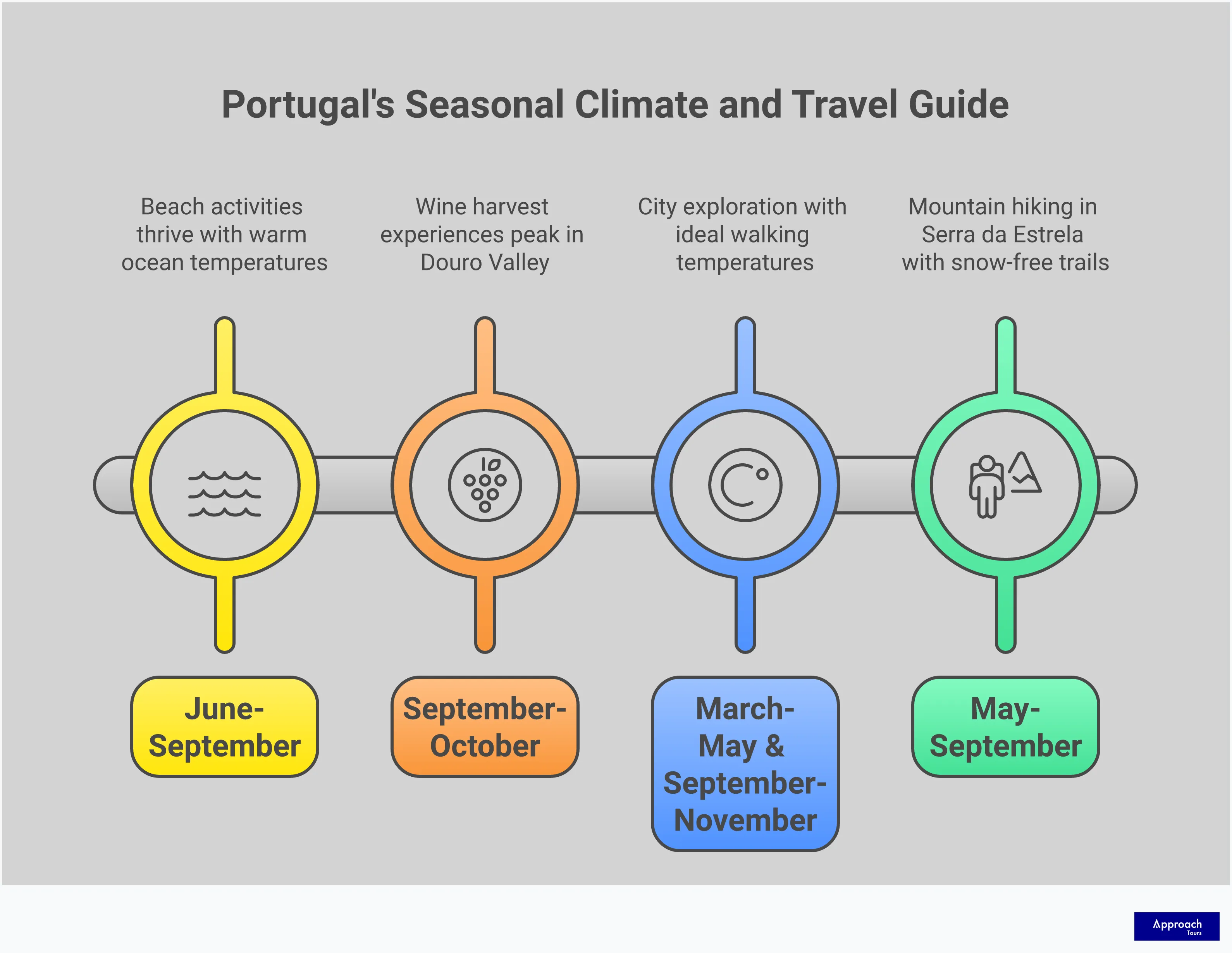
Portugal’s weather isn’t one-size-fits-all. The country has several distinct climate zones that create different experiences depending on where you are. The southern Algarve region boasts the most sunshine year-round making it a famous destination for beach lovers. The north around Porto is greener and tends to be cooler and wetter than the south. Lisbon and the central coast offer a balanced climate that’s moderated by the Atlantic. Inland areas like the Alentejo can experience more extreme temperatures with very hot summers and cooler winters. If your dream is to enjoy water activities and seaside dining the summer months from June to September are ideal for a coastal tour. If you prefer exploring historic cities and lush landscapes without the summer crowds the milder weather of spring and autumn in the central and northern regions will be perfect for you.
Find Activities for Every Season
No matter when you decide to travel Portugal offers a unique charm and a full calendar of activities. From the vibrant festivals of spring to the cozy cultural pursuits of winter each season invites you to experience the country in a new light. The best part is that with fewer crowds during the shoulder seasons you can often enjoy a more personal connection with the places you visit. Here’s a look at what you can enjoy throughout the year.
Celebrate Spring with Festivals and Flowers
As winter’s gentle rains subside Portugal bursts into colour. Spring is arguably the perfect time to visit with comfortable temperatures and landscapes carpeted in wildflowers. The air is fresh and the sun is warm making it ideal for exploring cobblestone streets and ancient ruins without the intense summer heat. This is the season of festivals celebrating everything from flowers to saints. You can wander through lush gardens see Porto’s famous camellias in full bloom or witness the vibrant almond blossoms in the Douro Valley. It’s a time of renewal and celebration a wonderful backdrop for discovering the country’s natural beauty and rich traditions.
Enjoy Summer with Coastal Living and Alfresco Dining
Summer in Portugal is a celebration of sun and sea. The days are long and hot drawing everyone to the magnificent coastline. While it’s the busiest season it’s also when the country is at its most vibrant. Imagine relaxing on a golden beach in the Algarve enjoying freshly grilled sardines at a seaside café or sipping crisp Vinho Verde as the sun sets over the Atlantic. The evenings are wonderfully balmy perfect for alfresco dining and listening to the soulful sounds of Fado music drifting from a local tavern. Summer is the time to embrace Portugal’s laid-back coastal lifestyle and indulge in its delicious seafood.
Experience Autumn with Wine Tasting and Harvest Feasts
When autumn arrives it bathes the country in a soft golden light. The summer crowds have thinned and the weather is pleasantly warm making it a fantastic time for exploration. This is the season of the harvest particularly in the world-renowned wine regions. You can witness the grape harvest or vindima in the stunning Douro Valley and sample the fruits of the land. The air is filled with the scent of roasting chestnuts and the markets are overflowing with seasonal produce. It’s a season for the senses a perfect time for food and wine lovers to experience Portugal’s rich agricultural heritage and enjoy its rustic comforting cuisine.
Explore Winter with Museums and City Strolls
Winter in Portugal is mild and peaceful offering a different kind of magic. While you can expect some rain it’s the ideal time to immerse yourself in the country’s cultural treasures without the queues. The cities of Lisbon and Porto are particularly inviting with their world-class museums historic monuments and cozy cafés. You can spend a morning admiring masterpieces at the Calouste Gulbenkian Museum then warm up with a delicious pastel de nata and coffee. The cooler weather is perfect for city strolls and with fewer travellers you’ll feel like you have the place to yourself. It’s an intimate and authentic time to connect with Portugal’s history and art.
Tips for a Comfortable Trip
Portugal’s weather is as varied and delightful as its landscapes. From the sun-drenched beaches of the Algarve to the lush green hills of the north a little planning can go a long way in making your tour comfortable and memorable. Understanding the climate patterns will help you pack perfectly and get the most out of every moment whether you’re sipping port in Porto or exploring ancient castles. While Portugal is a wonderful destination year-round its regional microclimates mean the weather can change from one town to the next. These tips will help you prepare for whatever the Portuguese skies have in store so you can focus on soaking in the culture the history and the incredible food. Think of this as your personal guide to staying comfortable and happy from the first day of your adventure to the last.
When to Visit Each Region
The best time for your trip really depends on where you’re going and what you hope to experience. Portugal generally enjoys a Mediterranean climate but the country’s diverse geography creates distinct weather zones. The southern Algarve region is famous for its 300 days of sunshine making it a pleasant destination even in the milder winter months. For exploring cities like Lisbon and Porto the shoulder seasons of spring and autumn offer the perfect balance of warm sunny days and fewer crowds. If you’re dreaming of the Douro Valley’s terraced vineyards you’ll find the landscapes of Portugal are especially stunning during the spring bloom or the autumn harvest.
How Weather Can Affect Your Plans
While spontaneity is part of the fun of travel knowing what to expect from the weather helps you plan your days wisely. The summer heat in interior regions like the Alentejo can be intense making midday sightseeing a challenge. It’s better to plan indoor activities like museum visits or long leisurely lunches during the hottest part of the day. Conversely winter in the north can be rainy so packing a waterproof jacket and umbrella is essential for enjoying the sights. For the most pleasant and flexible touring conditions we recommend visiting during the spring or autumn. These seasons provide the most favorable weather for walking tours and outdoor exploration without the extremes of summer or winter.
Stay Healthy and Comfortable
Feeling your best is key to enjoying your tour. Portugal’s sun can be strong even on cloudy days so sun protection is a must. Always pack a wide-brimmed hat sunglasses and a good quality sunscreen. Staying hydrated is also crucial especially from June to September when temperatures are warmer. Carry a reusable water bottle with you to refill throughout the day. You’ll be doing a fair amount of walking on beautiful but sometimes uneven cobblestone streets so comfortable and supportive shoes are your most important accessory. A little preparation ensures you can keep up with every exciting activity on the itinerary feeling energized and ready for adventure.
Prepare for Cooler Evenings
One of the best travel tips for Portugal is to always pack layers. Even after a warm and sunny day evenings can turn surprisingly cool especially in coastal cities like Lisbon where a breeze often comes off the Tagus River. Having a light jacket a cardigan or a pashmina on hand means you can comfortably enjoy an evening stroll or a delicious alfresco dinner without feeling a chill. This is true for most of the year not just the cooler months. Packing a few versatile layers is a simple step that makes a world of difference ensuring you’re prepared for the country’s charming daily weather shifts and can savour every moment of your evenings.
Portugal’s Weather at a Glance
Portugal’s diverse geography creates a tapestry of microclimates making it a fascinating destination year-round. From the sun-drenched southern coast to the lush green mountains of the north the weather can change significantly from one region to the next. Understanding these nuances is the key to planning a perfect trip whether you dream of relaxing on a golden beach or tasting wine among rolling hills. This quick guide breaks down what you can expect from the weather in Portugal’s most beloved areas so you can pack accordingly and make the most of every moment.
Life on the Coast
Portugal’s long and beautiful coastline is shaped by a classic Mediterranean climate. This means you can expect long sun-filled summer days and wonderfully mild winters. The Atlantic Ocean adds its own special touch bringing refreshing breezes that sweep across the beaches and coastal towns even on the warmest days. This maritime influence keeps the temperatures from becoming too intense making it perfect for strolling along the dramatic cliffs of the Algarve or enjoying fresh seafood at a seaside cafe. It’s a climate made for relaxing and soaking in the views.
Exploring the Mountains
Venture inland and you’ll discover that Portugal’s weather has a different personality. The mountainous regions like the Serra da Estrela offer a crisp refreshing escape from the coastal heat. Here the seasons are more distinct with cooler temperatures year-round and even the possibility of a dusting of snow in winter. For travellers who love lush landscapes and scenic drives this is paradise. The shoulder seasons of spring and autumn are particularly magical when the weather is pleasant for exploring the granite peaks and verdant valleys. It’s a wonderful contrast to the sun-and-sand experience.
Staying Cool in the Cities
Portugal’s vibrant cities like Lisbon and Porto are a joy to explore thanks to their comfortable climate. During the popular summer months from June to September temperatures are pleasantly warm averaging between 18 and 24°C. This is ideal weather for wandering through historic neighbourhoods riding the charming trams and enjoying a coffee at an outdoor plaza. Because many of the major cities are near the coast they benefit from those lovely Atlantic breezes which provide natural air conditioning on sunny afternoons. You can comfortably explore city attractions without feeling overwhelmed by heat.
Weather in the Wine Valleys
The world-famous Douro Valley owes its spectacular terraced vineyards to a unique microclimate. The region is sheltered by mountains creating warmer drier summers and cooler winters than nearby Porto. This temperate weather is the secret ingredient for growing the grapes that become exquisite Port and Douro wines. A visit here means sun-kissed days perfect for a river cruise or a tour of a traditional quinta (wine estate). Imagine sipping a glass of wine on a terrace overlooking the winding river. The climate makes a trip to the Douro Valley an essential and delightful part of any Portuguese tour.
Related Articles
- How to Plan a Trip to Portugal: The Complete Guide
- Best Portugal Tour Packages for Every Travel Style
- Best Tours in Portugal: Your Ultimate Guide
Frequently Asked Questions
What is the absolute best time of year to visit Portugal for good weather? For the most comfortable and pleasant weather for exploring you can’t beat the shoulder seasons. Spring from March to May and autumn from September to November offer the perfect combination of warm sunny days and fewer crowds. The intense summer heat has not yet arrived or has already softened making it ideal for walking tours and enjoying the beautiful landscapes without feeling overwhelmed.
I’m trying to escape the Canadian winter. What is a Portuguese winter really like? A Portuguese winter is a gentle and welcome retreat compared to what we experience in Canada. You can expect mild temperatures especially in Lisbon and the Algarve where it rarely gets truly cold. While it is the rainiest season you will still enjoy many crisp sunny days perfect for sightseeing. It is a wonderful time to explore museums and historic sites at a relaxed pace and experience the country’s cozy charm without the crowds.
I’m worried about the summer heat. Is it too hot to enjoy sightseeing? While inland areas can get quite hot during the summer months most of the popular coastal destinations like Lisbon and the Algarve benefit from a refreshing Atlantic breeze. This breeze works like natural air conditioning and keeps the temperatures from feeling too oppressive. The key is to plan your days smartly by enjoying outdoor explorations in the morning and late afternoon and saving indoor activities like museum visits for the hottest part of the day.
Does the weather vary a lot between different parts of the country on the same trip? Yes it certainly can and that is part of Portugal’s charm. The country is home to several microclimates so you could easily experience different weather patterns on a single tour. For example you might enjoy a warm sun-filled day on an Algarve beach and then travel north to find cooler misty conditions in Porto. This is why packing layers is always the best strategy for a trip to Portugal.
What are the most essential items to pack for Portugal’s weather? Regardless of the season the single most important item you can pack is a pair of comfortable supportive walking shoes for the cobblestone streets. Beyond that layers are your best friend. A light jacket or a cardigan is essential for cooler evenings even in the summer. Sun protection including a hat sunglasses and sunscreen is a must year-round as the Portuguese sun can be quite strong.